
A software patch took down the NSA's classified network — a day later, full restoration is still unconfirmed
The network the National Security Agency uses to talk to itself went down on Tuesday — not under attack, by every official account, but under a patch. The fix for two critical flaws in PHP, the language behind most of the web, was being applied when some systems failed to come back up. A day later, the agency still has not confirmed that its classified internal network is fully restored.
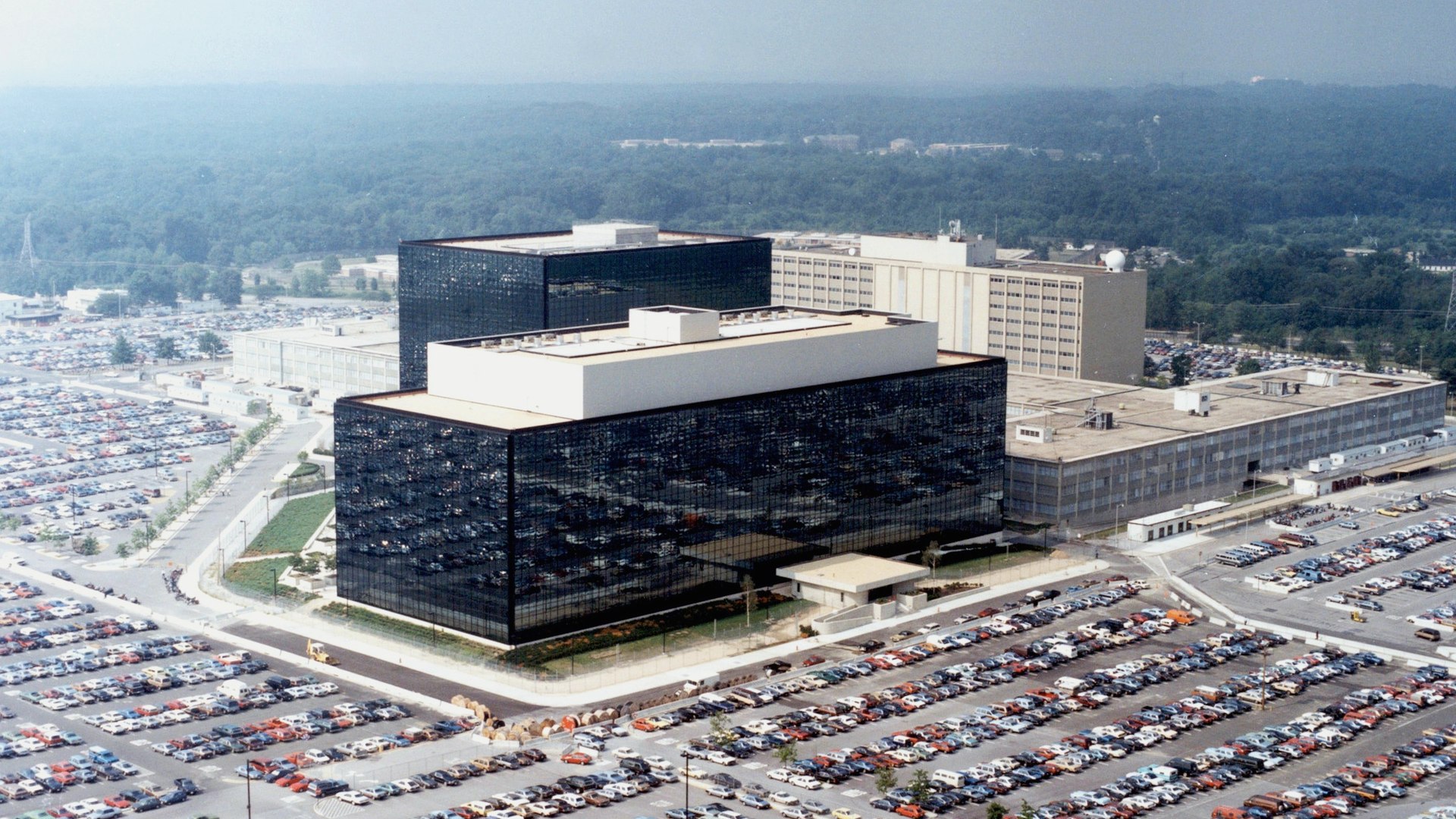
Photo: National Security Agency (public domain, via Wikimedia Commons) — aerial file photograph of NSA headquarters, Fort Meade, Maryland; not a scene from November 17, 2026.
The events in this story happened on Tuesday, November 17, 2026. This account is published on Wednesday, November 18, as what it is: the morning-after balance of a failure that, on the public record available as this story closes, has not yet been declared over. On Tuesday morning, the most secretive communications network in the United States — NSANet, the classified internal network the National Security Agency uses to exchange classified information among its own staff — stopped working properly. CNN broke the news at about 10:31 a.m. Eastern, citing six people familiar with the matter; Reuters, the Associated Press, Bloomberg and Nextgov matched it within hours. By Tuesday night, the NSA had closed its Fort Meade campus to most of its personnel. By Wednesday, the outage had become the sixth major failure of an American system in six days — and the one that reached furthest into the state itself.
What NSANet carries is the agency's internal life: classified information moving between the analysts, operators and staff of the largest signals-intelligence organisation in the world. One person familiar with the matter told CNN the service was intermittent rather than fully dark, and a former senior NSA official cautioned that NSANet is a network of networks, with redundancies that make a total outage unlikely. The precision matters: the network that failed is internal and classified, not a public service; no citizen-facing system depended on it; and the agency insists — in its own words, below — that its mission-critical capabilities never stopped. What failed was the classified plumbing of the building, on the one week when America's plumbing was already the national story.
The day the campus emptied
The visible symptom at Fort Meade was people, not screens. As the network degraded on Tuesday, the agency staggered employee arrivals to reduce the load on its systems — a detail carried in the employee voicemail line CNN obtained, which described the situation through the agency's internal colour codes. The day began at code yellow: non-emergency personnel were told to arrive in a staggered manner, emergency personnel as usual. For a few hours on Tuesday afternoon, the agency even returned to a normal schedule. Then the level changed again — to code orange — and the NSA ordered its campus closed to most employees until further notice, with only essential personnel reporting while engineers worked to restore the network. A source familiar with the matter told CNN restoration was under way but not yet complete. That was Tuesday night's record — and, in its essentials, it is still Wednesday's: no outlet reviewing the incident, and no statement from the agency, confirms a full restoration of NSANet or offers a timeline for one.
The official explanation: a patch for PHP2Shell
The NSA broke its silence on Tuesday afternoon with a statement that named the setting but not the mechanism: the agency, it said, had "experienced temporary degradation during scheduled routine maintenance", and "mission-critical capabilities remain fully operational and our ability to defend national security remains intact." The mechanism came from the Director of National Intelligence, Jay Clayton, in a Fox Business interview the same afternoon. The outage, Clayton said, followed the installation of a software patch addressing major vulnerabilities in PHP discovered the previous month: "some of these systems did not come back up when you patch them as expected." Clayton was equally explicit about what the outage was not. The intelligence agencies, he said, see no indicia of a coordinated cyberattack and no indicia of state-sponsored activity behind the week's disruptions. Senator Mark Warner of Virginia, the top Democrat on the Senate Intelligence Committee, backed the assessment: no indication that these incidents are the result of a cyberattack. At the White House, spokesperson Lauren Bis said there was no evidence of a cyberattack and no crisis for Americans to worry about.
The patch Clayton described has a name in the security world's recent memory: PHP2Shell. In October, researchers disclosed two flaws in PHP itself — not in any application built on it, but in the language engine that powers roughly 70 percent of the world's websites, by W3Techs' measure. Catalogued as CVE-2026-109618 and CVE-2026-109619, each scores 9.2 out of 10 on the CVSS v4.0 severity scale, and the vulnerable code dates back, on Sansec's analysis, to PHP 5.4 in 2012. The PHP project shipped fixes on October 21, 2026 — versions 8.5.12, 8.4.27, 8.3.36 and 8.2.35 — and the NSA issued its own advisory the same day, NSA Advisory: Critical Patches Recommended for PHP Vulnerabilities, urging every organisation running PHP to patch immediately and, if that was not feasible, to take the system offline until it could be fully mitigated. Read that last instruction again, because Tuesday gave it an unintended echo: the agency that told the world to patch or go offline was, a month later, taken partly offline by the patching itself. The irony is structural, not personal, and it is the sharpest detail in the story — the defence and the failure were the same act.
The same Tuesday, across the Washington area: smoke at Langley
The NSA was not the only intelligence campus with an abnormal Tuesday. At about 5:00 p.m. local time, Fairfax County firefighters responded to reports of smoke at the headquarters of the Central Intelligence Agency in Langley, Virginia, and the building was evacuated as a precaution. The smoke was traced to the building's heating, ventilation and air-conditioning system. There was no fire, and no injuries were reported. By itself, it is a minor facilities incident. Its weight here is purely chronological — the same day, at the country's other emblematic intelligence headquarters, in the middle of the most failure-dense week in recent American memory — and this magazine records it with exactly that weight and no more: no source connects the Langley smoke to the Fort Meade outage, and no official has suggested one.
The sixth link: a week of systems falling in a chain
Tuesday's outage did not arrive alone, and its context is not decoration. Counted with the NSA, the United States has now watched six critical systems fail in six days, each in a different domain, each — on the verified record — for its own reasons:
| When | System | What happened |
|---|---|---|
| Thu–Sat, Nov 12–14 | Microsoft 365 | A global outage knocked out Outlook email, Teams and Copilot — told in Microsoft 365 is down worldwide. |
| Fri, Nov 13 | FAA air traffic system | A failed router held every departure in America in a rare nationwide ground stop — told in Every departure in America stopped, and followed in the sequel on the reaction in Washington. |
| Mon, Nov 16 | United Airlines | A technology issue delayed departures while final aircraft weights failed to arrive — The jet was ready. The number was not. |
| Mon, Nov 16 | U.S. retail banking | A software bug at Chase slowed transactions across the banking chain — Four days, four outages: now U.S. banking slowed down. |
| Tue, Nov 17 | Apple services | A software outage disrupted services including iCloud and Apple Pay, as USA Today reported. |
| Tue, Nov 17 | NSANet (NSA) | The classified internal network degraded during patching; the Fort Meade campus closed to most staff — this story. |
Six domains — office software, air traffic, an airline, money, consumer services and now classified intelligence — in six days. The honest sentence about that sequence is the narrow one, the same this magazine printed on Monday: there is no verified evidence that any of these failures caused or was connected to any other. They share no common system, operator or established cause. What they share is an audience — and a rumour economy. A viral claim of a global blackout supposedly scheduled for November 17 had been circulating for days before Tuesday gave it a classified-network outage to feed on; this magazine examined that claim in The November 17 global blackout is a hoax assembled from three real facts. Tuesday's real outage is not evidence for the hoax: a degraded internal network at one agency, its mission systems running on redundancies, is not a blackout — and the distance between the two is precisely the distance this story exists to measure.
Wednesday: Washington answers
If Tuesday belonged to the failure, Wednesday belonged to the response — and the response reached beyond one network. On Wednesday, Senators Maria Cantwell, a Democrat from Washington, and Mike Rounds, a Republican from South Dakota, wrote to Clayton — as chair of the White House Super Intelligence Task Force — warning that "AI is rapidly increasing the ability to discover and exploit weaknesses in software and our defenses are not keeping pace", and that "we cannot meet these threats with yesterday's cybersecurity infrastructure or rely on individual companies to solve a problem that spans the entire digital economy." The letter, reported by Reuters, cites AI's role in uncovering the serious flaws in PHP, and calls for faster deployment of defensive AI tools and security standards for autonomous agents. It is a request, not a rule, and sets no deadlines. But its timing is the story — the PHP flaws the senators cite as exhibit one are the same flaws whose patching took NSANet down the day before.
The House moved the same day on a parallel track. As Nextgov/FCW reported, Representative Morgan Luttrell, a Texas Republican, introduced the bipartisan ROOT CAUSE Act with Democratic cosponsor Representative Ritchie Torres of New York — a bill to create a federal board to investigate major cyberattacks, artificial-intelligence incidents and technology failures, following the outages that disrupted air travel, workplace software and NSA operations over the last week. Companion proposals address safeguards for federal AI agents and coordination between CISA and technology providers. None of this is law, and none of it restores a network. What it establishes, on the record of a single Wednesday, is that the week's chain of failures has crossed from operations into legislation — the point at which a bad week becomes a policy fact.
The backdrop officials insist is separate
One thread of the week needs exact attribution, because it is the one most easily welded to the outages by insinuation. On Monday, November 16, CNN reported that United States intelligence indicates Iran is developing plans to target senior Trump administration officials with a radioactive dirty bomb or a chemical weapon in Washington. That reporting is real, it predates the NSA outage by a day, and it is why a patch failure at Fort Meade was always going to be read, by part of the public, as something darker. The officials responsible for knowing have addressed the connection directly and closed it: Clayton said the agencies see no indicia of a coordinated cyberattack or state-sponsored activity behind the recent outages, and National Cyber Director Sean Cairncross has said the same. This magazine prints the backdrop because it explains the week's temperature — and prints the denial of a connection in the same breath, because on the verified record the denial is where the evidence ends.
What remains unknown
What remains unknown, a day later, is the layer that decides whether Tuesday was an accident of maintenance or a lesson about the architecture of classified systems. The NSA has not confirmed that NSANet is fully restored, and has given no timeline. It has not said which systems failed to restart after the patch, how long classified workflows ran on backup arrangements, or whether the Fort Meade campus has fully reopened. Nor has it published a root-cause account — the very document the ROOT CAUSE Act, introduced the next day, would make routine for failures of this class. Until the agency speaks again, the verified record is this: a patch, applied on Tuesday, November 17, 2026; some systems that did not come back; a classified network degraded and a campus emptied in stages, from code yellow to code orange; a mission that, by the agency's account, never stopped; smoke at Langley that same evening; and, on Wednesday, a Senate asking for a national defence against machine-speed vulnerability hunting and a House proposing a board to investigate failures exactly like this one. No evidence of a cyberattack has been produced by anyone. The network's full restoration remains — as this story is published — unconfirmed.
Published Wednesday, November 18, 2026. This story will be updated when the NSA confirms the state of NSANet.
𝐆𝐄𝐓 𝐅𝐑𝐄𝐄 𝐅𝐔𝐋𝐋 𝐌𝐀𝐆𝐀𝐙𝐈𝐍𝐄 𝐀𝐓 thebuyerspulse.com
Sources
- CNN (Nov 17, 2026): six people familiar with the matter — NSANet went down; service intermittent rather than fully off; staggered arrivals under code yellow, campus closed to most personnel under code orange on Tuesday night; restoration under way, not complete; no evidence of a cyberattack. White House spokesperson Lauren Bis: no evidence of a cyberattack, no crisis.
- National Security Agency, statement (Tuesday afternoon, Nov 17, 2026, via Reuters and AFP): the agency "experienced temporary degradation during scheduled routine maintenance"; "mission-critical capabilities remain fully operational and our ability to defend national security remains intact."
- Jay Clayton, Director of National Intelligence, Fox Business interview (Nov 17, 2026): the outage followed a software patch for major PHP vulnerabilities discovered the previous month — "some of these systems did not come back up when you patch them as expected"; no indicia of a coordinated cyberattack or of state-sponsored activity. Sen. Mark Warner, top Democrat on the Senate Intelligence Committee: no indication the incidents resulted from a cyberattack.
- Reuters (Nov 18, 2026): Senators Maria Cantwell (D-Wash.) and Mike Rounds (R-S.D.) wrote to Jay Clayton, chair of the White House Super Intelligence Task Force — "AI is rapidly increasing the ability to discover and exploit weaknesses in software and our defenses are not keeping pace"; "We cannot meet these threats with yesterday's cybersecurity infrastructure"; the letter cites AI's role in uncovering the PHP flaws and calls for defensive AI tools and security standards for autonomous agents.
- Nextgov/FCW (Nov 18, 2026): Rep. Morgan Luttrell (R-Texas) introduced the bipartisan ROOT CAUSE Act with Rep. Ritchie Torres (D-N.Y.) to create a federal board investigating major cyberattacks, AI incidents and technology failures; companion proposals on federal AI agent safeguards and CISA coordination.
- NSA Advisory: Critical Patches Recommended for PHP Vulnerabilities (NSA, Oct 21, 2026); PHP project security advisories for CVE-2026-109618 and CVE-2026-109619 (the PHP2Shell flaws, CVSS v4.0 9.2 each; fixes shipped Oct 21, 2026 in PHP 8.5.12, 8.4.27, 8.3.36 and 8.2.35); vulnerable code dating to PHP 5.4 (2012), per Sansec's analysis; PHP's share of websites (~70 percent), per W3Techs.
- Fairfax County Fire and Rescue response at CIA headquarters, Langley, Virginia (Nov 17, 2026, via CNN and Newsmax): smoke traced to the building's HVAC system; precautionary evacuation; no fire found and no injuries reported.
- CNN (Nov 16, 2026): U.S. intelligence indicates Iran is developing plans to target senior Trump administration officials with a dirty bomb or chemical weapon in Washington — backdrop only; DNI Clayton and National Cyber Director Sean Cairncross state there is no evidence connecting the week's outages.
- Restoration status: as of Wednesday, November 18, 2026, no statement from the NSA and no outlet reviewing the incident confirms a full restoration of NSANet or a timeline for one (CNN; The Record; The Defense News, Nov 18, 2026).
- Photo: National Security Agency (public domain, via Wikimedia Commons), "National Security Agency headquarters, Fort Meade, Maryland" — aerial file photograph of the NSA headquarters campus. https://commons.wikimedia.org/wiki/File:National_Security_Agency_headquarters,_Fort_Meade,_Maryland.jpg