
Four days, four outages: now U.S. banking slowed down
No bank failed on Monday, and the FDIC closed nothing. What failed was software — a bug in Chase's own on-premise hardware — and because America's money moves in a chain, one bank's slow transactions became a multi-bank morning: the fourth critical system in the United States to stop in four days.
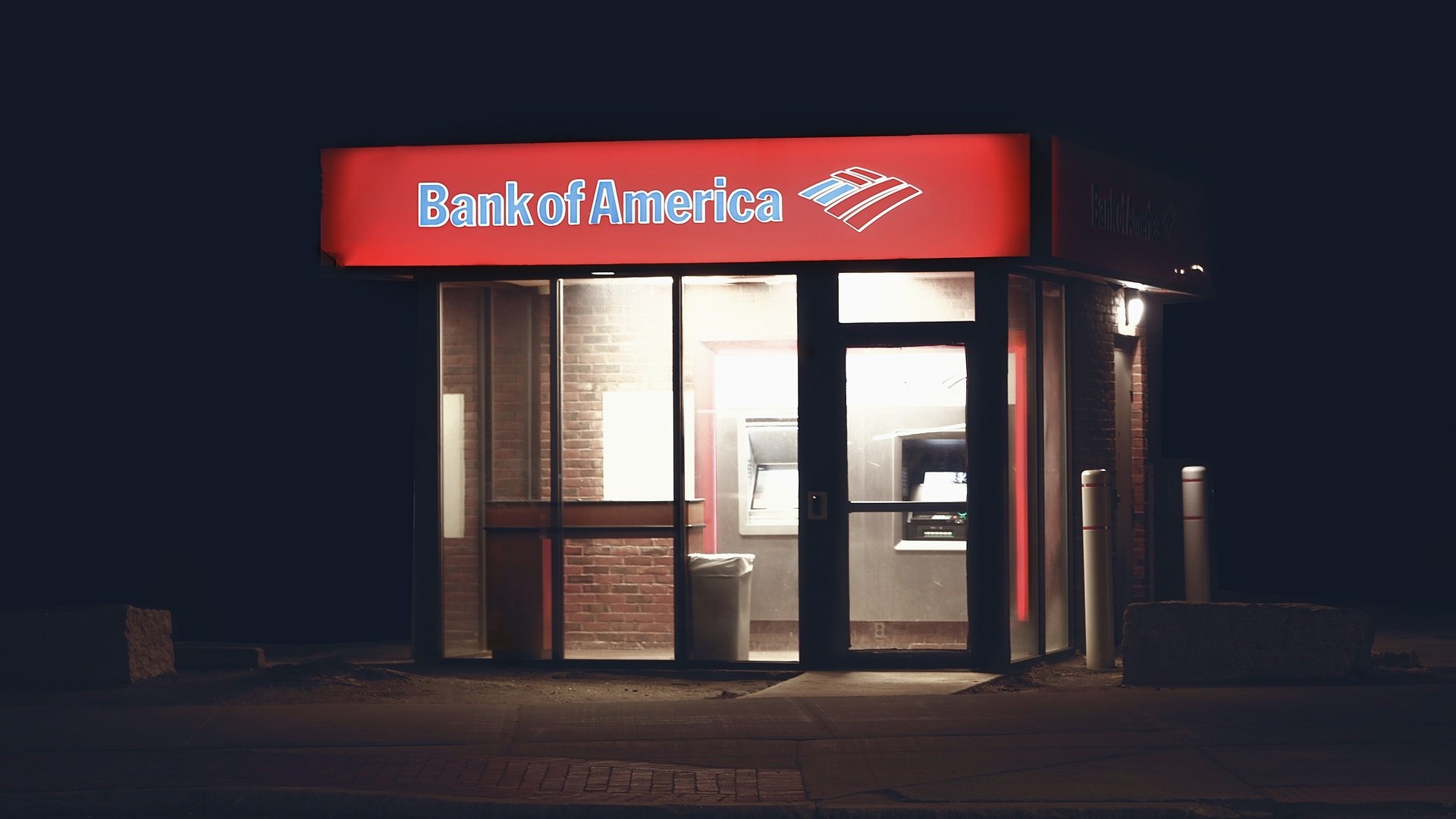
Photo: © Steve Pancrate / Pexels License (via Pexels) — file photo of a Bank of America ATM kiosk in Boston, MA; not a scene from November 16, 2026.
No bank failed on Monday. No bank was closed. The Federal Deposit Insurance Corporation shut nothing down, and no depositor lost a dollar to a collapse — because there was no collapse. What failed on Monday, November 16, 2026, was software: a bug inside JPMorgan Chase, the largest bank in the United States, slowed transactions for hours, and because American money moves in chains — from one bank to another, through payment networks like Zelle — the delay showed up on the screens of customers at Bank of America, Wells Fargo, U.S. Bank, Capital One and Truist as well. By the time Chase said, at about 6:30 p.m. Eastern, that transactions were posting normally again, the episode had become something larger than one bank's bad Monday: it was the fourth critical system failure in the United States in four days.
That distinction — systems down, banks standing — is the whole story, and it is worth stating without ambiguity at the top, because the rumor that travelled on Monday said the opposite. In Spanish-language social media especially, the outage circulated as a collapse: banks "falling", accounts in danger, illustrations of crumbling bank buildings. None of that happened. Chase itself said, from its first statement, that customers still had access to their accounts and their funds; what was failing was speed. Some transactions were taking longer than usual to complete. A payment that should have posted in seconds sat pending. A transfer to another bank waited. The money existed. The plumbing, for several hours, did not keep up.
What happened on Monday morning
The first public trace of the failure was not a bank statement. It was the outage tracker Downdetector, where user reports for Chase began climbing on Monday morning — coverage of the day places the start of the problems at about 9:30 a.m. Eastern — and kept climbing into the afternoon. Reuters reported user reports indicating problems at JPMorgan Chase, Bank of America, U.S. Bank and Wells Fargo; Truist customers also reported difficulties, and users reported problems with Zelle, the person-to-person payment network built into the apps of most large American banks. By about 2:00 p.m. Eastern, Downdetector had logged approximately 4,614 reports for Chase alone, with comments citing trouble logging in to online banking, trouble with Zelle, and issues involving in-person systems and ATMs.
Two cautions belong with every Downdetector figure in this story, and this magazine applies them throughout. First, Downdetector counts are reports submitted by users, not confirmed numbers of affected customers, and not a measurement of any bank's internal systems. Second, a spike of reports at a bank does not prove a fault inside that bank — a fact that turned out to be the key to Monday's whole shape. Customers at five or six institutions were reporting problems at the same time. It did not follow that five or six institutions had broken.
The bug was at Chase — and only at Chase
The explanation, when it came, came from Chase itself. A Chase spokesperson, Joe Evangelisti, said the bank had experienced "a temporary issue related to a software bug in on-premise hardware systems" — software running on hardware Chase operates itself, not in a cloud provider's data centre — and added the sentence that every outage of this scale now requires within hours: "it is not cyber-related." There was, the bank said, no evidence of a cyberattack. CNBC, citing a source familiar with the matter, reported the same perimeter from the other side: no indication that malicious actors were involved, and no sign that a single bug was affecting several banks at once.
Evangelisti drew the boundary of the failure explicitly: "This is not a systemic issue — other banks may have been impacted by slowness in transactions only to the extent that they were a party to a transaction with us." Read that sentence carefully, because it converts Monday from a mystery into a mechanism. There was one fault, in one bank. Everything else was consequence. Chase is the largest retail bank in the United States; an enormous share of the country's payments begin, end, or pass through it. When its transactions slowed, any payment that touched Chase slowed with it — including payments whose sender and recipient banked elsewhere and merely crossed Chase's systems on the way.
Chase's first public description was narrower — "due to a technical issue, some transactions are taking longer than usual to complete, but customers still have access to their accounts and funds" — and the bank said it was working to resolve the problem as quickly as possible, expecting a fix by the end of the day. The fuller account — the software bug, the on-premise hardware, the exclusion of a cyber cause — followed as the day went on. What Chase has not provided, on the verified record, is the layer below that: which system the bug lived in, what change or condition triggered it on Monday morning, or how many customers and transactions were ultimately delayed. Those questions remain open as this story is published.
How one bank slows all the others: the chain
Modern American retail banking looks, from a customer's phone, like a set of separate institutions. Underneath, it is a web of obligations between them. A Zelle payment is not money teleporting from one app to another; it is an instruction that moves value from an account at one bank to an account at another, and it can only complete as fast as the slowest institution on its path. That is why the other banks' statements on Monday all describe the same geometry — their own systems standing, their customers' Chase-touching payments waiting.
Zelle's operator, Early Warning Services, said the Zelle network itself was operating; a delayed payment involving an institution experiencing problems could still reach a Zelle customer, but the network had not gone down. U.S. Bank said its systems were not directly impacted, while warning that customers sending or receiving Zelle payments involving another institution could see delays. The Associated Press reported that Bank of America and Citigroup had no problems with their own services — their outage reports were the shadow of Chase's, cast through shared transactions. Wells Fargo is the least resolved case on the record: its website displayed a notice citing technical issues during the disruption, as ABC News reported, without establishing whether its problems were its own or the same chain effect. This magazine does not resolve what the sources leave open.
The lesson is structural, and it is the reason this story sits in Enterprise rather than in a consumer alerts column. Concentration is a form of coupling. When the largest bank in the country is also a hub through which a significant share of everyone else's payments pass, its internal software acquires a property its owners never advertised: it becomes, for practical purposes, national infrastructure. A bug in an on-premise hardware system in one institution produced a multi-bank customer experience on Monday — not because the system is fragile everywhere, but because it is connected everywhere.
The fourth link: a week of systems falling in a chain
Monday's bank outage did not arrive alone, and its context is not decoration — it is the pattern that made a one-bank bug a national story within hours, and that a senior member of Congress cited the same evening. In the space of four days, the United States watched four critical systems fail in sequence, each in a different domain, each for its own reasons, with no verified evidence connecting any of them to the others:
| When | System | What happened |
|---|---|---|
| Thu–Sat, Nov 12–14 | Microsoft 365 | A global outage knocked out Outlook email, Teams and Copilot — the story this magazine told in Microsoft 365 is down worldwide. |
| Fri, Nov 13 | FAA air traffic system | A nationwide ground stop held every departure in America — told in Every departure in America stopped, and followed in the sequel on the reaction in Washington. |
| Mon, Nov 16 | United Airlines | A technology issue delayed departures while final aircraft weights failed to arrive — The jet was ready. The number was not. |
| Mon, Nov 16 | U.S. retail banking | A software bug at Chase slowed transactions across the banking chain — this story. |
Four domains — office software, air traffic, an airline, and money itself — in four days. The honest sentence about that sequence is the narrow one: there is no verified evidence that any of these failures caused or was connected to any other. They share no common system, no common operator and no common cause that any source has established. What they share is an audience that now experiences them as a single phenomenon — a week in which the systems underneath ordinary life kept stopping — and a rumour economy ready to weld them into one plot. It was against exactly that background that a separate viral claim, a supposed global blackout scheduled for November 17, was already circulating before Monday's bank outage gave it fresh fuel; this magazine examined that claim in The November 17 global blackout is a hoax assembled from three real facts. Monday's real outage is not evidence for that hoax. A slowed payment network is not a wiped banking system, and the distance between the two is precisely the distance this story exists to measure.
Restoration: what "fixed" meant on Monday evening
By the evening, the curve of reports was falling and Chase moved from explanation to closure. At about 6:30 p.m. Eastern, a Chase spokesperson told NBC News that "transactions are now posting normally" — roughly nine hours after the first reports began climbing that morning. That is the restoration time this magazine prints, because it is the one fixed to a named source: Chase, via NBC News, echoed across the evening's coverage. (An early summary of this story inside the magazine spoke of restoration "toward the early hours of Tuesday"; the sourced record does not support that later hour, and the sourced hour is the one that stands.)
"Posting normally" is, precisely, a statement about the flow of transactions, not a full post-incident account. Chase has not published — on the record available as this story closes — a timeline of the failure, a count of affected customers, or a statement on compensation for customers who incurred fees or penalties because a payment posted late. Those absences matter, because they are exactly what Washington asked for on Monday evening.
Washington asks for explanations — and for customers to be made whole
Representative Maxine Waters of California, the ranking Democrat on the House Financial Services Committee, issued a statement on Monday calling the reported disruptions concerning given the recent pattern of technology failures — the chain of the previous section, named from Capitol Hill. She urged the banks to promptly inform the public about what went wrong, and said regulators must hold banks accountable and ensure that any harmed consumers are made whole.
Two precisions belong with that intervention. It was a statement by a member of Congress, not an action by a regulator: on the record of Monday, this magazine found no public statement from the FDIC, the Federal Reserve, the OCC or the Treasury about the outage — a silence that itself underlines the headline fact of the day. Regulators close failed banks. No regulator closed anything on Monday, because nothing failed in the sense those agencies exist for. What failed was software inside a solvent, operating bank, and the accountability question Waters posed — explain publicly, and compensate the harmed — is the question that remains open after the systems came back.
The rumor, and the facts
It is worth closing the loop on the version of Monday that travelled furthest in Spanish. In that version, "the banks fell" — se cayeron los bancos — shaded quickly into bank failure, with alarmist illustrations of collapsing buildings doing the work that evidence did not. The verified record supports a different sentence in every particular. No bank failed. The FDIC closed nothing. It was not a cyberattack — Chase says there is no evidence of one, and a source cited by CNBC saw no sign of malicious actors. Customers' funds remained accessible, by Chase's own account from its first statement. The root cause named by the bank is a software bug in its own on-premise hardware. And the multi-bank footprint was a chain effect through shared transactions and Zelle, not a simultaneous failure of many banks — Zelle's network was operating, U.S. Bank's systems were not directly impacted, and Bank of America's own services were reported normal by the Associated Press.
What remains unknown
What remains unknown is the layer that decides whether Monday was an accident of scale or a warning about architecture. Chase has not said which system carried the bug, what triggered it on Monday morning, how many customers and transactions were delayed in total, or whether customers who paid late fees because a transaction posted late will be reimbursed without having to ask. Wells Fargo has not clarified, on the record, the nature of the technical issues its own notice cited. And no regulator has yet published an account of the day.
So the verified record of Monday, November 16, 2026, is this. At about 9:30 a.m. Eastern, reports began climbing for a failure that Chase later located in a software bug in its on-premise hardware systems. By about 2:00 p.m., Downdetector had logged some 4,614 reports for Chase, with parallel spikes at other banks that the banks' own statements describe as the shadow of shared transactions, not separate failures. At about 6:30 p.m., Chase said transactions were posting normally. No bank failed, no depositor's money vanished, and no evidence of a cyberattack has been produced. It was the fourth critical system to stop in four days in the United States — after Microsoft 365, after the FAA, after United — and the first of the four to touch the country's money. The banks were never falling. The systems were. In a week like this one, knowing the difference is not pedantry; it is the story.
Published Tuesday morning, November 17, 2026. This story will be updated when Chase or the regulators publish a fuller account of the failure.
𝐆𝐄𝐓 𝐅𝐑𝐄𝐄 𝐅𝐔𝐋𝐋 𝐌𝐀𝐆𝐀𝐙𝐈𝐍𝐄 𝐀𝐓 thebuyerspulse.com
Sources
- Reuters (Nov 16, 2026): user reports on Downdetector indicating problems at JPMorgan Chase, Bank of America, U.S. Bank and Wells Fargo; Chase's statement that some transactions were taking longer than usual while customers kept access to accounts and funds; CNBC, citing a source, reporting no indication of malicious actors and no sign that one bug was affecting several banks at once.
- Associated Press (Nov 16, 2026): Chase spokesperson Joe Evangelisti — “a temporary issue related to a software bug in on-premise hardware systems; it is not cyber-related” and “This is not a systemic issue — other banks may have been impacted by slowness in transactions only to the extent that they were a party to a transaction with us”; Bank of America and Citigroup reported no problems with their own services.
- NBC News (Nov 16, 2026): at about 6:30 p.m. ET a Chase spokesperson said transactions were posting normally again; Zelle's delays traced to the institution-side problem.
- Downdetector figures as reported by USA TODAY Network (Democrat and Chronicle/lohud) (Nov 16, 2026): problems beginning about 9:30 a.m. ET and approximately 4,614 Chase reports by about 2:00 p.m. ET. Downdetector counts are user-submitted reports, not confirmed affected customers.
- Early Warning Services (Zelle) and U.S. Bank statements as reported Nov 16, 2026: the Zelle network was operating; U.S. Bank's systems were not directly impacted, with possible Zelle delays involving other institutions. Wells Fargo's website notice citing technical issues, via ABC News.
- Rep. Maxine Waters, ranking Democrat on the House Financial Services Committee (statement, Nov 16, 2026): the disruptions are concerning given the recent pattern of technology failures; banks should promptly inform the public about what went wrong; regulators must hold banks accountable and ensure harmed consumers are made whole.
- Photo: © Steve Pancrate / Pexels License (via Pexels), “An ATM Machine on the Side of the Road during Night Time” — Bank of America ATM kiosk, Boston, MA; file photo. https://www.pexels.com/photo/an-atm-machine-on-the-side-of-the-road-during-night-time-4135324/