
Mercado Libre’s Hidalgo hub runs 240 autonomous robots — on its way to 1,000
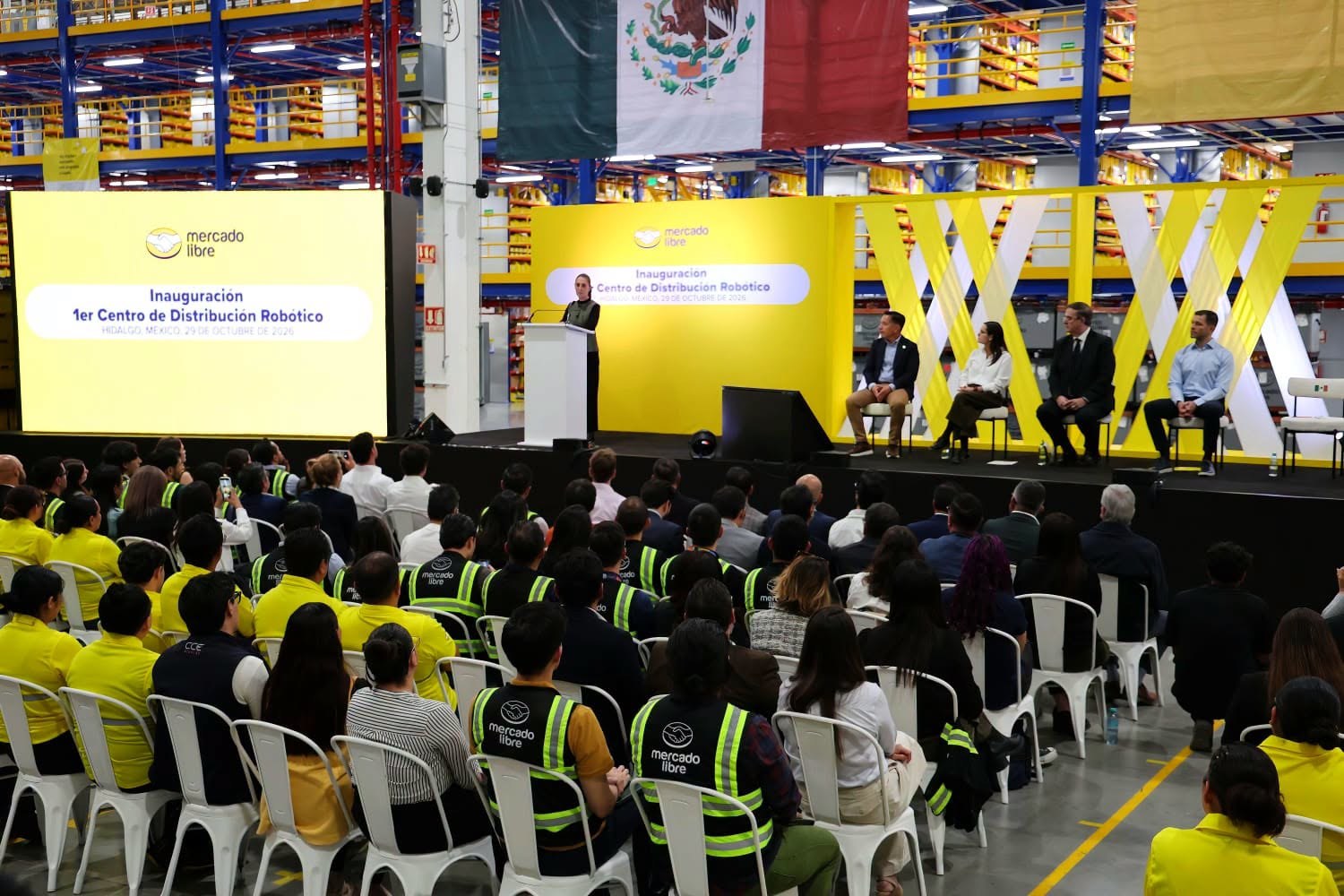
The warehouse has new coworkers, and they do not take breaks. Mercado Libre inaugurated its Hidalgo distribution hub on October 29 with 240 autonomous robots moving loads of up to 800 kg — a fleet designed to exceed 1,000 at full capacity — inside a complex of more than 100,000 m² already dispatching 6.8 million packages a month, on its way to 15 million in 2027.
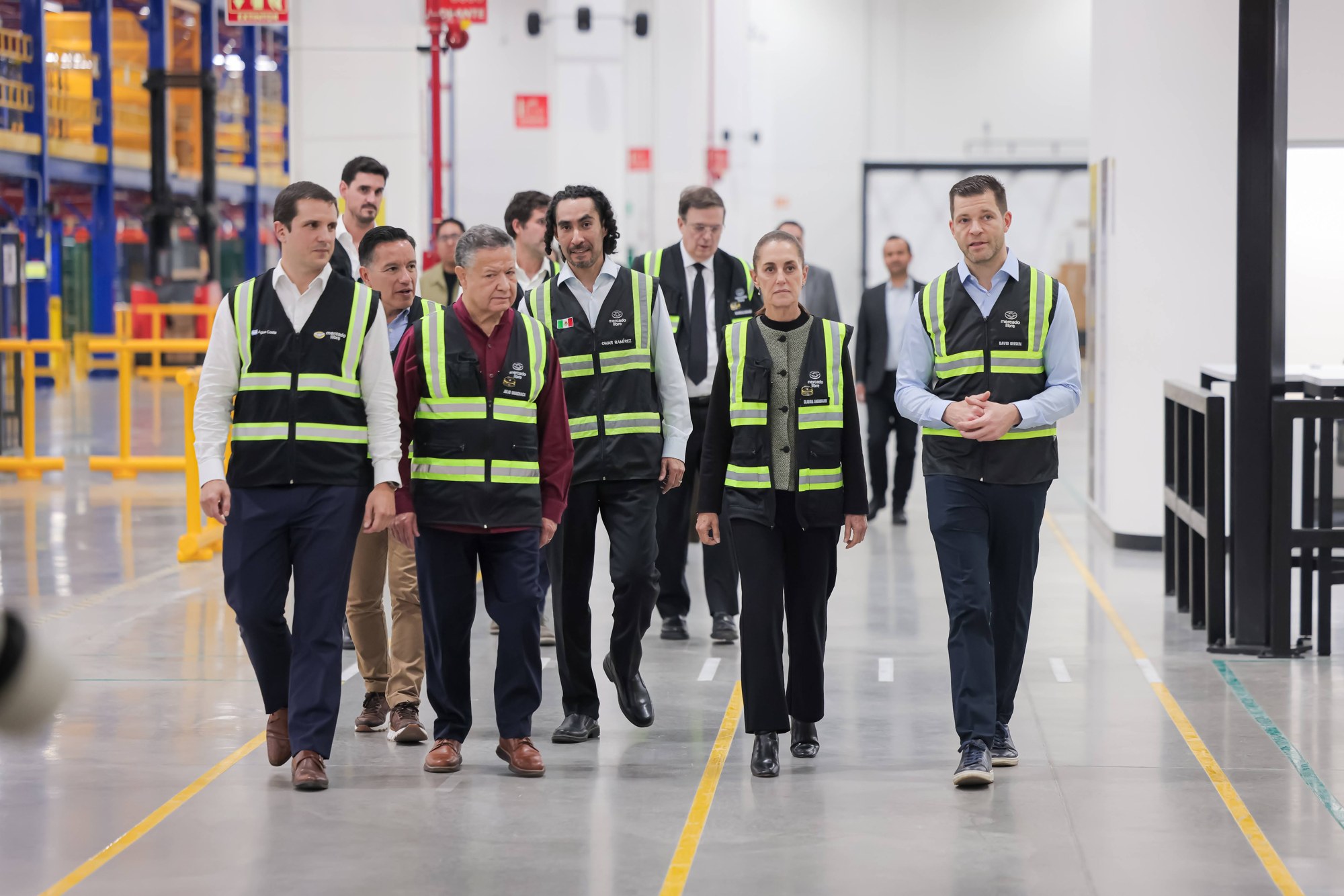
Photo: Mercado Libre / press.
The machine room of Mexican e-commerce
The numbers describe a small city dedicated to parcels. The hub, in Villa de Tezontepec, Hidalgo, inaugurated on October 29, exceeds 100,000 m² on its own and anchors a three-warehouse campus of more than 290,000 m² in the Platah industrial park. Through it flow 6.8 million packages a month today, with a target above 15 million a month in 2027. The robots are the multiplier: 240 autonomous units at opening, each moving up to 800 kg, scaling past 1,000 machines at full capacity — goods-to-person automation of the kind that turns walking time into throughput. Behind the hub stands US$604 million invested by Mercado Libre in Hidalgo, within more than US$4.6 billion committed to Mexico in 2026, some 4,700 direct jobs per the company, and same-day delivery reaching more than 37 cities.
David Geisen, the company’s Mexico chief, framed the opening in terms of social impact — the jobs, the regional development, the formalization that a logistics campus drags behind it. The enthusiast’s read is complementary: Latin American e-commerce has reached the scale where its warehouses are designed like its data centers — automated, measured and built to be copied. One honest production note: press photography shows the facility and its people on opening day; the robots at work are described by the company’s figures, and we caption them as such.
How a robotic fulfillment floor actually flows
Follow one order through a building like this and the robots stop being a spectacle and become a logic. In a conventional warehouse, the picker is the transport system: a worker walks to the shelf, takes the item, walks to the next shelf, and repeats — which means the scarcest resource in the building, human judgment, spends much of the shift simply traveling between places where it is needed for a few seconds at a time. A goods-to-person system inverts the journey. Inventory sits in storage structures the robots can carry; when an order arrives, fleet software selects the unit holding the right products and dispatches a robot to bring that whole structure to a stationary workstation. The person stays; the building comes to the person. At the station, the picker takes what the order needs, the robot returns the structure to storage or carries it directly to the next station that needs it, and another robot is already arriving. Walking time — the pure waste in the old flow — is engineered out of the human’s day.
The load figure explains what kind of work these machines do. A robot rated for hundreds of kilos is not carrying your parcel; it is carrying the shelving, racking or palletized inventory from which parcels are picked — the heavy geography of the warehouse itself, rearranged continuously. That distinction matters for how the rest of the building works: picking from robot-delivered storage is only the middle of the flow. Before it comes inbound receiving and the decision of where every product is stored — a decision the software makes with future orders in mind, so that fast-moving goods live where robots can fetch them quickly. After it comes packing, sortation by destination and the outbound dock, where the promise made to the customer is ultimately kept or broken by trucks, not robots. Automating the middle without scaling the ends simply moves the queue, which is why a fleet growing toward four digits implies parallel growth in stations, sortation and dock capacity that never makes the headline.
The fleet itself is a choreography problem. Hundreds of autonomous machines sharing one floor need traffic rules no less than a city does: dispatch software assigns each trip, sequences machines through intersections, routes them to recharge before their batteries become a problem, and re-plans around any unit that stops. Done well, the floor looks calm — an unhurried procession that never quite pauses. Done badly, it is gridlock at robot scale. The engineering triumph of a mature fulfillment floor is precisely its boredom: thousands of small, correct decisions per hour, none of them waiting for a human to make them.
And the same-day promise those 37-plus cities enjoy is, underneath, arithmetic of this kind. A delivery promise is a chain of deadlines — the latest an order can be placed, picked, packed, sorted and loaded and still reach its city the same day. Every minute the robotic floor removes from the middle of that chain buys margin everywhere else: later cut-off times for customers, more slack for the road, fewer heroic recoveries. Throughput is not an abstract virtue in this business. It is the product being sold, one unremarkable, on-time parcel at a time.
The decision this sets
For retailers and logistics operators in Mexico, the benchmark just moved: 15 million packages a month with same-day reach in 37-plus cities is the service level competitors must now answer, and automation density is how it is answered. For regional governments, Hidalgo’s campus is the template of the modern industrial pitch — land, energy and a workforce plan, exchanged for a decade of logistics gravity. And for the 4,700 people hired, the decision is already made around them: their workplace’s next colleague is a robot, and the skills premium moves to whoever runs the fleet.
What thrills
- Automation at national scale: a 1,000-robot fleet is a statement about where logistics is going.
- Throughput with a date: 6.8M to 15M packages a month by 2027 — a public, checkable promise.
- Regional gravity: 290,000 m² of campus pulls suppliers, jobs and infrastructure behind it.
What to watch
- Company figures: jobs and capacities are Mercado Libre’s numbers, as captioned.
- Robots unseen: opening photography shows the facility, not the fleet in operation.
- Scale risk: tripling monthly volume on schedule is an operations exam, not a ribbon-cutting.
The data sheet
The hub (inaugurated Oct 29, 2026)
| Field | Detail |
| Location | Villa de Tezontepec, Hidalgo — Platah industrial park |
| Size | >100,000 m²; campus of 3 warehouses >290,000 m² |
| Robots | 240 autonomous units at opening (up to 800 kg each); >1,000 at full capacity |
| Throughput | 6.8M packages/month; target >15M/month in 2027 |
The investment
| Field | Detail |
| Hidalgo | US$604 million accumulated |
| Mexico 2026 | More than US$4.6 billion |
| Jobs | ~4,700 direct, per the company |
| Delivery | Same-day in more than 37 cities |
Sources
- Mercado Libre inauguration coverage and company figures (Oct 29–30, 2026), incl. LogistixNews: robots, capacity, investment, jobs; statement by David Geisen.
- Photo: Mercado Libre / press, via LogistixNews.