
Brazil’s Anatel will block abusive callers for 15 days, starting November 12
Relief arrives by regulation: from November 12, Brazil’s telecom regulator Anatel will block, for 15 days, the numbers of whoever places more than 1,000 calls per access line per day with at least 85% of them “short” — uncompleted, voicemail or six seconds or less. Short calls are 70% of Brazil’s phone traffic: 24.7 billion a month of ringing for nothing.

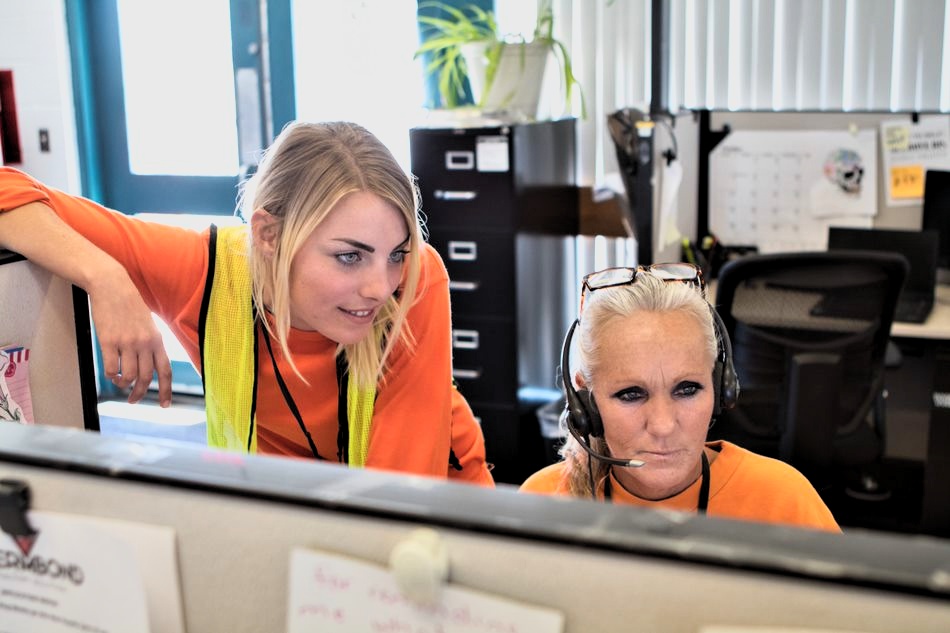
Photo: Pexels (free license).
The rule, precisely
The measure’s engineering is in its thresholds. Blocking is triggered per access line at more than 1,000 calls in a day — or more than 10,000 calls summed across a holder’s access lines — when at least 85% of those calls are short: not completed, sent to voicemail, or lasting six seconds or less. The 15-day block reaches every number registered to the same CPF or CNPJ, closing the “just rotate numbers” escape. There are exemptions, and they are the right ones: public bodies and health, security and civil-defense services acting in their functions are outside the measure. The target is not calling; it is industrialized ringing — the predictive-dialer economics in which a human answers one call in hundreds and the network carries the waste. Anatel’s own figures size the waste: short calls were 70% of traffic from January to August 2026, averaging 24.7 billion calls a month.
For anyone whose phone lights up six times a day with silence, the statistic is the scandal: seven of every ten calls on the national network were never a conversation. The regulation does not try to persuade the machines to behave; it prices their behavior in the only currency they hold — access. Fifteen days of silence, per holder, per trigger.
The decision this sets
For telemarketing and collections operations, the compliance decision is immediate: dialer pacing, list hygiene and answer-rate engineering stop being best practices and become license conditions — exceed the thresholds and the whole holder’s numbering is benched. For carriers, enforcement is now a measurable duty, with the regulator’s thresholds as the test. And for consumers, the expectation to set is modest and real: the rule attacks the industrial end of the nuisance — the remaining calls will increasingly be ones a person actually placed.
How a block like this actually bites
To see why the thresholds are shaped this way, it helps to picture the machine they are aimed at. A modern predictive dialer does not wait for an agent to be free before it calls; it dials ahead, in bursts, gambling that by the time a human picks up, an agent will have just finished another conversation. When the gamble fails, the person who answered hears silence, a click, or a recorded fragment — or the call is abandoned into voicemail before anyone real was ever involved. Multiplied across thousands of lines, that is how a network ends up carrying billions of calls that were never intended to become conversations: each one is cheap for the dialer, and the cost — the ringing phone, the interrupted workday, the drained trust in unknown numbers — is paid entirely by everyone else. Anatel’s definition of “short” is, in effect, a fingerprint of that machine: a call that is not completed, lands in voicemail, or dies within six seconds is almost never a person trying to reach a person.
The second piece of engineering is the identity layer. Phone numbers are disposable; tax identities are not. By attaching the sanction to the CPF or CNPJ — the individual and corporate taxpayer registries behind the lines — the rule follows the operation rather than the instrument. Rotating numbers stops working because the block is not really about numbers: it is about the legal person originating the traffic, and every line that person holds goes quiet at once. That is also why the measure pairs naturally, as a matter of design, with the call-authentication regimes other regulators have built — the family of techniques, of which STIR/SHAKEN is the best-known example, in which the originating carrier cryptographically attests that a caller is entitled to use the number it presents. Blocking disciplines volume; authentication disciplines identity. One makes abuse expensive, the other makes it attributable, and together they describe the direction of travel for voice networks everywhere: a call that cannot prove who sent it, or that behaves like a machine, progressively loses the right to ring at all.
There is an enthusiast’s pleasure in watching this happen, and it is worth naming: for decades, the telephone network was the original open platform, engineered to connect any call from anywhere, and that openness is precisely what the dialer economy learned to farm. The fix is not to close the network — the exemptions for health, security, civil defense and public bodies are there so that legitimate urgency keeps its fast lane — but to teach the network arithmetic: volume plus failure rate equals intent. A hospital reminder system and a collections floor do not look alike under that arithmetic, and a well-run operation on either side of the line can prove it in its own logs.
For managers, the operational translation is concrete. Any organization that originates calls at scale in Brazil now has to manage three numbers as compliance variables, not marketing metrics: daily volume per line, daily volume per holder, and the share of calls that end short. List hygiene becomes a legal function — stale numbers and wrong numbers are no longer just wasted dials, they are the raw material of a block. Answer-rate engineering flips sign: practices that once maximized agent utilization by over-dialing now maximize regulatory exposure, and the safer optimization is the more human one — dial when an agent is ready, identify the caller clearly, and make the first six seconds worth staying for. The cost of getting this wrong is not a fine in the abstract; it is fifteen days in which the entire holder cannot originate a call, which for a legitimate operation is a revenue event, and for an abusive one is the first honest price it has ever paid.
What thrills
- Thresholds, not vibes: the abuse is defined in numbers an engineer can enforce.
- The rotation escape closed: the block follows the holder (CPF/CNPJ), not the number.
- Right exemptions: health, security and civil defense stay callable.
What to watch
- 70% is the disease: the rule treats the industrial symptom; list brokers remain.
- False-positive risk: legitimate high-volume callers must engineer below the line, carefully.
- 15-day cycles: determined abusers may treat blocks as a cost of business — enforcement repetition matters.
The data sheet
The measure (Anatel, effective Nov 12, 2026)
| Field | Detail |
| Trigger | >1,000 calls/day per access line, or >10,000 across a holder’s lines, with ≥85% short calls |
| “Short call” | Not completed, voicemail, or ≤6 seconds |
| Sanction | 15-day block of all numbers under the same CPF/CNPJ |
| Exempt | Public bodies; health, security and civil-defense services in their functions |
The problem (Anatel, Jan–Aug 2026)
| Field | Detail |
| Short-call share | 70% of traffic |
| Volume | 24.7 billion short calls per month, on average |
Sources
- Agência Nacional de Telecomunicações (Anatel): blocking measure effective Nov 12, 2026 — thresholds, definitions, exemptions and traffic statistics (Jan–Aug 2026).
- Photo: Pexels (free license), modern contact center.