
Meal-voucher interoperability takes full effect in Brazil, reaching 22 million workers
A deadline passed on Saturday, and lunch changed with it. Full interoperability of Brazil’s meal and food vouchers is now in force: a card from any operator — Alelo, Ticket, Pluxee, VR — must be accepted on benefit-enabled terminals, no refusals by brand. The PAT program behind it reaches more than 22 million workers.
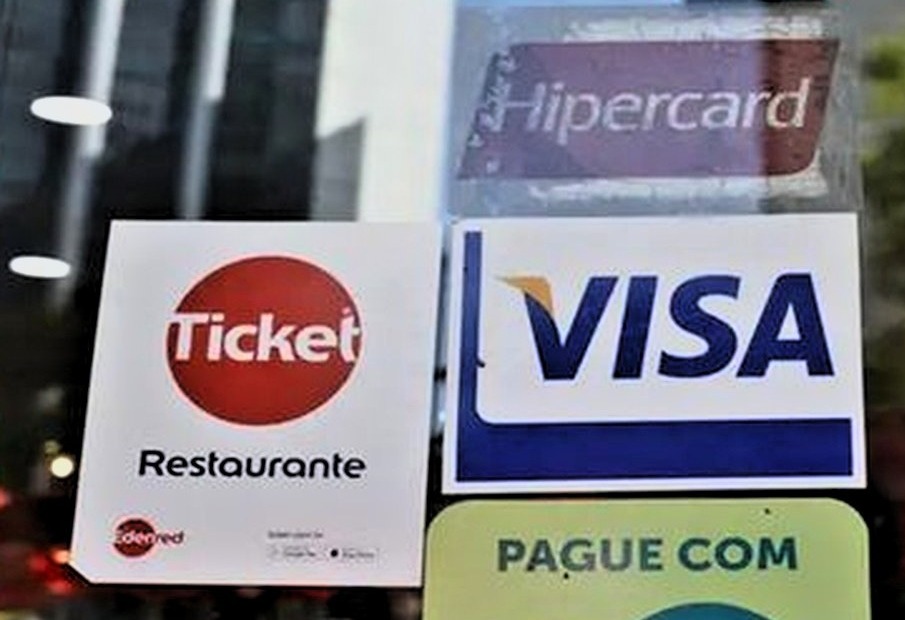
Photo: Fernando Frazão / Agência Brasil.
Any card, any terminal
The mechanics are simple to state and vast to execute: voucher cards from any operator must now run on the terminals enabled for benefits, ending brand-by-brand refusal at the counter. The rule does not force every establishment to accept vouchers — but those that do can no longer pick favorites among operators. The merchant fee cap of 3.6% and settlement within 15 days were already in force; interoperability is the piece that makes them real at national scale. The PAT (Worker Food Program) reaches more than 22 million workers, 743,000 establishments already accept the vouchers, and fines run from R$5,000 to R$50,000, doubling on repeat offenses.
Abrasel, the bars and restaurants association, has flagged integration difficulties that could affect how smoothly this works in practice — the honest footnote of every interoperability story. Systems that were built as walled gardens do not become a commons by decree; they become one by engineering sprints, terminal updates and support calls. The regulation sets the destination; the integration work decides the arrival time.
The decision this sets
For operators, the moat moves: when every terminal accepts every card, competition shifts from acceptance networks to price, service and product — a healthier market, and a harder one. For restaurants, the decision is operational: verify your terminal’s benefit configuration before the lunch rush does it for you. And for 22 million workers, the change is measured in the smallest possible unit of progress: the card in your pocket works where lunch is.
What the PAT actually is — and why a terminal decides lunch
Start with the program underneath the cards, because its design explains everything else. The PAT — Programa de Alimentação do Trabalhador, the Worker Food Program administered under the Ministry of Labor — is the framework through which Brazilian employers provide meal and food benefits to their workers, delivered not as cash but as dedicated voucher value, spent in restaurants and food establishments. In practice it created a parallel payments universe: specialized operators issue the cards, employers load them, workers spend them, and establishments accept them through terminals configured for benefits. It is a market measured, on the figures cited around this deadline, at some R$150 billion a year — an entire economy of lunches, running on its own rails, beside the ordinary card networks.
For years, those rails were laid out as walled gardens, and the walls were the business model. Each operator built its own acceptance network; a restaurant that wanted the customers of several operators needed the arrangements — commercial and technical — to take each brand, and a terminal enabled for one operator’s benefits could still refuse another’s card at the counter. The worker experienced this as a small daily absurdity: money that was indisputably theirs, for food, that stopped working at the wrong sticker on the window. The establishment experienced it as a portfolio of separate deals. And the operator experienced it as a moat: the bigger your acceptance network, the more employers chose you, in a loop that rewarded incumbency more than service.
Interoperability, formalized in the framework of Decree 12.712 and now fully in force, breaks the loop at the terminal. Technically, it means the benefit-enabled terminal becomes a common carrier for voucher value: the card presented is routed to its own operator for authorization, whatever brand issued it, instead of being rejected for arriving on the wrong network. The money rules that were already in force give that technical change its economic teeth. The 3.6% cap limits what acceptance costs the establishment, and settlement within 15 days governs how fast voucher sales turn back into cash in the till — for a small restaurant, whose margins live and die on the timing of money in versus money out for ingredients, wages and rent, the difference between a long settlement cycle and a 15-day one is not bookkeeping; it is working capital. Put together — any card accepted, a capped fee, a bounded wait — the regulation rewrites the unit economics of saying yes to voucher customers.
None of which happens by signature alone, and Abrasel’s warning about integration difficulties deserves its place in the story rather than a footnote’s exile. Interoperability is executed in terminal firmware, acquirer configurations, operator systems and the support desks that reconcile them when the lunch rush finds the gaps. The first weeks of any mandate like this are an engineering story disguised as a legal one: configurations updated establishment by establishment, staff learning which declines are configuration and which are genuine, operators discovering whether their systems were built to be opened. The honest expectation is a destination that is certain and an arrival that is uneven — which is precisely why the fines, R$5,000 to R$50,000 and doubling on repeat offenses, matter: they price the difference between integrating promptly and integrating eventually.
For the managers in this story, each seat now holds a different decision. Operators must compete where the moat used to protect them: on price to employers, on service to establishments, on the product wrapped around the card. Restaurants and retailers should treat the terminal as an audited asset — benefit configuration verified, staff briefed, declines logged — because every wrongly refused card is a customer taught to eat elsewhere. And human-resources leaders hold the subtlest lever of all: the benefit’s value to a worker is now partly a function of where it works, and as of this Saturday, the answer is supposed to be everywhere lunch is served. Twenty-two million workers will grade the rollout one meal at a time, and that daily, delicious referendum is what makes this payments story impossible to fake.
What thrills
- Interoperability as freedom: the worker’s card works where lunch is, not where the network says.
- Competition moves up a level: from locked networks to price and service.
- Scale with a human unit: 22 million workers, measured in lunches.
What to watch
- Integration friction: Abrasel warns of difficulties that may affect real-world operation.
- Not universal acceptance: establishments are not forced to take vouchers at all.
- Enforcement: fines exist; their application will set the rule’s real temperature.
The data sheet
The rule (PAT interoperability)
| Field | Detail |
| In force | Deadline completed Saturday, Nov 7, 2026 |
| Scope | Meal and food voucher cards of any operator accepted on benefit-enabled terminals |
| Fee cap | 3.6% charged to establishments |
| Settlement | Within 15 days |
| Fines | R$5,000–R$50,000, doubling on repeat offenses |
The program
| Field | Detail |
| Workers reached | More than 22 million (PAT) |
| Establishments | 743,000 already accepting |
| Operators | Alelo, Ticket, Pluxee, VR, among others |
Sources
- Ministry of Labor (MTE) / PAT program rules and figures; Folha de S.Paulo and g1 coverage of the interoperability deadline (Nov 7, 2026); Abrasel statements on integration.
- Photo: Fernando Frazão / Agência Brasil.