
Anthropic is buying power like a utility: a reported $3.4 billion in generators for 1.7 GW
The AI race has left the cloud and arrived at the power plant. The Financial Times reports that Anthropic struck deals worth about $3.4 billion for roughly 1.7 gigawatts of generation capacity — commitments bought in late September from OnePWR Solutions, a company that had spent two years ordering equipment from Caterpillar. When the grid is too slow, the model companies are becoming their own utilities.
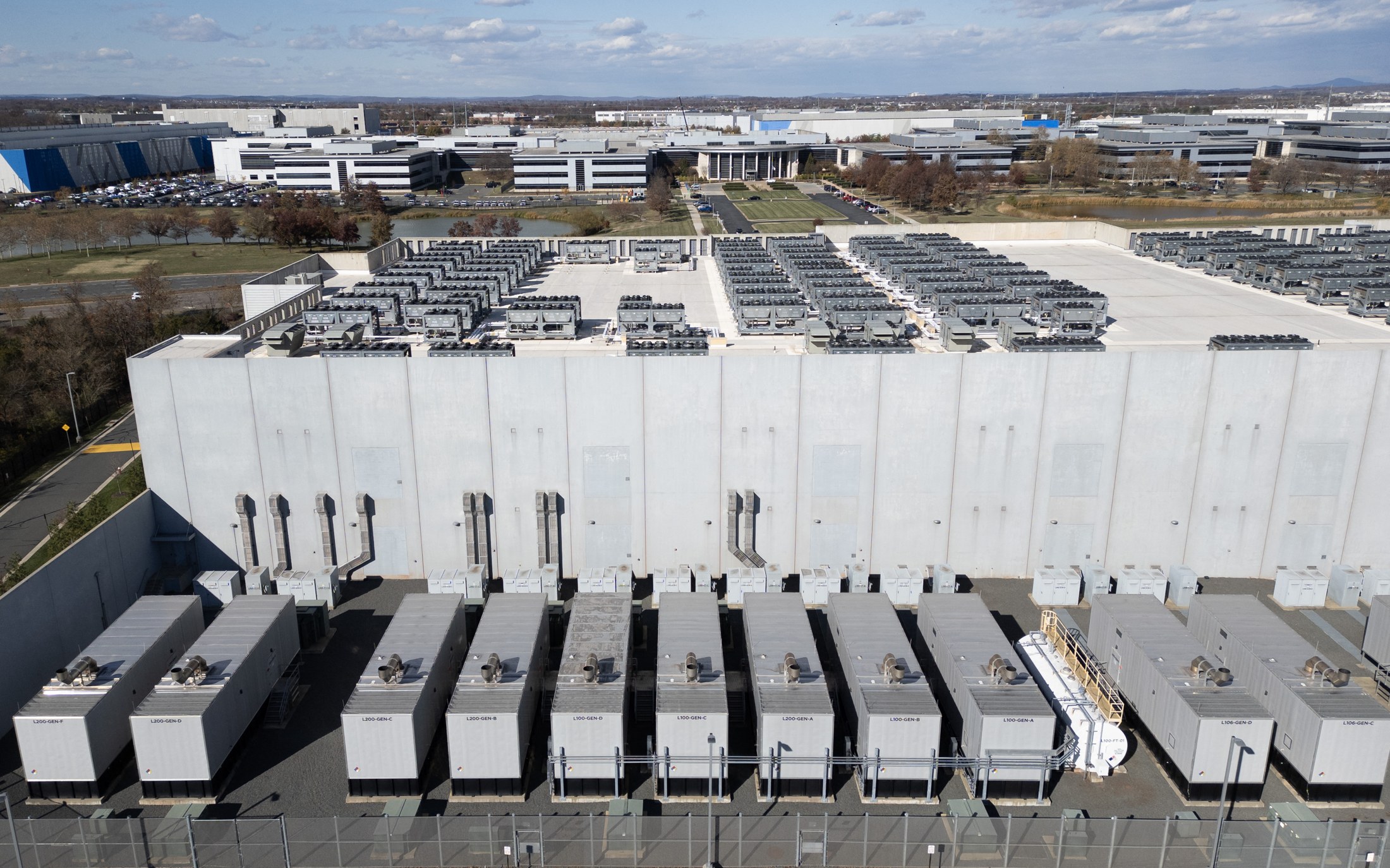
Photo: Getty Images.
The reported deal
According to the FT, via Reuters (November 8), Anthropic’s commitments total around US$3.4 billion for some 1.7 GW of capacity, purchased in late September from OnePWR Solutions — and the figure includes engineering and construction, which matters for precision: this is not an acquisition of OnePWR, but the purchase of its commitments. OnePWR had been placing equipment orders with Caterpillar for about two years before Anthropic stepped in and took over the existing orders. Reuters could not verify the report; neither Anthropic nor OnePWR commented. Every figure in this paragraph carries that attribution, and the story is stronger for saying so.
The context is documented in Anthropic’s own filings: its S-1 (October 26) and amended S-1 (November 2) describe on-site gas generation and long equipment lead times as part of the build-out, and Reuters reported in September 2026 that the company’s decade-scale commitments exceed US$500 billion. The generator deals fit that picture exactly: when interconnection queues stretch for years, “behind-the-meter” gas generation is how a data center opens on schedule. The constraint in AI is no longer chips or capital. It is electrons, delivered on a date.
Behind the meter, explained
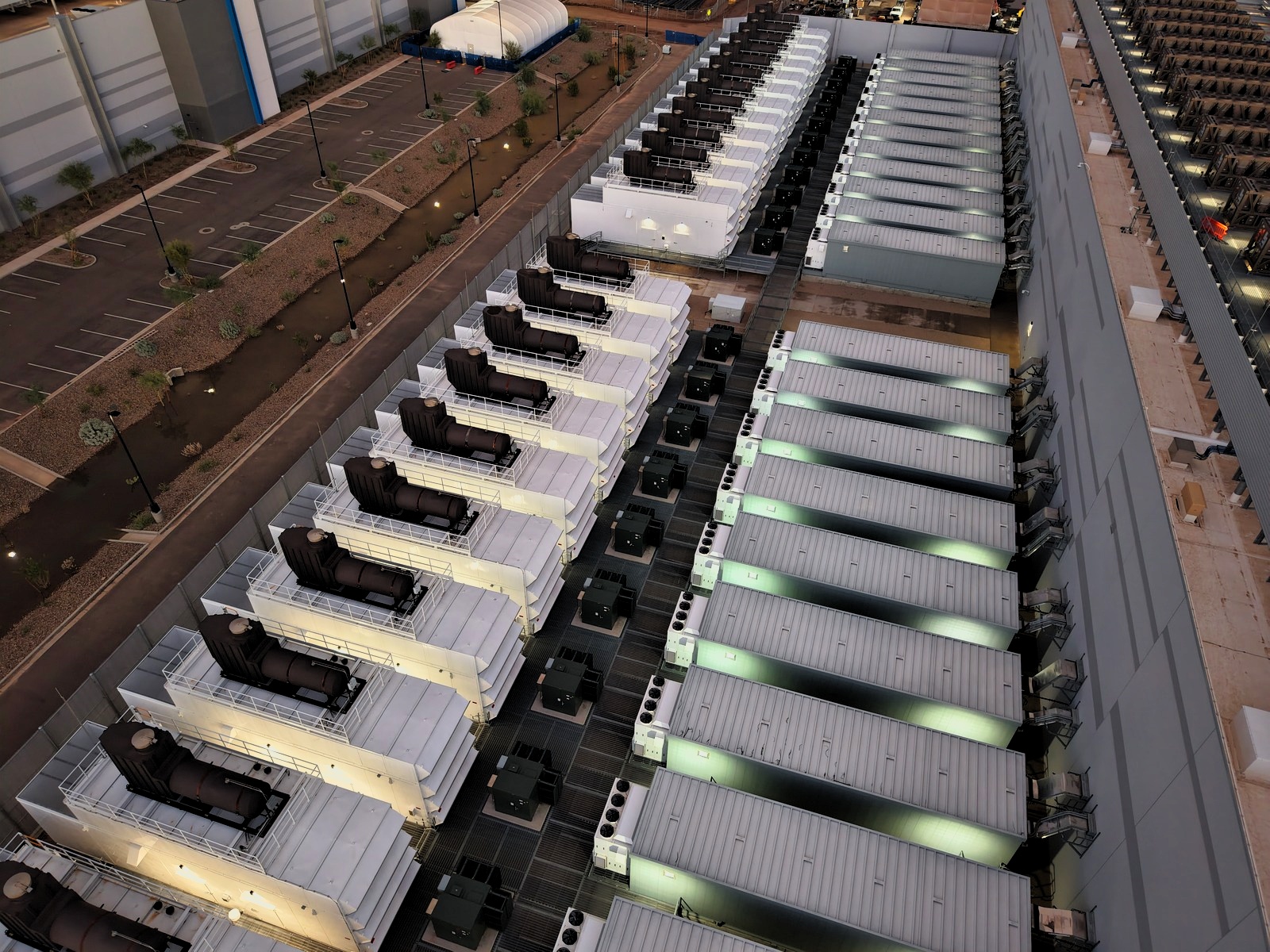
The phrase that unlocks the whole story is “behind the meter.” In a conventional arrangement, a data center is a customer of the grid: power flows from distant plants across transmission lines to the utility’s meter at the site, and everything the building draws is measured there. Behind-the-meter generation moves the power plant to the customer’s side of that line. Generators installed at the site itself produce the electricity the site consumes, on site, under the operator’s own control. The meter stops being the border between the data center and its energy supply, because the supply has moved inside the fence. Anthropic’s own filings describe on-site gas generation as part of the build-out — which is precisely the arrangement the reported OnePWR commitments would serve, if the FT’s account is right.
Why would anyone build a private power plant instead of simply plugging in? Because plugging in, at this scale, is a queue. Connecting a very large new load to the grid involves studies of whether the local network can carry it, upgrades to substations and lines, and a place in an interconnection line that can stretch for years — a timeline set by utilities and regulators, not by the customer’s construction schedule. Self-generation runs on a parallel track: the critical path becomes manufacturing and installing equipment, which the customer controls with money. And that is where the reported structure of this deal becomes elegant. Long equipment lead times — again, a constraint Anthropic’s filings themselves name — mean that a place in a manufacturer’s order book is an asset in its own right. A company that has spent two years ordering equipment holds something money alone cannot instantly recreate: elapsed time. Taking over those existing orders, with engineering and construction bundled in, is buying that elapsed time — converting someone else’s head start into your opening date.
None of this is free of engineering discipline, and the trade-offs deserve respect rather than romance. A private plant must be fed: fuel has to arrive reliably, in quantity, for as long as the site runs. It must be maintained: generation equipment is rotating machinery with service intervals, which means a serious operator designs in spare capacity, so a unit can be down for maintenance — or fail outright — without the site going dark. And it lives under local rules: permits and emissions obligations attach to a plant in a way they never attach to a power bill. The operator trades the grid’s delay and dependence for fuel, maintenance and permitting exposure of its own. That this trade is reportedly being made at gigawatt scale, by a company whose product is software, tells you exactly how the industry now ranks its scarcities.
There is something genuinely thrilling in watching a new industrial skill being born in real time. A generation ago, the craft of siting and building power generation belonged to utilities and heavy industry; today it is being learned, at speed and at scale, by the companies that train models — because they discovered that compute without electrons is inventory, not capacity. The generator yard has become part of the machine.
The decision this sets
For infrastructure leaders, the precedent is the story: generation procurement has moved from the utility’s roadmap into the AI company’s capex plan, with engineering and construction bundled in. That changes vendor maps (Caterpillar’s order book now runs through AI demand), site selection (gas access rivals fiber access), and risk registers (fuel, permits and emissions now sit beside GPU supply). The companies that treat power as a utility’s problem will open late; the ones buying generators in September are telling you what the critical path actually is.
What thrills
- Power as strategy: buying generation is buying schedule certainty — the scarcest asset in AI.
- Engineering bundled: commitments include construction, not just hardware on a dock.
- The supply chain lights up: Caterpillar’s order book is now an AI indicator.
What to watch
- Single-source report: FT via Reuters, explicitly unverified — treat figures as reported.
- Gas dependence: on-site generation trades grid delay for fuel, permit and emissions exposure.
- Scale of promises: >$500B in decade commitments must eventually meet revenue.
The data sheet
The report (FT via Reuters, Nov 8, 2026)
| Field | Detail |
| Value | Approximately US$3.4 billion |
| Capacity | Approximately 1.7 GW |
| Counterparty | OnePWR Solutions — commitments purchased in late September; includes engineering and construction |
| Background | OnePWR had ordered equipment from Caterpillar for ~2 years; Anthropic took over existing orders |
| Verification | Reuters could not verify; Anthropic and OnePWR did not comment |
The filings
| Field | Detail |
| S-1 | Filed Oct 26, 2026; amended (S-1/A) Nov 2, 2026 — on-site gas generation and long equipment lead times described |
| Decade commitments | More than US$500 billion (Reuters, Sep 2026) |
Sources
- Financial Times via Reuters (Nov 8, 2026): reported Anthropic–OnePWR generation commitments (~$3.4B, ~1.7 GW); Reuters noted it could not verify the report and that the parties did not comment.
- Anthropic S-1 (Oct 26, 2026) and S-1/A (Nov 2, 2026); Reuters (Sep 2026) on decade-scale commitments.
- Photo: Getty Images.