
DIGI joins the fight for Portugal’s free 700 MHz spectrum
Every mobile network is, at bottom, a real-estate business conducted in invisible land. Portugal has a free 2×5 MHz block in the 700 MHz band, and DIGI — the Romanian challenger that entered the market in 2024 — has written to regulator ANACOM asking for auction caps or assignment of the block, arguing the country’s giants hold the low bands while it holds almost none.

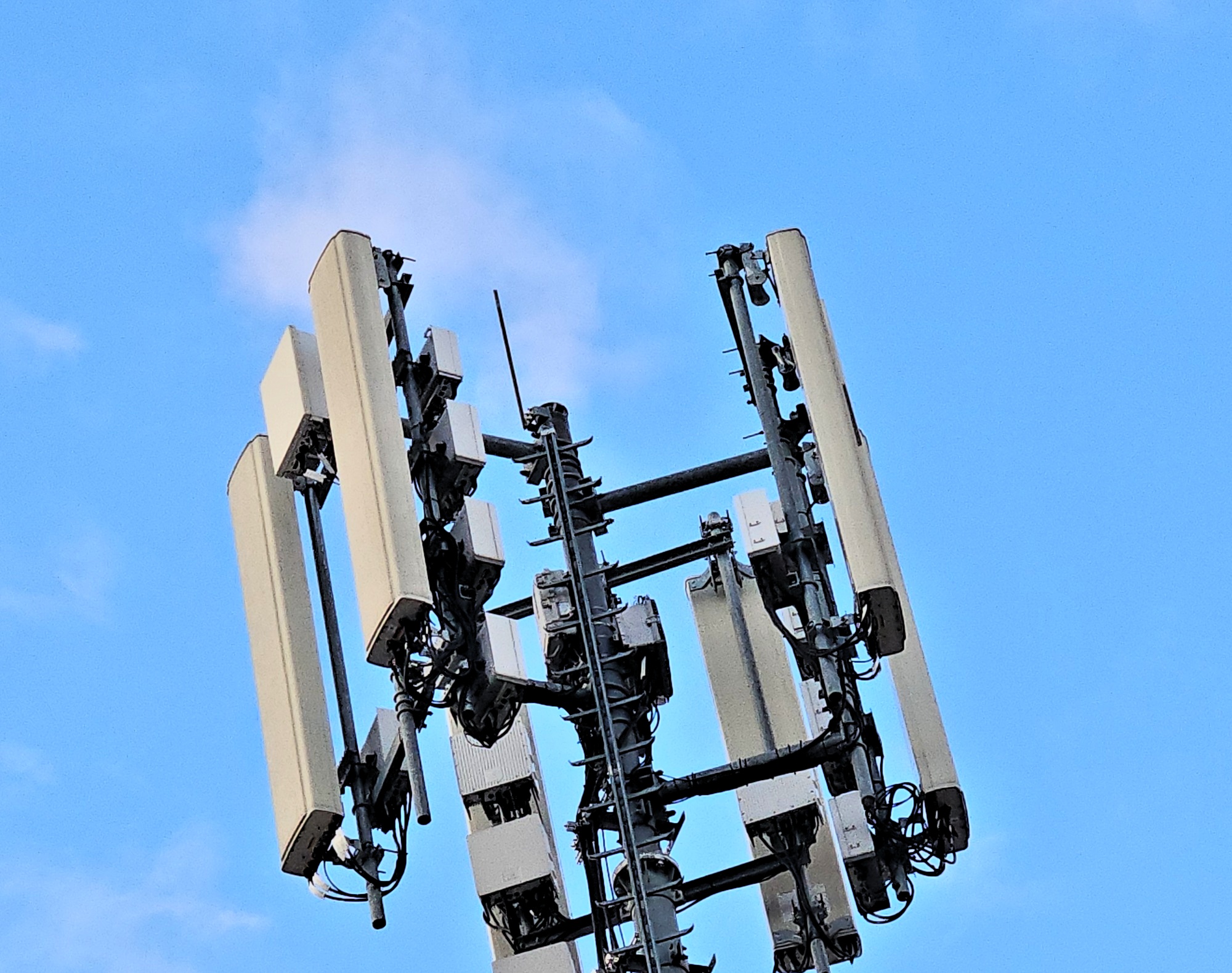
Photo: DIGI Portugal (official press material).
The arithmetic of the airwaves
Low-band spectrum is the coverage layer — the frequencies that travel far and penetrate walls. DIGI says it holds 5.6% of Portugal’s sub-1 GHz spectrum and operates 4,943 base stations. In its open letter of November 3 to ANACOM, the operator asks for the spectrum auction to include caps or for the free 2×5 MHz block in 700 MHz to be assigned to it, and argues that a Lisbon Economics study estimates up to €3.5 billion in consumer benefit over 15 years. Behind the letter stands a heavier sentence: the company’s administration has warned of a possible exit from Portugal.
The incumbents answered through Apritel, their association, on November 4: no to direct assignment, on the grounds that DIGI paid less than the others in acquisition and spectrum terms. ANACOM has not decided. Read as engineering, this is an argument about how much spectrum a fourth operator needs to make a network work; read as policy, it is an argument about whether a market’s fourth player is a feature to be protected or a cost to be auctioned.
The decision this sets
For ANACOM, the choice is structural and irreversible for a decade: assign, auction with caps, or auction open — each writes a different competitive map of Portuguese telecom. For consumers, the €3.5-billion estimate is the number to remember, because it prices the alternative: a challenger that leaves, or starves, returns the market to three comfortable networks. For investors in European telecom, Portugal is now the case study of how regulators treat entrants after the welcome mat: the auction rules are the real business plan.
Why 700 MHz is the band worth fighting over
A short course in radio physics explains why a block as small as 2×5 MHz can carry a possible market exit on its back. Spectrum is not one resource but a family of them, and the low bands — the frequencies below 1 GHz, where 700 MHz lives — have a property no marketing budget can buy: they travel. A low-band signal covers wide territory from a single site and bends through walls, floors and lift shafts, which makes it the coverage layer of any network, the layer that decides whether a phone works in a basement car park, a farmhouse, or the back room of a Lisbon apartment. Higher bands are the opposite bargain: shorter reach, vastly more capacity, the speed layer for dense streets and stadiums. A modern operator needs both, but it needs them in proportion — and an operator thin in low band, as DIGI says it is with 5.6% of the sub-1 GHz total, must compensate with more sites, more backhaul and more money to deliver the indoor signal its rivals produce almost by default. Its 4,943 base stations are what that compensation looks like in steel and rent.
That asymmetry is what makes the regulator’s three options genuinely different futures rather than administrative flavors. Direct assignment of the free block to the operator that lacks it treats spectrum as a balancing instrument: the state corrects a lopsided map so that four networks can compete on roughly comparable physics. An auction with caps lets the market price the block while forbidding the already-rich from simply buying the correction away. An open auction is the purest revenue logic and the riskiest competitive one, because the incumbents’ incentive is not only to use the block but to keep it out of the challenger’s hands — a motive that does not appear in any bid document and dominates every bidding strategy. Spectrum specialists have a word for the underlying tension — whether a band is managed as infrastructure or sold as an asset — and Portugal’s file, a free block sitting inside a band the giants already dominate, is that tension in its cleanest possible form.
The incumbents’ counter-argument, delivered through Apritel the day after DIGI’s letter, deserves its precise shape: MEO, NOS and Vodafone reject direct assignment, on the grounds DIGI cites — that the challenger already paid less than the others in acquisition and spectrum terms. In other words, the giants frame the dispute as fairness between operators; DIGI frames it as benefit to consumers, priced by the Lisbon Economics study it cites at up to €3.5 billion over 15 years. Both frames are coherent, and ANACOM’s unenviable job is that they cannot both be the one that decides. Meanwhile the challenger is not a paper entrant pleading for shelter: by its own account it has invested some €700 million in Portugal and employs 1,900 people there — sunk cost and payroll that give its administration’s warning of a possible exit the weight of a real option rather than a bluff, and give the regulator a deadline made of economics rather than procedure.
For a manager anywhere in European telecom — or any market where a challenger brand rents its future from a regulator — the transferable lesson is that spectrum position is strategy in its most literal form: it sets the cost curve of coverage for a decade, and with it the prices a network can profitably charge. DIGI’s low prices are not a promotion; they are what its cost structure was built to offer, and the 700 MHz decision will either extend that structure’s reach or quietly tax it, site by site, wall by wall. Consumers rarely see spectrum — they see one bar more or less in the kitchen, a bill a few euros lighter, a fourth logo on the high street or, one day, only three. That is the real content of ANACOM’s pending decision: not who wins a block of invisible land, but how many networks Portugal’s phones get to choose between for the next ten years.
What thrills
- A real challenger: 4,943 base stations in two years is building, not posturing.
- The consumer priced: €3.5 billion over 15 years puts a number on competition itself.
- Low bands, high stakes: the coverage layer decides whose network works indoors.
What to watch
- Exit warning: DIGI’s administration has floated leaving Portugal — leverage or reality, it raises the stakes.
- Incumbent pushback: Apritel rejects assignment, arguing DIGI already paid less.
- ANACOM’s clock: no decision yet; the auction design will outlive everyone at the table.
The data sheet
The dispute
| Field | Detail |
| Asset | Free 2×5 MHz block, 700 MHz band |
| DIGI’s request | Auction with caps, or assignment of the block |
| DIGI’s position | 5.6% of sub-1 GHz spectrum; 4,943 base stations |
| Opposition | Apritel (incumbents’ association): no direct assignment |
| Regulator | ANACOM — no decision yet |
The stakes
| Field | Detail |
| Consumer benefit estimate | Up to €3.5 billion over 15 years (Lisbon Economics, cited by DIGI) |
| Market entry | DIGI launched in Portugal in 2024 |
| Risk flagged | Company administration warned of possible exit from Portugal |
Sources
- DIGI open letter to ANACOM (Nov 3, 2026); Apritel statement (Nov 4, 2026); Lisbon Economics study as cited by DIGI; Negócios/Expresso coverage.
- Photo: DIGI Portugal, official press material.