
Brazil has 2,033 IT tenders open right now, worth an estimated R$7.9 billion
While the market watches product launches, the Brazilian state is quietly running one of the largest technology shopping lists on Earth. This Sunday’s count on the national procurement portal (PNCP) shows 2,033 open IT tenders with an estimated R$7.9 billion in play — and 835 of them close within seven days.
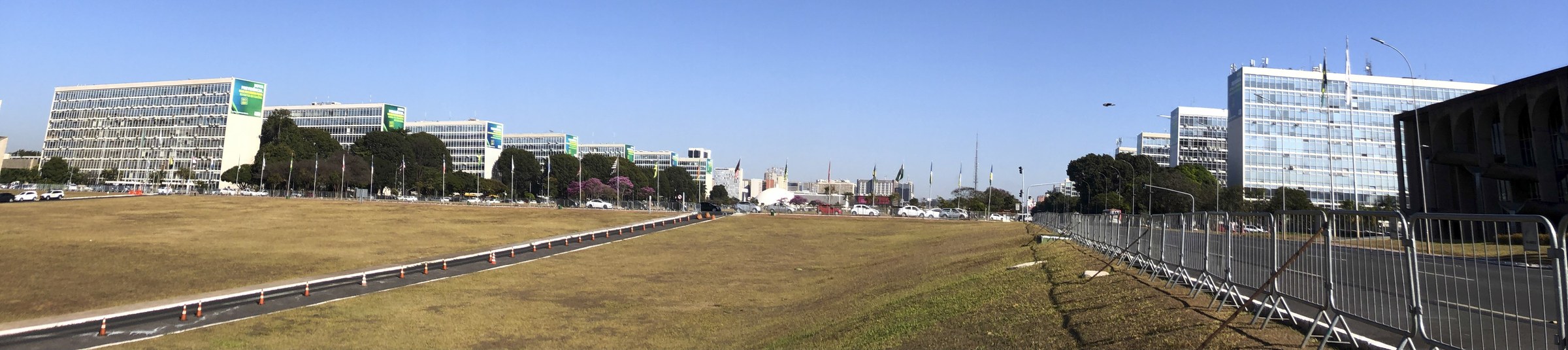
Photo: Senado Federal (CC BY 2.0), via Wikimedia Commons.
The count, and what composes it
The snapshot is from the PNCP this Sunday, November 8: 2,033 open technology tenders, R$7.9 billion in estimated value — a figure that excludes sealed-value processes, so the true total is higher. The flow is as striking as the stock: 736 tenders were published in the last seven days, and 835 close within the next seven. The demand map has a shape: the Navy leads with 33 open processes and the Army follows with 26 — defense modernization is a procurement category of its own — while São Paulo’s public security secretariat and the University of São Paulo hold 12 each, and the state of São Paulo concentrates 356 tenders overall. This is not a market segment; it is a parallel economy with its own calendar.
For the channel — the distributors, integrators and resellers who actually fulfill public technology demand — this weekly rhythm is the business: hundreds of simultaneous processes, each with its own specification, deadline and documentation discipline. The enthusiast’s detail is the transparency itself: a single national portal where the state’s entire technology appetite can be counted on a Sunday morning is infrastructure as real as any data center.
The decision this sets
For vendors selling into Brazil, the PNCP count converts “public sector strategy” from a slide into a staffing decision: 835 closings in seven days is a bid-desk workload, and the defense-heavy mix rewards suppliers with the certifications and patience the segment demands. For policymakers, the portal’s data is the audit trail of digital government — what the state buys is what the state becomes. And for competitors outside Brazil, the R$7.9 billion is a reminder that the region’s largest technology buyer wears a uniform or a civil-service badge.
Inside the machine: how a pregão eletrônico runs
Understanding what those 2,033 processes actually are requires a short tour of the machine that produces them. The PNCP is Brazil’s single national window for public procurement: contracting bodies publish their notices there, and anyone — a multinational distributor, a regional integrator, a two-person reseller — can read the same specification, on the same day, for free. That sounds administrative until you realize what it replaced: a fragmented world of official gazettes and local portals in which knowing that an opportunity existed was itself a competitive advantage. The portal turns the state’s demand into a public data stream, and this Sunday’s count is simply what the stream looked like at one moment — a photograph of a river that never stops moving.
The dominant current in that river has a name. Of the 2,033 open IT processes in the count, 1,437 are pregão eletrônico — the electronic reverse auction that handles most of Brazil’s public buying of goods and common services. Its choreography is worth appreciating, because it is genuinely elegant procurement engineering. The buyer publishes an edital: a specification, an estimated budget, a deadline and a list of qualification documents. Suppliers submit proposals electronically; then, in a live session, qualified bidders compete downward in successive bids, each one visible, each one timestamped, until the lowest sustainable price wins. There is no smoke-filled room and no envelope to lose. Judgment is typically by lowest price for the specified item, which is why the specification — the edital’s exact technical wording — is where these contests are truly won and lost: read it loosely and you bid on the wrong machine; read it precisely and the auction itself is almost a formality.
Around the auction sits the discipline that separates professional bid desks from hopeful ones. Brazilian public tenders run on documentation: registrations, certificates, fiscal clearances and technical attestations that must be valid, current and filed in the right order before the session, not after it. A missing document does not trigger a negotiation; it triggers disqualification. Then come the windows the snapshot makes vivid — 736 processes published in seven days, 835 closing in the next seven — which means the real skill is triage: scanning a national firehose every morning, classifying by fit, margin and probability, and concentrating scarce proposal-writing hours where the specification matches what your warehouse, your certifications and your service network can actually deliver. Winning a tender you cannot fulfill is not a victory; it is a contractual problem with a flag on it.
That is why the decision this market sets is fundamentally about operations, not salesmanship. For a channel executive, the PNCP count is a capacity-planning input: how many bid specialists, how much documentation automation, how much working capital to finance deliveries against public payment calendars, and which segments — the defense-heavy mix at the top of this week’s table being the obvious example — justify the certifications and clearances they demand. The cost of entry is discipline; the cost of absence is invisibility in a R$7.9-billion week. And there is a quieter thrill underneath the arithmetic for anyone who loves systems that work: a country publishing its entire technology shopping list, in the open, in real time, has built a piece of civic infrastructure as impressive as any in this issue — a market where the buyer shows its hand, every Sunday, to everyone.
What thrills
- Transparency you can count: the state’s whole tech appetite, on one portal, on a Sunday.
- Defense as a tech buyer: Navy and Army lead the table — modernization is procurement.
- A market with a calendar: 736 in, 835 closing — the rhythm itself is the opportunity.
What to watch
- Snapshot, not a stock price: counts move daily; R$7.9B excludes sealed values.
- Bid discipline: hundreds of simultaneous processes punish improvised bid desks.
- Specification risk: public tenders reward the precise and bury the approximate.
The data sheet
The snapshot (PNCP, Sunday Nov 8, 2026)
| Field | Detail |
| Open IT tenders | 2,033 |
| Estimated value | R$7.9 billion, excluding sealed-value processes |
| Published, last 7 days | 736 |
| Closing, next 7 days | 835 |
Largest buyers
| Field | Detail |
| Navy (Marinha) | 33 open processes |
| Army (Exército) | 26 |
| SSP-SP / USP | 12 each |
| State of São Paulo | 356 tenders |
Sources
- Portal Nacional de Contratações Públicas (PNCP), count taken Sunday, Nov 8, 2026: open IT tenders, estimated values, publication and closing windows, largest buyers.
- Photo: Senado Federal (CC BY 2.0), via Wikimedia Commons. Tender data: PNCP.