IT Infrastructure | New Technologies | Buying Advisor
The Daily Pulse · Three posts a day ◆ Morning 5:30 a.m. PT ◆ Midday 12:00 p.m. PT ◆ Evening 5:30 p.m. PT ◆ The Daily Pulse · Three posts a day ◆ Morning 5:30 a.m. PT ◆ Midday 12:00 p.m. PT ◆ Evening 5:30 p.m. PT ◆
MORNING EDITION
5:30 a.m. PT
Bitdefender calls it GhostMap: an app with no code and no permissions can crash-loop an Android phone — 110 cycles in one capture — and Google says it is outside the scope of a security fix.
01
Consumer Tech · Android Security
GhostMap: An Android Flaw That Can Trap a Phone in a Crash Loop, With No Security Patch Planned
Installing one app — never opened, no permissions — can loop-crash an Android phone 110 times.
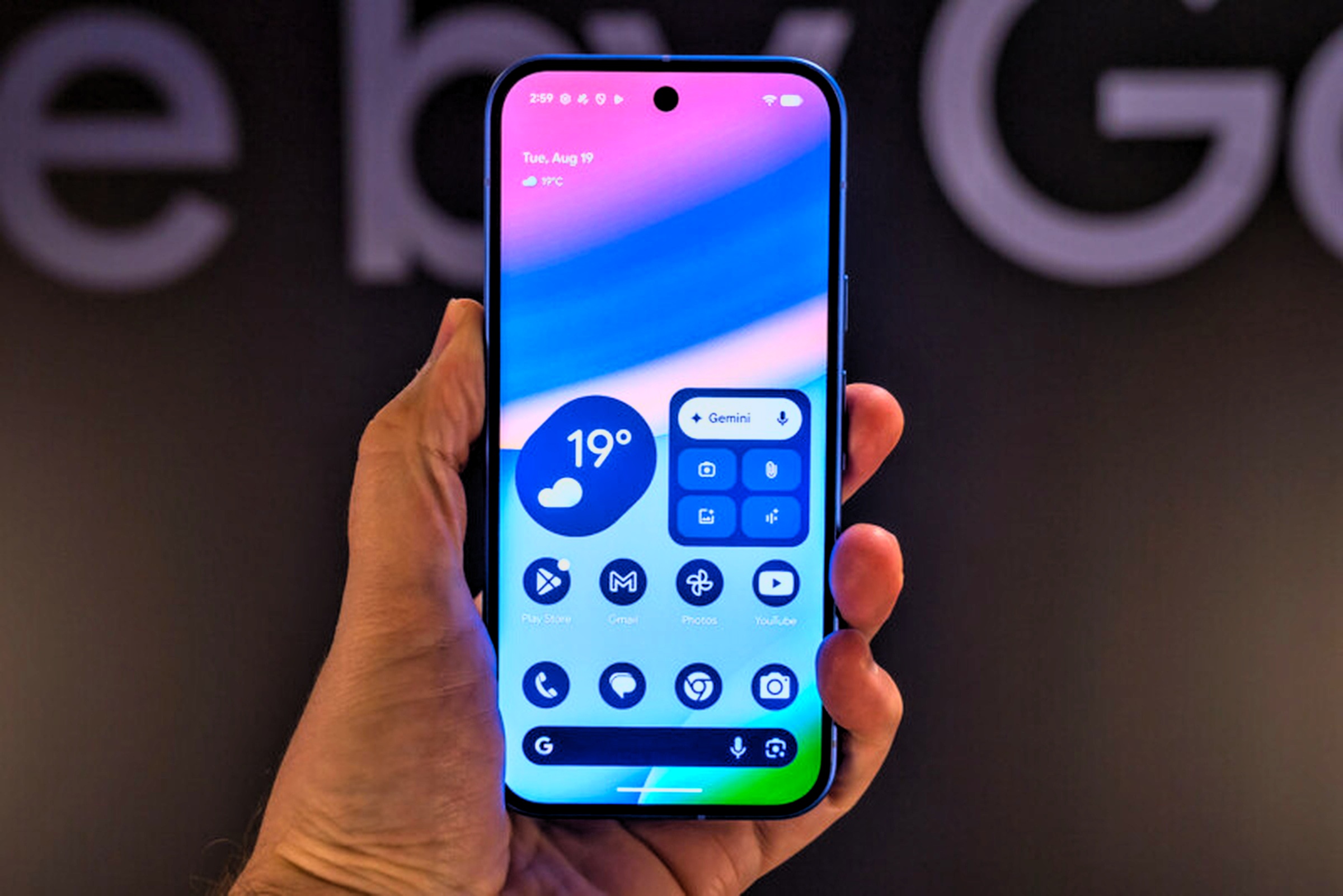
Bitdefender Labs reported today a flaw it calls GhostMap in Android itself: a crafted app with no code and no permissions can, once installed, crash a core system process again and again. Rebooting does not help, and safe mode does not stop it — in one capture, researchers counted 110 crash cycles on a Pixel 10 running Android 17. The flaw affects every version from Android 10 up. Recovery may require a factory reset, which erases everything stored on the phone — or, in limited cases, deleting the file over ADB if USB debugging was already on. Google assessed the issue as outside the scope of a security fix, so no security patch is planned. Bitdefender has not seen the loop used against anyone in the wild.
Why It Matters
How it affects you: an Android device running version 10 or later — the range Bitdefender tested, up to a Pixel 10 on Android 17 — can be left unusable by an app that never even has to be opened. Restarting does not save it and neither does safe mode; recovery may mean a factory reset that wipes the phone. There is no security patch for the flaw as of publication, because Google has decided it will not get a security fix.
Sources: Bitdefender Labs, 'GhostMap: The Android flaw that crashes your phone before you open the app,' Nov 5, 2026 (primary, read in full) — a specially crafted app with no executable code and no permissions can, once installed, crash a core system process (system_server) in a loop; rebooting does not help and the loop continues in safe mode (72 cycles counted in one safe-mode run; 110 cycles in one normal-mode capture, screen stuck on the boot animation); reproduced on a Pixel 10 running Android 17 with the Aug 5, 2026 security patch and on every version from Android 10 up; recovery identified: a factory reset, which erases locally stored data, or deleting the file over ADB if USB debugging was already enabled (a route that can stop working after a full reboot); Bitdefender reported the flaw to Google on Aug 20 and Aug 25, 2026 — Google closed the first report as 'Won't Fix (Not Reproducible)' and answered the second that the issue is outside the scope of a security fix, referred to a feature team for possible inclusion in a future version; no security fix is available as of publication and there is no CVE; Bitdefender has not observed the technique used against anyone in the wild — the persistent crash loop is its own proof of concept, developed after a banking dropper collected from the wild on Aug 12, 2026 crashed its analysis emulators during installation. Help Net Security, 'A banking malware sample led researchers to an Android bug that can loop-crash phones,' Nov 5, 2026 (corroboration, read in full). Infosecurity Magazine, 'GhostMap Bug Leaves Android Phones Stuck in Reboot Loop,' Nov 5, 2026 (corroboration). Photo: Google Pixel 10 in hand at the Made by Google launch event, Android home screen visible — real photograph by PetaPixel (petapixel.com, 'Google Pixel 10 Series Hands-On,' Aug 20, 2025), native 3:2; the Pixel 10 is the exact device model on which Bitdefender reproduced GhostMap; house HDR remap applied to the publication copies only (LinkedIn and web), official pill signature on the LinkedIn copy; the original remains intact.
AFTERNOON EDITION
12:00 p.m. PT
From January 1, 2027, California bars autoplay and personal recommendations for children under 16. Google, Meta and TikTok sued on Wednesday to block the law.
01
Social Media · Children Online
Google, Meta and TikTok Sue to Block California's Law Limiting Addictive Features for Children Under 16
Three tech giants sued California to keep autoplay and personal feeds for children under 16.
Reuters reported today that Google, Meta Platforms and TikTok have sued California to block Assembly Bill 1709, in separate federal lawsuits filed on Wednesday. Signed on September 10, the law bars platforms, from January 1, 2027, from offering children under 16 'psychologically exploitative features' that could lead to compulsive use — personal recommendations and autoplay video among them. The companies say the law overrides their editorial judgment and substitutes the state's judgment for parents', violating the First Amendment and Section 230. California's attorney general did not immediately respond on Thursday.
Why It Matters
How it affects you: if the law takes effect on January 1, 2027, a child under 16 in California loses autoplay and personally recommended feeds on these platforms. If the platforms block it in court, those restrictions do not take effect and the features remain in place while the fight continues.
Sources: Reuters, 'Google, Meta, TikTok sue to block California youth social media law,' by Jonathan Stempel, Nov 5, 2026 (agency, read in full) — Google, Meta Platforms and TikTok sued California in separate federal lawsuits filed on Wednesday (Google in San Jose, Meta in San Francisco, TikTok in Los Angeles) to block enforcement of Assembly Bill 1709, signed by Governor Gavin Newsom on September 10; the law prohibits offering children under 16 'psychologically exploitative features' that could lead to compulsive use, such as personal recommendations and autoplay video; the companies argue the law compels them to honor the state's preferred means of presenting content, substitutes the state's judgment for parents', and violates the First Amendment and Section 230 of the Communications Decency Act; California Attorney General Rob Bonta, the only defendant, did not immediately respond on Thursday; the Electronic Frontier Foundation called the law 'a massive privacy and free speech nightmare'; in August, Meta agreed to pay up to $18 billion and limit teenagers' use of Facebook and Instagram under agreements with nearly all US states, and the companies and Snap still face thousands of lawsuits claiming they sought to addict children. Effective date verified separately: AB 1709 takes effect January 1, 2027 — official site of the bill's author, Assemblymember Josh Lowenthal, press release of Sep 10, 2026 ('Starting on January 1st, 2027, California will age gate addictive features on social media'), and Legal 500, 'California Enacts Five Children's Online Privacy Laws,' Sep 29, 2026. Photo: a child seen from behind holding a smartphone with the TikTok app on screen — real photograph from the Fox Business / Fox News media library (static.foxbusiness.com, Oct 2024); recomposed to 3:2 complete over a blurred extension of its own background; house HDR remap applied to the publication copies only (LinkedIn and web), official pill signature on the LinkedIn copy; the original remains intact.
NIGHT EDITION
5:30 p.m. PT
Agility reports more than 100,000 totes moved and 65,000 hours in real warehouses. Today its maker became the first U.S.-listed pure-play humanoid robot company.
01
Enterprise Tech · Humanoid Robots
Agility Robotics Becomes the First U.S.-Listed Pure-Play Humanoid Robot Company
A humanoid robot that has already moved 100,000 warehouse totes started trading on Nasdaq today.
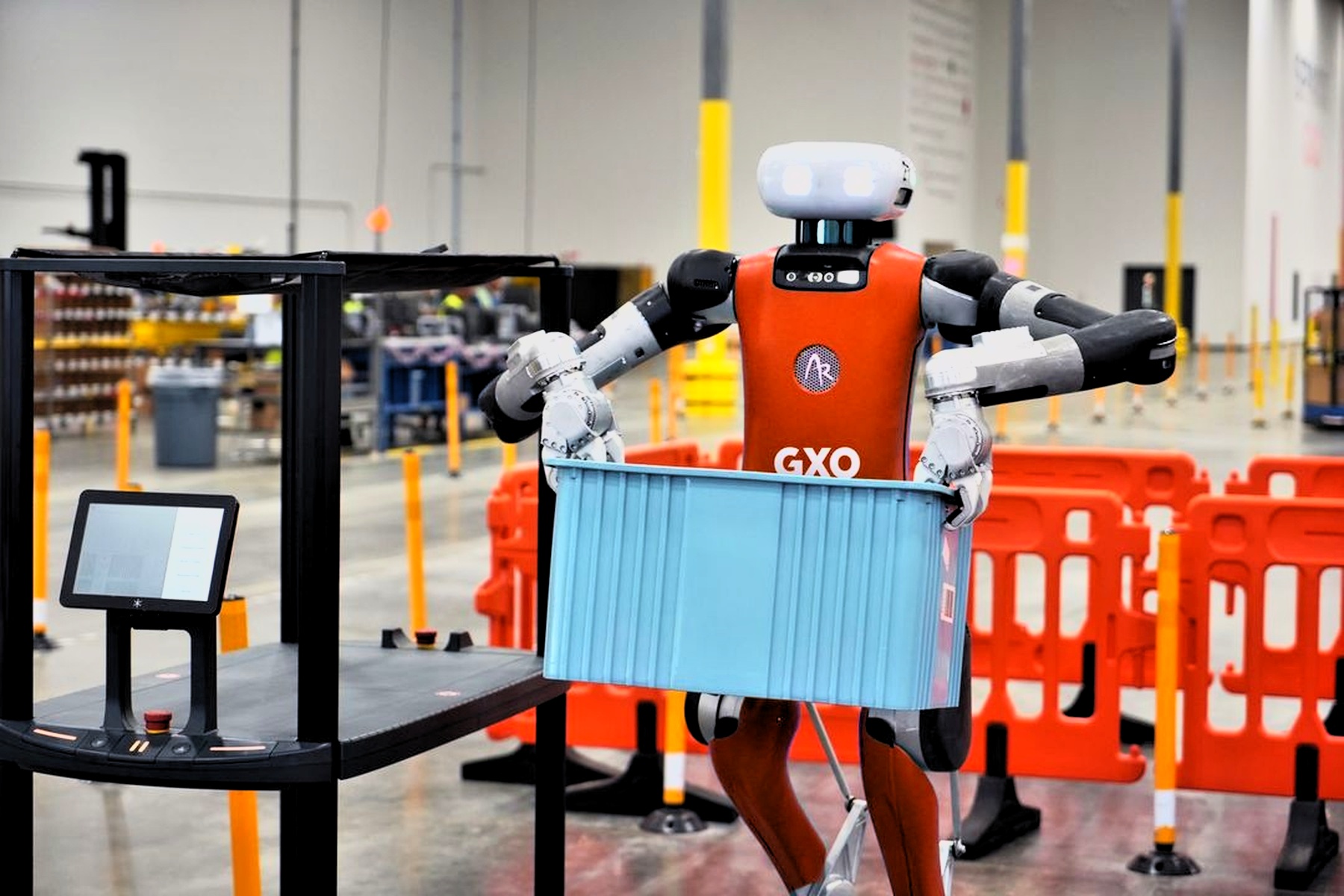
Agility Robotics began trading on Nasdaq today under the ticker AGLT — the first U.S.-listed company dedicated exclusively to humanoid robotics, with active commercial deployments. Its robot, Digit, works today at GXO, Schaeffler and Toyota Motor Manufacturing Canada. Agility reports more than 65,000 hours across its deployments and more than 100,000 totes moved at one GXO facility in Georgia. The business combination and related financings raised about $465 million in gross capital before transaction expenses, and customers have committed more than $300 million in multi-year orders for the next model, Digit 5, subject to contractual milestones, product features and specifications.
Why It Matters
How it affects you: at one GXO warehouse in Georgia, a two-legged robot now handles the repetitive, physically demanding work of moving totes — more than 100,000 of them so far at that facility. From today, the company behind Digit answers to public investors, and GXO plans to deploy it at two additional U.S. facilities in early 2027.
THE BUYER’S PULSE is independent and free. If this coverage helps you do your job, you can help keep it publishing with a voluntary contribution — one-time or monthly, in the amount you choose.
Support never influences our coverage and buys no access. Contributions are not tax-deductible donations — they go directly to keeping this magazine independent.