IT Infrastructure | New Technologies | Buying Advisor
The Daily Pulse · Three posts a day ◆ Morning 5:30 a.m. PT ◆ Midday 12:00 p.m. PT ◆ Evening 5:30 p.m. PT ◆ The Daily Pulse · Three posts a day ◆ Morning 5:30 a.m. PT ◆ Midday 12:00 p.m. PT ◆ Evening 5:30 p.m. PT ◆
MORNING EDITION
5:30 a.m. PT
A Russia-linked campaign hid attack code on trusted websites and could take a vulnerable phone's chats, passwords and photos — no tap needed.
01
Security · iPhone & Android
Russia-Linked Hackers Used Compromised Websites to Target iPhones and Android Phones
One visit to a compromised website could expose an unpatched phone's messages, passwords and photos — without a single tap.
Security firm Sekoia reported today a campaign it attributes, with moderate-to-high confidence, to APT29, a Russia-linked group. Malicious code was injected into legitimate websites — a Ukrainian gas producer, a U.S. chemical industry association — and spread through the compromised Plerdy SEO Tracker, an analytics script loaded by thousands of websites. The code fingerprinted each visitor's device and delivered a matching exploit chain: on iPhones running iOS 18.5 it could extract WhatsApp and Telegram chats, saved passwords, location data and photos; on Android it targeted Chrome versions 139 to 145. Every flaw used had already been patched, so devices running fully updated systems are protected against this campaign.
Why It Matters
How it affects you: an iPhone running iOS 18.5 — a separate chain hit iOS 16.7 — or an Android phone with Chrome 139–145 could lose chats, saved passwords, photos and location data just by opening a poisoned page, with no tap or download. Every flaw used was already fixed by Apple and Google, so installing the latest update protects the phone against this campaign.
Sources: Sekoia (Threat Detection & Research), 'Poisoned Source: APT29 watering holes target mobile devices with n-day exploits,' Nov 4, 2026 — large-scale watering-hole campaign uncovered in mid-October 2026; attribution to APT29 (Midnight Blizzard) with moderate-to-high confidence; three infection vectors (JavaScript injection on legitimate sites, lookalike AiTM domains, and the compromised Plerdy SEO Tracker, Aug 27–Sep 3, 2026, loaded by thousands of websites); three exploit chains (iOS 16.7: Safari cookies; iOS 18.5: WhatsApp and Telegram databases, Keychain credentials, location data and photos; Android Chrome 139–145 except 143: cookies, login data, browsing history and saved Wi-Fi credentials); all vulnerabilities already patched — 'a user running an up-to-date operating system is safe from these attacks'; no payload established persistence. BleepingComputer, 'Hackers use n-day exploits in zero-click attacks on iOS, Android devices,' Nov 4, 2026 — corroborates the compromised sites (Ukrainian gas producer, U.S. chemical industry trade association, Bulgarian military-related site), the lookalike domains (America250, Raffles London at The OWO) and the patch status. Photo: iPhone 16 Pro and Pro Max on display, real photograph by Jakub CA, via Wikimedia Commons (CC BY 4.0), recomposed to 3:2 over a blurred extension of its own background; house HDR remap applied to the publication copies only.
AFTERNOON EDITION
12:00 p.m. PT
Canva's restructuring affects 1,271 people — 22% of its workforce — in the hardest moment of its thirteen-year history, after growth slowed for the first time in a decade.
01
Consumer Software · Canva
Canva Restructuring Affects 1,271 People, 22% of Its Workforce, as Growth Slows for the First Time in a Decade
After its hardest year yet, Canva's restructuring hits 1,271 people — 22% of everyone who works there.
Canva co-founder and CEO Melanie Perkins told staff today that 1,271 people — 22% of the company — will be impacted: some will change roles or be asked to relocate to centralised hubs, and some will leave; Canva has not said how many. Perkins called it the hardest moment in the company's thirteen-year history, with growth slowed for the first time in a decade. Canva plans to bring Product, Growth and Platform together into a single Product Org, and Sydney will become the primary home for more of Canva's product teams. For Canva's users, no product change has been announced.
Why It Matters
How it affects you: 1,271 people at the design tool used by hundreds of millions — some losing their jobs, some asked to move to centralised hubs — after growth slowed for the first time in a decade; the teams that build Canva are being merged and recentred on Sydney. For Canva's users, no product change has been announced.
Sources: Canva Newsroom, 'An important update on our team,' note from co-founder and CEO Melanie Perkins, published Nov 4, 2026 (Sydney) — 1,271 people, or 22% of Canva, will be impacted; for some, changes to their roles or relocation to centralised hubs; for others, leaving the company (Canva does not state how many will leave); 'without doubt the hardest moment in our thirteen-year history'; 'our hardest year yet'; growth slowed for the first time in a decade; Product, Growth and Platform brought together into one Product Org; Sydney to become the primary home for more product teams; from January, most hybrid staff expected in the office 2–3 days a week; teams across 37 countries; those leaving receive at least six months of salary, twelve months of continued healthcare coverage where Canva provides it, and access to US$10,000 Canva Collective Fund grants. Reuters, 'Australia's Canva to restructure, affecting 22% of workforce,' Nov 4, 2026 — corroborates the 1,271 jobs / ~22% figure, the growth slowdown and the $10,000 grants; Reuters corrected its headline and first paragraph to show the 1,271 includes job cuts, role changes and relocations, not only layoffs. TechCrunch, 'Canva lays off over 1,200 people amid slowing growth,' Nov 4, 2026 — corroboration. Photo: Melanie Perkins, co-founder and CEO of Canva, speaking on Centre Stage at Web Summit, Altice Arena, Lisbon — real photograph by Web Summit (websummit.com; Web Summit photo set via Wikimedia Commons, CC BY 2.0), recomposed at its native 3:2; house HDR remap applied to the publication copies only.
NIGHT EDITION
5:30 p.m. PT
OpenAI's future AI campuses will cut their power draw when the grid is strained — starting with up to 1,000 MW of flexible demand in Georgia, roughly the average demand of 700,000 homes.
01
AI Infrastructure · Energy
OpenAI's Future AI Campuses Will Cut Power Use When the Grid Is Strained — 1,000 MW in Georgia Alone
Grid Protectors, launched Nov 2: demand-reduction terms go into every future campus agreement — how much load it sheds, how fast, and for how long.
OpenAI has launched Grid Protectors (Nov 2): at every future campus, demand-reduction terms will be written into its utility and regulatory agreements — how much load it sheds, how fast, and for how long when the grid is under stress. The pilot is Project Camellia, in Effingham County, Georgia, where the flexible-demand agreement with Georgia Power covers up to 1,000 MW — roughly the average demand of 700,000 homes, more than Washington, D.C. and Boston combined; OpenAI's stated aim is to keep air conditioners running in hundreds of thousands of homes during extreme heat. The backdrop is the buildout itself: U.S. data center capacity is projected to pass 100 GW by 2030, on a BloombergNEF projection OpenAI cites. OpenAI pays the full cost of Camellia's power infrastructure and service; the campus is still in development, and Georgia Power's projected customer savings — about $950 million a year from 2029 — cover its entire large-load portfolio, not this campus alone.
Why It Matters
How it affects you: AI campuses are becoming negotiating partners of the power grid. A campus that can shed load on request changes what a utility has to build — and what lands in everyone's electricity bill. OpenAI's own caveat stands: flexibility cannot replace investment in new energy supply and transmission.
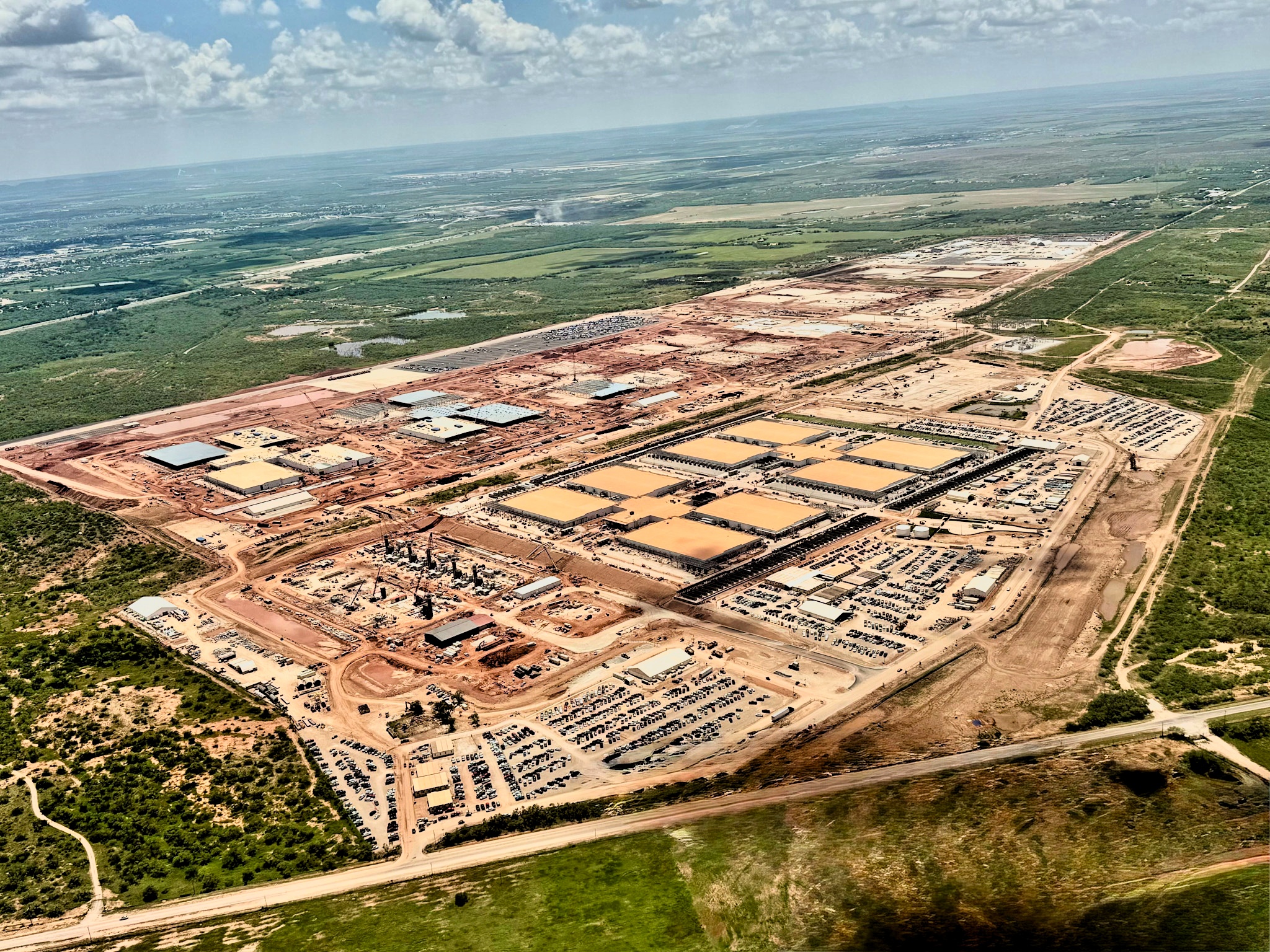
Sources: OpenAI, 'Grid Protectors Program,' Nov 2, 2026 (primary) — OpenAI's future campuses will reduce demand when the grid is strained, with the amount, speed and duration set in utility and regulatory agreements; the pilot is Project Camellia in Effingham County, Georgia, with up to 1,000 MW of flexible demand response under its Georgia Power agreement, equivalent to the average demand of roughly 700,000 homes; OpenAI pays the full cost of the campus's power infrastructure and service; U.S. data center capacity is projected to exceed 100 GW by 2030 (BloombergNEF projection cited by OpenAI); Georgia Power's projected savings of about $950 million a year from 2029 cover its entire large-load portfolio. Photo: aerial view of the Stargate I campus in Abilene, Texas, OpenAI's flagship site, still under construction (OpenAI press photo) — the Grid Protectors pilot, Project Camellia in Georgia, is still in development; house HDR remap applied to the publication copies only (LinkedIn and web); the original photo remains intact.
THE BUYER’S PULSE is independent and free. If this coverage helps you do your job, you can help keep it publishing with a voluntary contribution — one-time or monthly, in the amount you choose.
Support never influences our coverage and buys no access. Contributions are not tax-deductible donations — they go directly to keeping this magazine independent.