
Web Summit 2026 puts humanoid robots on stage as speakers
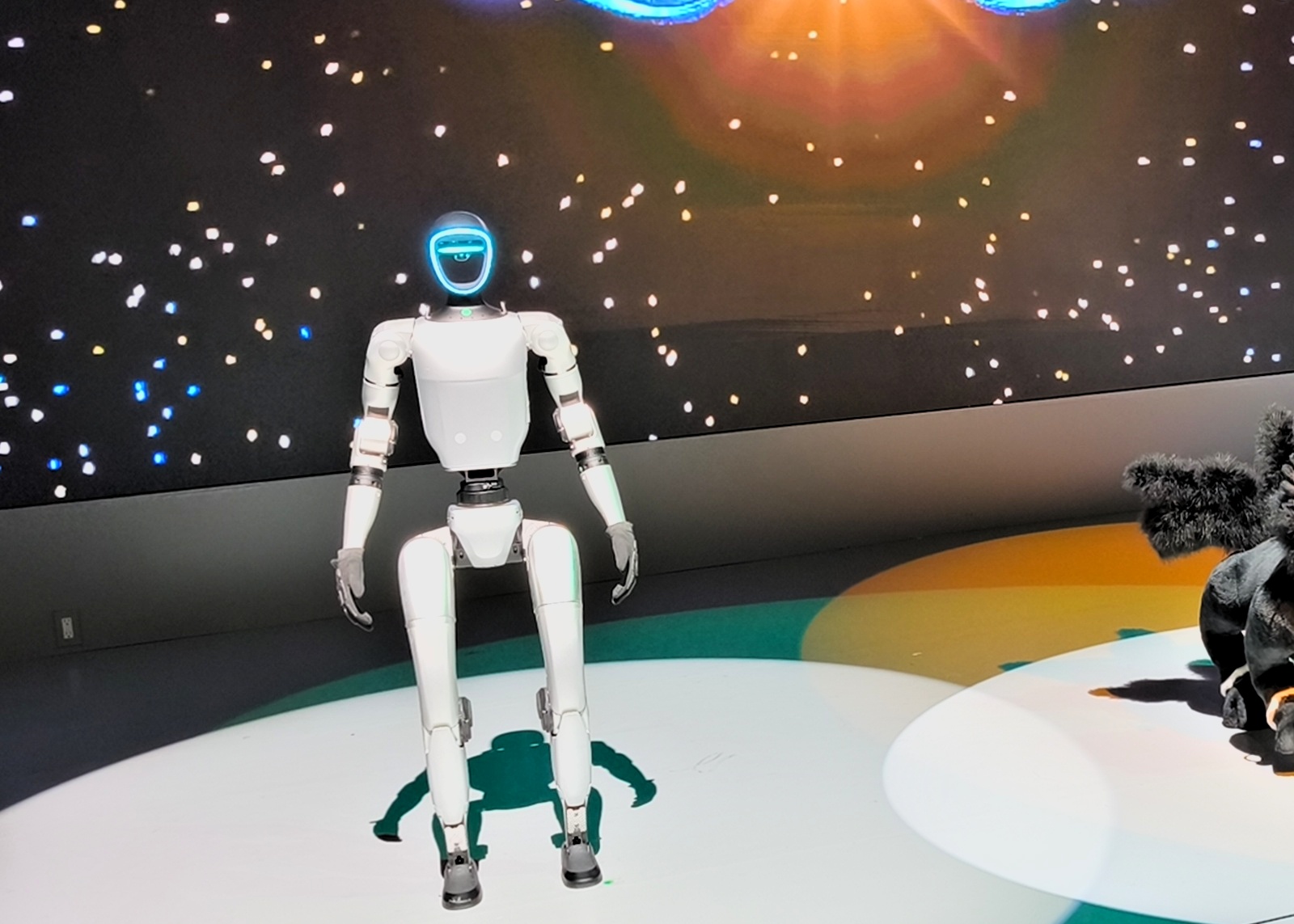
The conference speaker is evolving — literally onto two legs. At Web Summit 2026 in Lisbon, November 9–12, humanoid robots take the stage as speakers: AgiBot’s A3 and Galbot’s G1 are on the official program, in an edition expecting more than 70,000 participants from over 160 countries.
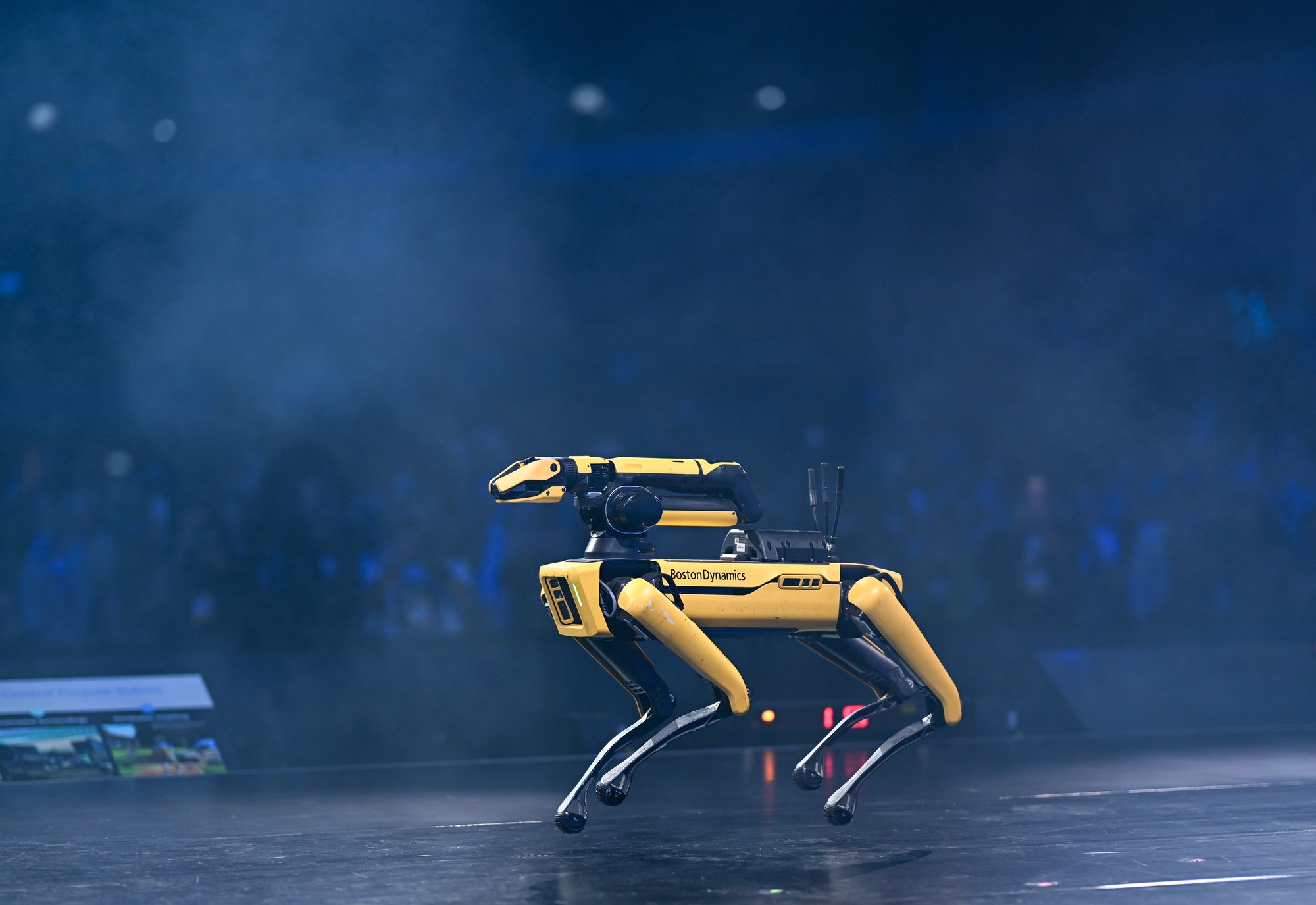
Photo: Web Summit (CC BY 4.0), via Wikimedia Commons.
From exhibit to orator
For a decade, robots at tech conferences were photo opportunities — machines in the expo hall, waving at cameras. Web Summit’s 2026 program moves them to the other side of the lectern: AgiBot A3 and Galbot G1 appear as speakers, listed on the official program of an event that fills the MEO Arena and the FIL exhibition center, in its eleventh consecutive edition in Lisbon, with more than 2,000 startups attending. Whatever one thinks of the format, the symbolism is precise: the industry that spent years talking about humanoids has started handing them the microphone.
The two machines come from the new Chinese humanoid wave — AgiBot and Galbot are among the names productizing bipedal robots at a pace the rest of the industry watches closely. Their presence in Lisbon is also a market statement: Europe’s largest tech stage is where the humanoid race now presents its credentials, in front of the investors and buyers who will decide which robots get purchased by the thousand.
The decision this sets
For event organizers everywhere, the bar just moved: a robot speaker is no longer a gimmick booking but an editorial claim about where technology stands. For the humanoid industry, the metric to watch is not applause but follow-through — the purchase orders and pilots that conferences are supposed to generate. And for attendees, the practical decision is which sessions to attend: the ones where humans describe the future, or the one where it walks in and describes itself.
What it takes for a robot to “speak” at a conference
It is worth slowing down on what the word “speaker” demands of a machine, because the gap between a robot that waves in an expo hall and a robot that holds a program slot is most of modern robotics in miniature. A humanoid on stage must solve, in public and in sequence, the problems its industry spends the rest of the year solving in laboratories: perceiving a space full of lights, cables and unpredictable humans; keeping its balance on two legs in an environment designed for a different species; producing speech that an arena can hear and follow; and doing all of it on cue, repeatedly, in front of an audience that has paid to be unimpressed. Some of that performance, at any conference, is choreography — rehearsed movement and prepared remarks are the honest grammar of every product launch ever staged, human or otherwise. But choreography at this level is itself the technology on display: the balance, the actuation, the thermal and battery discipline that let a bipedal machine work a stage instead of being carried onto it are exactly the capabilities a warehouse, a hospital corridor or a factory floor will one day be buying.
The setting sharpens the statement. Web Summit has been held in Lisbon since 2016 — this is its eleventh consecutive edition in the Portuguese capital, spread across the MEO Arena and the FIL in the Parque das Nações — and this year’s edition foregrounds, in its own framing, the application of artificial intelligence to the physical world. That is the context in which AgiBot’s A3 and Galbot’s G1 take the lectern: not as mascots for an AI conversation happening elsewhere, but as exhibits in the precise category the program is about. The industry has spent two years arguing that intelligence is leaving the screen and entering the room — in robots that manipulate, carry, greet and assist — and a speaker listing is the most compressed possible version of that claim. The robot does not need to win the argument. It needs to stand where the argument is held, upright, audible, and recognizably a product rather than a prototype in a trench coat.
For the buyers in the hall — and with more than 70,000 participants and over 2,000 startups in the building, the hall is a marketplace as much as an audience — the useful response to a robot speaker is a checklist, and this magazine would be failing its name not to supply it. A stage appearance proves stage capabilities; a purchase decision needs the unglamorous evidence behind them: hours of autonomous operation between interventions, the tasks completed per shift in a real pilot rather than a filmed one, the cost of the unit against the labor it genuinely displaces, and the service network that answers when — not if — a joint, a sensor or a battery degrades in month nine. The humanoid makers who convert Lisbon applause into signed pilots will be the ones whose stage machines are backed by that paperwork; the ones who cannot will discover that a speaker slot, like a keynote by any founder, is a promise the market eventually audits.
And yet, having filed the skepticism where it belongs, the thrill of the thing should be allowed its full weight — this is, after all, a magazine that loves machines. Within living memory of everyone attending, a bipedal robot that could walk a stage at all was a research triumph guarded by spotters and safety lines. Now two of them are printed in a conference program between founders and ministers, in the eleventh Lisbon edition of the largest gathering of its kind in Europe, in front of crowds from more than 160 countries. Novelty has a half-life, as our own watch list concedes: next year a robot speaker will have to say something new. But that is precisely the measure of arrival — when the miraculous becomes a booking category, and the only question left is the oldest one in technology: not whether it can perform, but who is buying, for what work, at what price. Lisbon, for four days in November, is where that question gets asked out loud — in at least two cases, by the product itself.
What thrills
- The microphone moment: humanoids graduate from expo decoration to program speakers.
- Signal over spectacle: the booking is an editorial claim about the industry’s state.
- Lisbon as the arena: 70,000 people is where the humanoid race shows its credentials.
What to watch
- Substance check: a staged appearance is not a deployment; pilots and orders are the metric.
- Novelty half-life: next year, a robot speaker will need to actually say something new.
- Europe’s position: the stars of the stage are Chinese machines — a fact the home crowd will notice.
The data sheet
The event
| Field | Detail |
| Dates | November 9–12, 2026 |
| Venue | MEO Arena and FIL, Lisbon |
| Scale | 70,000+ participants, 160+ countries, 2,000+ startups |
| Edition | 11th consecutive in Lisbon |
The speakers
| Field | Detail |
| AgiBot A3 | Humanoid robot, listed as speaker |
| Galbot G1 | Humanoid robot, listed as speaker |
Sources
- Web Summit 2026 official program and event data (speakers AgiBot A3 and Galbot G1; Nov 9–12, Lisbon).
- Photo: Web Summit (CC BY 4.0), via Wikimedia Commons (Spot robot, Web Summit 2025).