
Palo Alto Networks buys Applied Compute for US$4.5 billion and takes the team that trains AI on each company's own data
Palo Alto Networks announced on November 18 a definitive agreement to buy Applied Compute for US$4.5 billion, paid entirely in stock. The acquired company is months old: it was founded in 2025 by three former OpenAI researchers, and its product is the platform that adapts open-weight artificial intelligence models with each company's own proprietary data and puts them to work. The thesis of the deal reads effortlessly: the enterprise AI that is coming is not the generic kind bought by subscription — it is the kind trained at home, on the home's data — and the cybersecurity company wants to sell that training with security integrated from the very start.
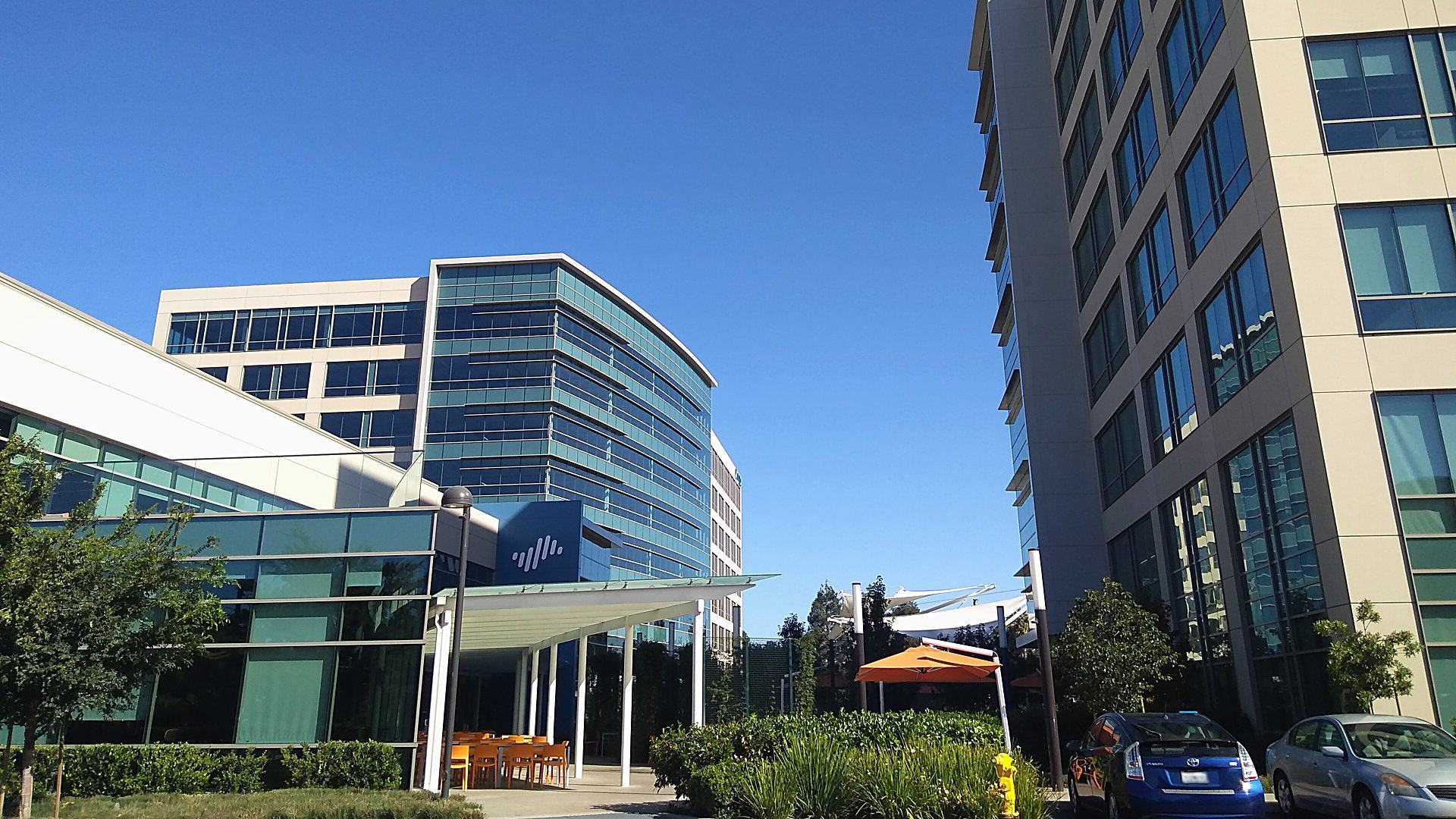
Photo: Namaste jinx, via Wikimedia Commons (CC BY-SA 4.0). Palo Alto Networks headquarters in Santa Clara, photographed in 2018 — file photo.
The agreement is definitive and it already has a price, a form of payment and a calendar. Palo Alto Networks will pay US$4.5 billion for Applied Compute, and it will pay entirely in stock — there is no cash component in the announced transaction — subject to the usual adjustments and to regulatory approval. If regulators give their go-ahead, the close is expected in the buyer's fiscal third quarter of 2027. The announcement arrived on November 18 from Palo Alto Networks itself, via PR Newswire: this is not a market rumor or a leak, it is the deal told by the party signing it.
What turns the figure into news is not only its size. It is the contrast: US$4.5 billion for a company that was born in 2025. Applied Compute does not sell a consolidated product with decades of customers; it sells a young platform and, above all, a team. In the acquisitions of this artificial intelligence cycle, that is the recurring pattern: the large platforms are not buying revenue, they are buying the capacity to build what they do not yet have — and they pay for it as if they already had it.
What Applied Compute does: the AI after the model
Applied Compute works in the phase that comes after an artificial intelligence model already exists: post-training and inference. Its platform takes open-weight models — models whose parameters are available and that any company can download and run on its own infrastructure — and adapts them with each company's own proprietary data: its documents, its processes, its history, its way of working. Then it puts them into production: that second part is inference, the moment when the already-trained model answers and works on real cases.
The distinction matters because it is the exact point where generic AI falls short. An open model, just as it is downloaded, knows a little about everything and nothing about a specific company. Post-training on proprietary data is what turns it into that company's tool: it learns its vocabulary, its rules and its exceptions. And it is also the point where the problem Palo Alto Networks knows better than anyone appears: to train a model that way, an organization has to gather, in a single place, its most sensitive data.
The people: three ex-OpenAI founders and a co-head of AI
Applied Compute was founded by Yash Patil, Rhythm Garg and Linden Li, all three with a past at OpenAI. It is not a minor biographical detail: post-training is exactly the discipline the large AI labs practice behind closed doors to turn a base model into a product, and those who master it are among the scarcest — and most expensive — profiles in today's technology market.
The agreement acknowledges it in its own structure. After the close, Yash Patil will be co-head of AI at Palo Alto Networks, and the Applied Compute team joins the buyer. In other words: the transaction does not stop at absorbing a platform; it installs its creators inside the org chart of the largest cybersecurity platform, with a shared leadership seat over its entire artificial intelligence strategy. Deals of this size are judged by what remains when the noise of the announcement fades, and what remains here is people.
Why a security company is the buyer
The business reading of the agreement — the thesis that holds it up — is that enterprise AI will be hybrid: open models that each company adapts on its own ground, with its own data, instead of depending entirely on someone else's closed model. And that this hybrid AI is only viable if security is integrated from the design, not bolted on afterwards: the data that feeds post-training is, by definition, the data a company can least afford to see exposed, copied or outside its control.
From that thesis, the logical buyer of Applied Compute was not another model company: it was a security company. Palo Alto Networks has sold for years the platform on which large organizations protect their infrastructure; with this purchase it also positions itself at the earlier step, the moment when each client's AI is built. Whoever controls how the model is trained on the house's data, and how that model then operates in production, controls the complete layer — and can charge for it complete.
The context: the same day, a +39% quarter
The announcement did not arrive alone. On the same November 18, Palo Alto Networks reported its fiscal first-quarter results: revenue of US$3.44 billion, growth of 39% year over year. The coincidence of dates puts the purchase in its correct frame: it is not the bet of a company looking for oxygen, it is the move of an expanding platform that uses its own stock — the chosen form of payment, entirely in shares — as acquisition currency.
Paying in stock has its own reading. The buyer preserves its cash, shares with the sellers the risk and the reward of what the deal will be worth tomorrow, and ties the founders to the future value of the company absorbing them: for a team that must stay and build, being paid in the house's shares is also a retention mechanism. The final price, moreover, remains subject to adjustments, as the announced terms establish.
What remains: regulators and the calendar
Until the close, this is an announced agreement, not a consummated purchase. Ahead lies regulatory approval, and the calendar the company itself has put on the table places the close in its fiscal third quarter of 2027. In between, the questions that will decide whether the US$4.5 billion was a price or a bargain are the usual ones in this kind of transaction: that the team stays, that the platform integrates into the larger platform's offering without losing what made it different, and that customers accept training their AI with the same vendor that already sells them security.
The enterprise artificial intelligence market has spent two years arguing over which model is most powerful. This agreement suggests the argument is moving: the advantage no longer lies only in the model — it lies in each company's data, and in who helps it train on that data without losing it along the way. Palo Alto Networks has just paid US$4.5 billion to sit exactly in that spot.
Published on Saturday, November 21, 2026.
𝐆𝐄𝐓 𝐅𝐑𝐄𝐄 𝐅𝐔𝐋𝐋 𝐌𝐀𝐆𝐀𝐙𝐈𝐍𝐄 𝐀𝐓 thebuyerspulse.com
Sources
- Palo Alto Networks, November 18, 2026 (via PR Newswire): announcement of the definitive agreement to acquire Applied Compute for US$4.5 billion, entirely in stock, subject to adjustments and regulatory approval, with closing expected in fiscal Q3 2027; the description of the post-training and inference platform, the 2025 founding by Yash Patil, Rhythm Garg and Linden Li, Patil's appointment as co-head of AI and the team joining the company.
- Palo Alto Networks, November 18, 2026: fiscal first-quarter results — revenue of US$3.44 billion, up 39% year over year.