Adobe opens Photoshop, Illustrator, Premiere and After Effects to the AI agent you already use
Adobe used MAX 2026 in Miami Beach to preview local MCP integrations for Photoshop, Illustrator, Premiere and After Effects: the third-party AI agent you already use will make changes directly in your native project files, with layers, vectors, bins and sequences staying editable. The private beta opens in early 2027.
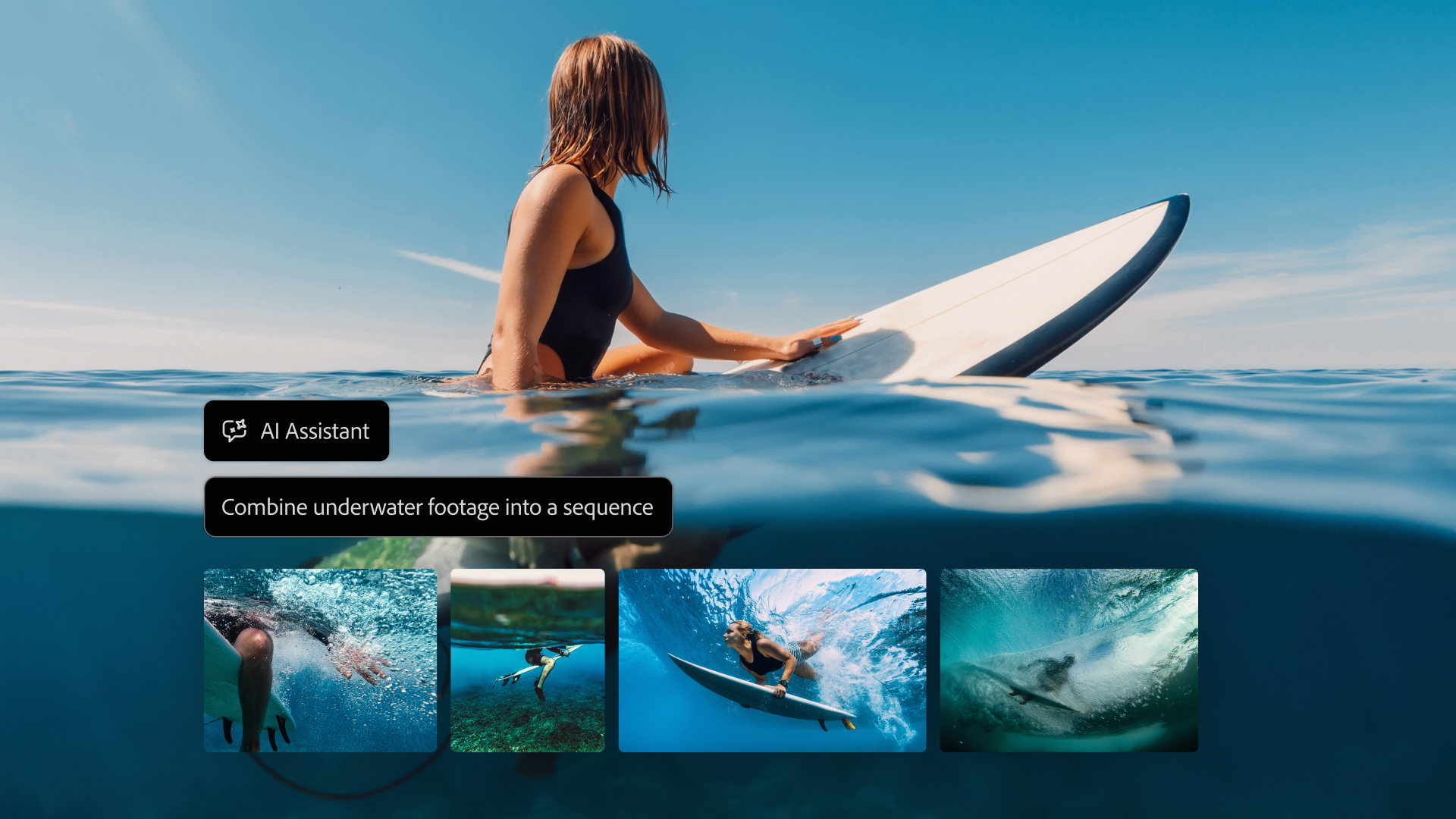
Photo: Adobe.
On November 10 in Miami Beach, Adobe opened MAX 2026 — the world's largest creativity conference, running November 10–12 with more than 300 speakers — with a preview of the most consequential change in how its flagship applications take instructions: local MCP integrations that will let creative professionals direct the third-party AI agent they already use to make changes directly in their native project files in Photoshop, Illustrator, Premiere and After Effects.
The detail that defines the announcement is not that an agent can touch the file. It is what the file looks like afterwards. Layers, vectors, bins and sequences remain editable, Adobe says, and creative professionals can step in at any moment to refine the work by hand. Nothing is rendered down into a finished export: the agent works inside the living project, on the user's own computer, and the project stays a project.
How a job would run
The integrations are local, and they run on the Model Context Protocol — MCP, the open standard Anthropic introduced in 2024 for connecting AI agents to external tools and data. In Adobe's design, the professional starts from the agent they already use, describes the change in their own words, and the Creative Cloud application applies it to the native file on their machine: the layered Photoshop document, the Illustrator artwork, the Premiere sequence, the After Effects composition.
Adobe's own example is a campaign fix. "Make the change once, then ask your agent to cascade it across the rest of the campaign, and step in at any moment to refine the work by hand," said Deepa Subramaniam, Adobe's vice president of product marketing for Creative Cloud, describing in a company blog post how a change such as removing a logo from one asset would propagate to the rest. The human makes the creative call once; the agent repeats it; the human can interrupt and take over at any point.
The chain does not stop at Adobe's door. If the agent is also connected to other MCP-capable tools such as Google Drive or Slack, Adobe says, it can bring them into the same workflow — pulling in a brief from Google Docs, working on the project with Adobe's tools and sharing the result with colleagues in Slack. One conversation, three companies' software, and the file never leaves the project format the team already works in.
Bring your own agent — or use Adobe's
The MCP preview is one of two agent tracks Adobe announced the same morning. The other is its own. The Adobe Creative Agent is expanding across Creative Cloud and Adobe Firefly, orchestrating multi-step workflows so professionals can delegate and direct work, and the AI Assistants it powers are now available in beta in Illustrator, Premiere, InDesign, After Effects and Frame.io. In Photoshop, the assistant is available in the separate Photoshop beta app.
Inside Premiere, that agent already takes the kind of order shown in the cover visual — combining footage into a sequence — and Adobe lists its new capabilities there: applying effects across every clip in a sequence, tracking masked subjects through a frame, and adjusting color and exposure across an entire sequence at once. In Firefly, the AI Assistant (beta) gains customization, Plan Mode and a Model Selector, and always-on agents, shown in preview, are meant to take recurring tasks — organizing incoming assets, checking quality, preparing content for different channels — and keep working in the background even when the creator steps away.
The distinction between the two tracks is the story. Adobe's own assistants work inside Adobe's walls, directed from within the applications. The MCP integrations start outside — from whichever agent the professional already trusts — and reach in. Adobe is building both the house agent and the door for everyone else's.
What shipped the same day
The agent news arrived inside a much larger MAX package, and most of it is not a preview: Adobe says the new Creative Cloud capabilities are generally available today, with the exceptions it labels beta. Photoshop gains Relight, for adding and adjusting light sources non-destructively, and Generative Restyle, which turns prompt-based edits into adjustable sliders a photographer can fine-tune instead of re-prompting. The Remove tool now detects related elements — the shadow and the reflection that belong to the object being removed — and Quick Compare puts before-and-after edits side by side; an AI Assisted Editor offers a simplified, AI-first editing experience.
Premiere gets Color Mode, a color grading system Adobe calls first-of-its-kind, and a Generative Media tool that generates video, sound effects, soundscapes and music directly in the timeline. Its new AI audio tools — Enhance Audio, Separate Crosstalk and Separate Sound Source — clean up, separate and refine sound, and Generative Remove, in beta, takes unwanted objects out of a shot. Lightroom adds Glow, cinematic light with five style options, one-tap Blemish Removal and Open Eyes (beta), which corrects an untimely blink using a reference photo, alongside improved Camera Tethering. Illustrator refreshes its content libraries and adds on-canvas Blend controls, and InDesign gains real-time Co-editing (beta), Flex Layout, and Check Document and Rewrite tools to catch common issues before a file ships.
Firefly, meanwhile, is repositioned as a complete AI creative studio rather than an image generator: Adobe's pro-grade tools and the Adobe Creative Agent sit alongside top industry models from Adobe, Topaz Labs and partners including ByteDance, Google, Kling, OpenAI and ElevenLabs. Firefly Design (beta) brings illustration, image editing, animation, 3D and print onto a single canvas; Firefly Graph (beta) helps professionals build custom, repeatable workflows, from character studies and shot lists to scaling brand guidelines across campaign assets; and Firefly Builder, in private beta, turns natural language into interactive, on-brand prototypes — a website, a presentation, an app — with no code required. Following Adobe's acquisition of Topaz Labs, two new enhancement models join the set: Wonder 4, powered by a Mixture of Experts architecture that combines upscaling, denoising, deblurring and sharpening in a single pass, and Image HDR, which converts standard images into richer HDR detail.
What Adobe has not said yet
The announcement leaves the practical questions open. Adobe's releases name no third-party agent for the MCP integrations — the wording throughout is "their preferred third-party agent" — and no price or subscription condition was attached to them. What the company commits to is a sequence: MCP integrations are coming to Creative Cloud customers in early 2027, starting as a private beta, and professionals can sign up for updates. No general-availability date follows the beta in anything Adobe published this week.
How much of each application the connection will expose is also undecided. "We are still figuring out where, when and how to draw the line," Subramaniam told TechCrunch, speaking about which capabilities the endpoint will offer. Adobe is not starting from zero with the agent makers: the company notes that the MCP step builds on connectors launched in collaboration with Anthropic, OpenAI, Slack and others, which already place Adobe tools inside other companies' assistants. The same week, Adobe deepened its partnerships with Google — Acrobat arriving in Google Workspace, expanded connectors for Gemini and Gemini Enterprise, creative tools in AI Mode in Google Search, and new AI-powered editing for Photoshop explored with Google DeepMind — and with Microsoft, with optimized versions of Photoshop, Premiere, After Effects and Substance 3D Painter (beta) for high-performance Arm-based Windows PCs, and Adobe Express creation tools inside Microsoft Photos. A multi-year alliance also made Adobe an Official AI Innovation Partner of The Walt Disney Company.
Why Adobe is opening the door
The strategy was stated from the MAX stage. "We're powering a new era of creativity where creative professionals and creators at every experience level have the tools, models and agents they need to bring their biggest ideas to life and stand out with work that reflects their unique taste, style and vision," said Anil Chakravarthy, Adobe's president and incoming chief executive officer. Ely Greenfield, the chief technology officer who runs Creative Cloud and Firefly, described the shift at a press briefing as "the disaggregation of creative technology and creative process" — the tools separating from the place where the directing happens.
This was the last MAX before the change at the top that frames the bet: Chakravarthy takes over as CEO on December 1, with Shantanu Narayen moving to executive chair after almost two decades at the helm, as Creative Boom reported from Miami Beach. The opening to outside agents is the incoming administration's founding wager — that the professional's project files, libraries and habits stay inside Adobe's applications even when the intelligence directing the work arrives from somewhere else. Subramaniam's own framing points the same way: "The ideas, taste, style and vision that creative professionals bring to their work are what make their work stand out."
For now, the door is a preview, not an entrance: shown in November, in private beta early in 2027, with the list of agents and the depth of access still to be drawn. What Adobe has already settled is the condition that makes the offer credible to the professionals it cannot afford to lose — the agent does the work, and the project, layer by layer and sequence by sequence, remains theirs.
𝐆𝐄𝐓 𝐅𝐑𝐄𝐄 𝐅𝐔𝐋𝐋 𝐌𝐀𝐆𝐀𝐙𝐈𝐍𝐄 𝐀𝐓 thebuyerspulse.com
Sources
- Adobe (Nov 10, 2026), press release “Adobe Transforms its Creative Cloud Tools into Agentic Workflows…”: the local MCP preview for Photoshop, Illustrator, Premiere and After Effects — layers, vectors, bins and sequences remain editable; the Google Docs–Adobe–Slack workflow; the Creative Agent's availability and the per-app features; pricing and availability, including the MCP private beta in early 2027.
- Adobe (Nov 10, 2026), press release “Adobe Powers a New Era of Creativity…”: the Creative Agent's expansion across Creative Cloud and Firefly; the Firefly studio and its model partners; the Google, Microsoft and Disney partnerships; Anil Chakravarthy's statement; MAX 2026 in Miami Beach, November 10–12, with more than 300 speakers.
- Adobe Blog (Nov 10, 2026), “Explore new ways to create across Creative Cloud and Adobe Firefly…”: MCP integrations are coming to Creative Cloud customers in early 2027; the campaign example from Deepa Subramaniam — make the change once, then ask the agent to cascade it across the rest of the campaign.
- Computerworld (Nov 11, 2026), “Adobe opens Creative Cloud apps to third-party AI assistants”: Subramaniam, speaking to TechCrunch, on Adobe still figuring out where, when and how to draw the line on what the MCP endpoint exposes.
- GadgetGuy (Nov 10, 2026), Adobe MAX 2026 report: CTO Ely Greenfield describes the shift as “the disaggregation of creative technology and creative process.”
- Creative Boom (Nov 10, 2026), reporting from MAX in Miami Beach: Chakravarthy takes over as CEO on December 1, with Shantanu Narayen moving to executive chair.
- Photo: Adobe (official visual published with the announcement).