
ChatGPT gets a wallet — and the agent never sees your card number
OpenAI's ChatGPT Wallet, launched November 13 with American Express, Mastercard and Visa, lets an agent pay for what it finds without ever touching your real card details: every purchase is approved with Face ID or a fingerprint, and the merchant receives a payment token instead of your number. It starts with ChatGPT Pro subscribers in the United States — and it is the clearest signal yet that shopping inside a chatbot is becoming infrastructure.
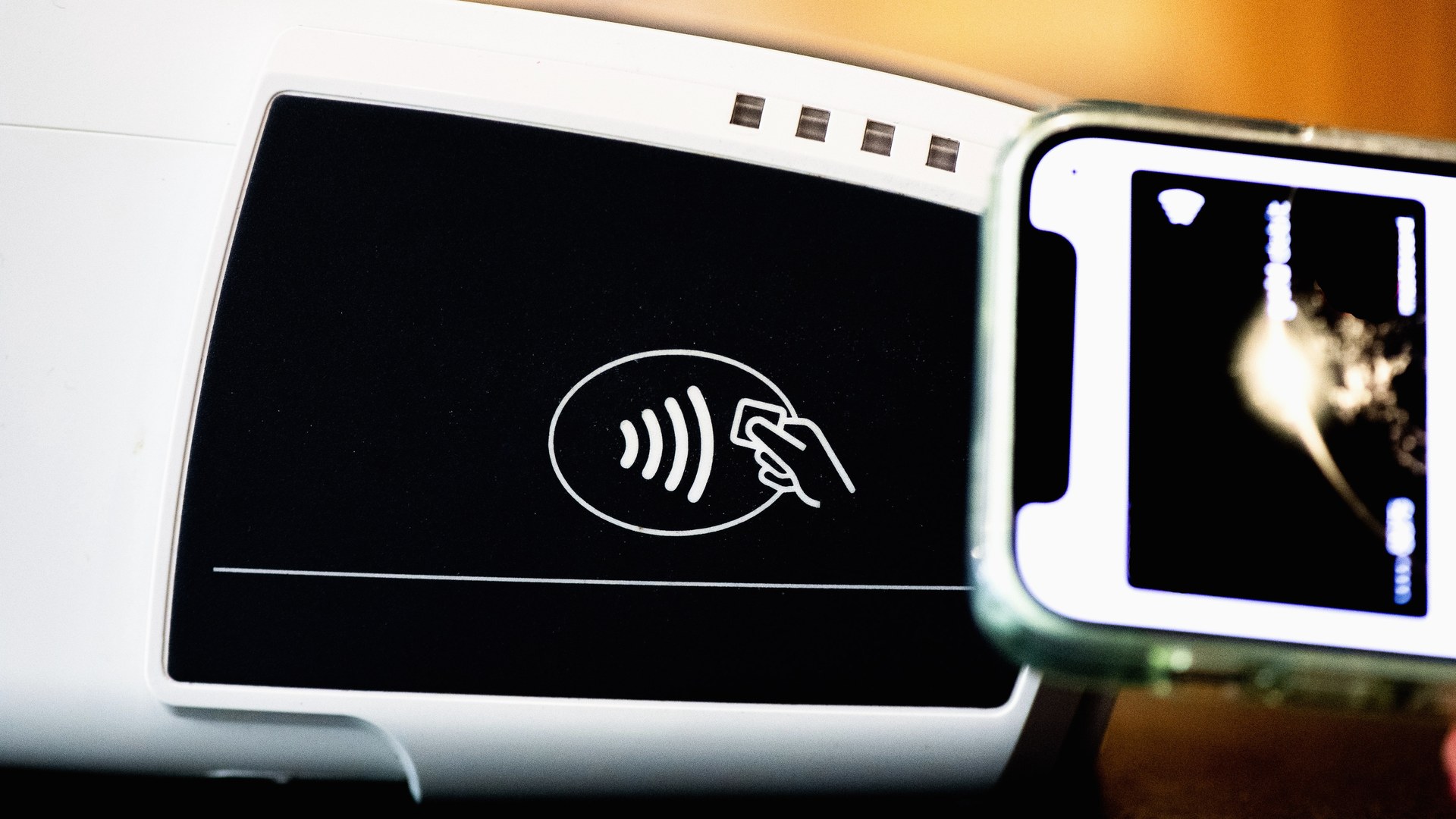
Photo: Bogdan Hoyaux / European Commission (CC BY 4.0).
Every online purchase still runs on a ritual from the 1990s: find the card, read the sixteen digits, type them into a website you may never visit again. ChatGPT Wallet, which OpenAI announced on November 13, is built to retire that ritual for the agent era — a wallet inside ChatGPT that lets an agent pay for what it finds without ever gaining access to the user's actual card details.
It is, in OpenAI's description, the first wallet designed for that job, and it does not arrive alone: it was built with American Express, Mastercard and Visa, the networks whose rails the money will travel. The launch is deliberately small. ChatGPT Wallet is initially available through dots for ChatGPT Pro subscribers in the United States who are over 18 and hold eligible US-issued cards, and OpenAI says the limited rollout exists so it can learn from real-world use before widening the door.
The context is dots themselves — OpenAI's always-on agents, introduced in September with their own cloud computer and browser, able to keep working on tasks while the user is elsewhere. An agent that can browse, compare and fill a cart but cannot pay is a researcher. The wallet is what makes it a buyer.
How a purchase runs
The setup happens once. The user adds a card to the wallet, and from then on the card itself stays out of the conversation. When a dot finds something worth buying, the user reviews the items, the total and the card selected for the purchase — and then approves the payment with a security check, Face ID or a fingerprint, which OpenAI requires for every purchase, not just the first.
Approval is where the machinery turns. The payment network issues a payment token — a substitute card number, security code and expiration date — and that token, not the real credential, is what gets charged. The charge lands on the user's actual card, but the business receives only the token, and the agent never holds the number at all. Each approval also creates a clear authorization record, so every agent purchase leaves a trail the user can inspect.
Three things are visible before any approval: the items, the total, and the card that will be charged. That review screen is the wallet’s whole philosophy in miniature — the agent does the legwork, the human sees exactly what the agent proposes to spend, and nothing moves until the human’s face or finger says so. OpenAI’s design keeps the most consequential click in the flow exactly where it has always been: with the person whose money it is.
Why the token is the story
Tokenization is not new — it is how phone wallets already pay in stores — but its arrival inside an AI agent changes who has to be trusted. Handing card details to an agent, or to every merchant an agent visits, would multiply the places a number can leak. Under the wallet's design there is no number to leak: the merchant receives a token created for the transaction, and the agent receives an approval, not a credential.
OpenAI is careful to keep the old protections attached to the new flow. Purchases made through the wallet preserve the card's existing rewards and its dispute protections, the company says — the two features that make credit cards safer than most alternatives when a delivery goes wrong. An agent purchase that never arrives is still a charge the cardholder can dispute.
Compare the alternative the industry was drifting toward: agents storing card numbers, or users pasting them into a chat. Every stored number is a liability with a breach attached, and every paste is a credential handed to a system that was never built to hold it. The wallet’s answer is to remove the credential from the agent’s world entirely — the strongest security property in the announcement is something the agent never has.
Who can use it today
The first wave is narrow on every axis. Per The Verge's reporting on the launch, eligibility requires US residence and a US billing address, and the cards that work are credit cards from American Express, Chase, Mastercard and Visa — debit cards are not supported, and users cannot add their own virtual cards. The wallet also lives only inside dot conversations, not in ordinary Chat, Work or standalone Codex sessions.
That narrowness is the point of a payments launch. Even a limited wave reaches into an enormous audience: 1.2 billion people use ChatGPT each week, OpenAI says, many of them already researching products inside the chat window. The wallet is the piece that turns that research into a transaction without leaving the conversation.
OpenAI takes no cut of wallet transactions at launch, according to CNBC — a detail that matters to merchants deciding whether to welcome agent traffic, and one that can change as the product matures. The wallet's terms, published on November 12 and covered by Reuters, distribute liability across the user, the merchant and the issuer; and some merchants are already blocking agent purchases outright, a friction noted in the launch coverage from day one.
The merchant side of the door
Why the networks are inside the room
It is worth pausing on the guest list. Agent commerce posed an obvious threat to the card networks: an agent that pays with bank transfers or a platform balance would route around the rails they own. By co-building the wallet, American Express, Mastercard and Visa made sure the agent’s money still travels on cards — tokenized, biometrically approved cards, but cards. The network issues the token, the issuer keeps the customer, and the rewards and dispute rights that make people prefer cards survive the transition to agents intact.
For OpenAI, the partnership buys the two things a payments product cannot fake: acceptance and trust. A wallet launched with three networks behind it does not have to persuade merchants one by one that its orders are real, and a user asked to add a card to ChatGPT is being asked to extend a system they already use, not to join a new one. The architecture is new; the money plumbing is deliberately not.
A wallet only works if shops accept it, so the launch ships with a Commerce Partner Playbook for businesses: claim your business in ChatGPT, connect product feeds, and prepare for agent traffic. The technical pieces have names worth knowing. Web Bot Auth lets sites verify signed requests from agents, so content delivery networks and firewalls stop treating them as bots to be blocked. WebMCP gives agents structured tools and plugins to transact with, instead of a screen to scrape.
The risk stack is staffed, too. OpenAI names fraud partners Forter, Riskified, Sardine and Signifyd, and payment processors Adyen, Checkout.com and Stripe — the existing plumbing of e-commerce, recruited so that an agent's order arrives with the same fraud screening as a human's. The message to merchants is that agent commerce is not a side channel: it is the same channel, with a different kind of customer holding the wallet.
Where this goes: delegation, with limits
Today, the human approves every purchase. OpenAI's stated direction is full delegation inside parameters the user sets in advance — spending limits, purchase categories, time periods — still guarded by biometric safeguards. In that end state the wallet stops being a checkout button and becomes a budget with an agent attached: the user writes the rules once, with a fingerprint, and the agent shops inside them.
The parameters OpenAI names are the ones a careful person would write: a ceiling on spending, the categories an agent may buy from, and the periods in which it may act. A user could, in that design, let a dot reorder household supplies under a monthly cap, or hunt for a purchase inside a price band, while anything outside the lines still stops for a fingerprint. Delegation becomes a budget document, not a blank check.
That is also where the hard questions live — what happens when an agent buys the wrong thing inside its allowance, or when a seller's agent and a buyer's agent start negotiating with each other. The limited launch buys OpenAI time to answer them at small scale. What November 13 settled is the architecture: the card number stays in the vault, the token does the travelling, and a human's face or finger stays on the money — for now, on every single purchase.
The authorization record deserves a mention of its own. Agent purchases create a new evidentiary problem — when software spends your money, “I didn’t approve that” needs a better answer than a chat transcript. A record created at the moment of biometric approval is that answer: a receipt that ties each charge to a specific human gesture. If agent commerce scales, that record, not the token, may be the piece every regulator asks about first.
𝐆𝐄𝐓 𝐅𝐑𝐄𝐄 𝐅𝐔𝐋𝐋 𝐌𝐀𝐆𝐀𝐙𝐈𝐍𝐄 𝐀𝐓 thebuyerspulse.com
Sources
- OpenAI (Nov 13, 2026), “Introducing ChatGPT Wallet”: the launch, the token mechanics, the Face ID or fingerprint check required for every purchase, the American Express, Mastercard and Visa partnership, the initial availability through dots for US ChatGPT Pro subscribers, the 1.2 billion weekly users and the delegation roadmap.
- OpenAI, Commerce Partner Playbook (developers.openai.com): claiming a business in ChatGPT, product feeds, Web Bot Auth signed requests, WebMCP tools and plugins, and the fraud and payments partners named for merchants.
- The Verge (Nov 13, 2026), report on the ChatGPT Wallet launch: eligibility — US residence and billing address, credit cards from American Express, Chase, Mastercard and Visa, no debit cards, no user-supplied virtual cards; the wallet works inside dot conversations.
- CNBC (Nov 13, 2026): OpenAI takes no cut of wallet transactions at launch.
- Reuters (Nov 13, 2026): the wallet terms, published November 12, and how liability is distributed among user, merchant and issuer.
- Photo: Bogdan Hoyaux / European Commission Audiovisual Service, via Wikimedia Commons (CC BY 4.0).