
WEG puts US$250 million into Hidalgo, and Mexico’s data-center map gets a factory
Brazil’s WEG will invest US$250 million in Mexico through 2030, anchored by a new plant in Hidalgo that will make generators, transformers, electric motors and energy-storage systems — the electrical equipment that the data-center build-out consumes in bulk. Announced at a presidential press conference on November 12, the project is expected to create 2,000 direct jobs and another 4,000 indirect ones, supplying the Mexican market and exporting to North America.
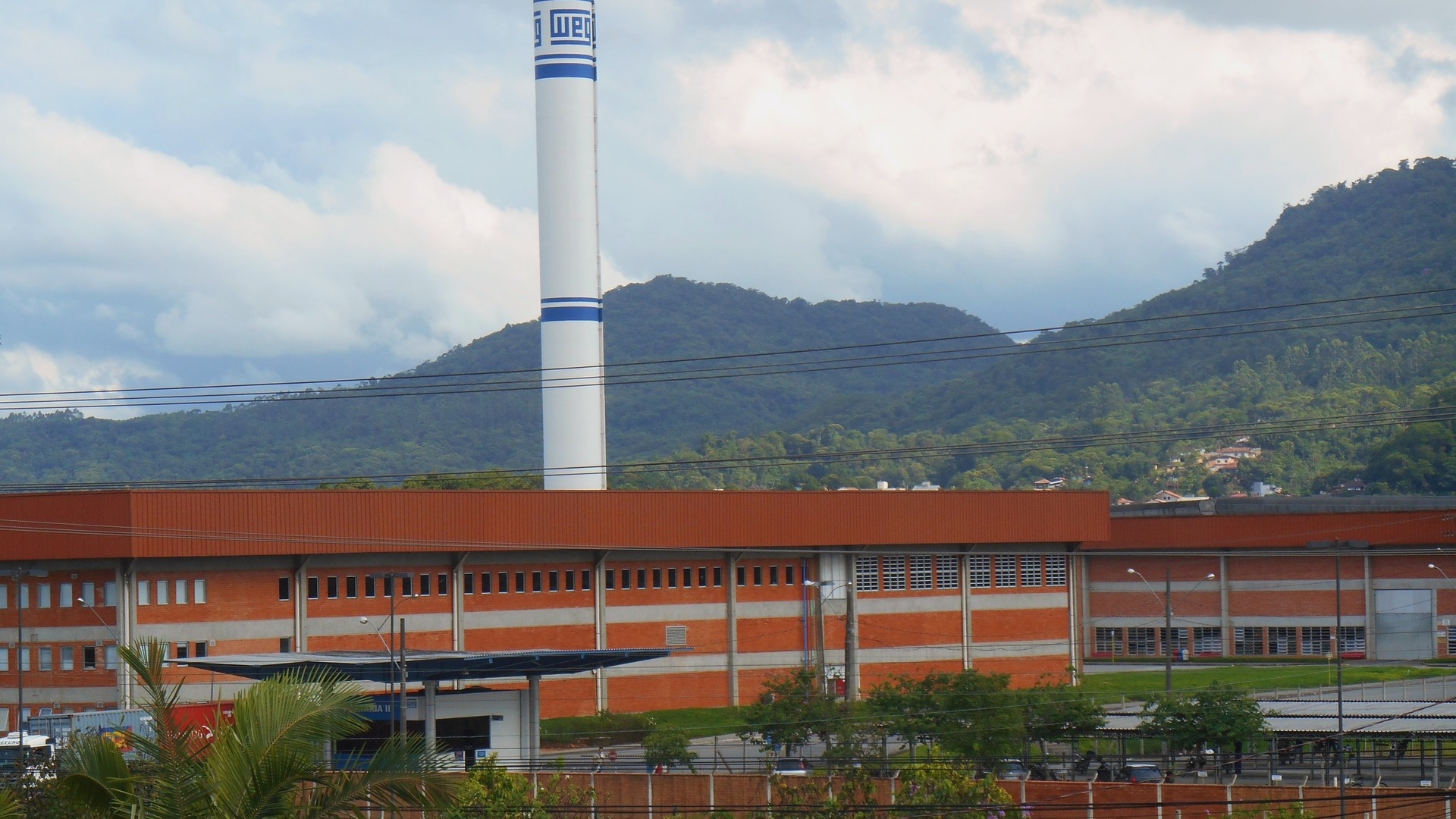
Photo: Nat fa, via Wikimedia Commons (CC BY-SA 3.0).
The announcement had a head table. On November 12, at a conference led by President Claudia Sheinbaum alongside Secretary of Economy Marcelo Ebrard, WEG — the Brazilian electrical-equipment group — committed US$250 million of investment in Mexico through 2030. The centerpiece is a new plant in the state of Hidalgo that will manufacture electric generators, transformers, motors and energy-storage systems. The expected employment effect, per the announcement: 2,000 direct jobs and another 4,000 indirect ones.
Read the product list slowly, because it is the story. Generators, transformers, motors, storage: that is the electrical skeleton of every data center, every grid reinforcement and every industrial expansion now being drawn in Mexico. WEG’s global vice president of Sustainability and Institutional Relations, Daniel Godinho, made the connection explicit at the announcement: “Behind all this digital revolution lies a fundamental need for reliable, efficient and robust energy infrastructure: technology needs energy and energy needs industry.”
The new plant will complement WEG’s existing production in Nuevo León and is aimed, in the company’s words, at responding to data-center demand by “manufacturing strategic electrical equipment for data centers, integrating Mexico into this strategic industrial chain” — and, beyond the domestic market, at exporting, “especially to North America.”
Why transformers are the bottleneck
Every AI announcement eventually becomes an electrical announcement. Mexico’s data-center industry association, MEXDC, working with DCD Intelligence and IDC, projects the sector’s power requirement growing from a base of 279 MW to 1,730 MW by 2031 — more than six times. MEXDC’s executive director, Adriana Rivera Cerecedo, expects some 205 MW to be added toward the end of 2026 and a similar amount in the first quarter of 2027: 410 MW of planned capacity, or 23.7% of the projected 2031 demand, with the rest dependent on grid infrastructure and connection conditions. The association’s broader estimates — an economic impact of US$82.5 billion and more than 133,000 jobs tied to data-center construction and operation — come with its own caveat that they are sector estimates, not a portfolio of individually committed projects.
What those numbers mean in a factory context is lead time. Transformers and large generators are among the longest-lead items in the entire electrical chain: they are built to order, in limited numbers of plants, and the global queue has stretched as every region builds at once. A country that wants data centers on a schedule has two options — join the import queue, or make the equipment at home. President Sheinbaum framed the WEG plant in exactly those terms at the announcement: the government is investing “between two and three times the investment of previous six-year terms” in transmission and distribution lines and substations, and domestic manufacturing of transformers and other electrical components will support that build-out while reducing the need to import equipment.
Secretary Ebrard’s version was shorter: WEG is “a key company for Mexico, for the expansion of industrial activity, data centers, artificial intelligence; everything that implies economic growth goes through this type of equipment.” Strip the ceremony away and the logic is industrial policy in its classic form — anchor the supplier of the bottleneck component inside your own borders, attached to your own grid program.
WEG’s Mexican base
This is not a newcomer buying a flag. WEG has operated in Mexico for more than 25 years and already employs more than 6,000 people in the country, including 400 engineers, across four industrial parks and a network of more than 500 distributors. Over the past years the group has accumulated close to US$400 million of investment in Mexico, serving more than 2,000 local customers and exporting to more than 30 markets. The Hidalgo investment is therefore an expansion of a working platform, not a beachhead.
Godinho’s emphasis at the announcement was on how the company makes things: “WEG manufactures 100% of the equipment it produces here in Mexico; we don’t import for assembly — we are a very vertically integrated company.” Vertical integration is the group’s global signature. Founded in Jaraguá do Sul, Brazil, WEG now employs more than 50,000 people across 69 industrial plants in 18 countries, with a commercial presence in more than 135 markets — one of the world’s largest makers of electric motors and a full-range supplier of generation, transmission and distribution equipment. The Hidalgo plant plugs Mexico into that system at the exact product layer — generation, transformation and distribution equipment, plus storage — where the data-center cycle is tightest.
The demand the plant is aimed at is not only data centers. Godinho was explicit that the strategy “will not be limited to data centers,” but will also serve the Mexican energy sector’s needs — the transmission and distribution expansion the government is funding — and widen exports to North America. In other words, the Hidalgo capacity is being built against three demand curves at once: AI infrastructure, grid reinforcement and industrial growth, all of which draw on the same catalogue.
Costs, constraints and the fine print
Mexico’s pitch to the data-center industry starts with cost. The Turner & Townsend Data Center Construction Index 2026 puts Monterrey 23rd among surveyed markets at an average construction cost of US$12.41 per watt of installed capacity, and Querétaro 32nd at US$11.49 per watt — below Northern Virginia’s US$11.80 on the same methodology and well below Silicon Valley’s US$15.01. (The index measures construction cost per watt, not electricity tariffs.) On cost per watt, Mexico builds cheaper than the two most famous data-center markets in the United States.
The constraints are printed in the same surveys. Among more than 400 specialists consulted for the index, 56% considered electricity supply a critical obstacle; 52% said grid procedures and connections usually take between one and two years, and 32% reported timeframes beyond 24 months; 81% identified moderate or severe limitations in hiring highly qualified staff. That is the context in which a domestic transformer and generator plant matters twice: it shortens one queue — equipment — even while the other queue, grid connection, is worked by the state.
The timeline also deserves a plain reading. The investment runs through 2030 and the plant’s development is scheduled across 2027–2030: this is a capacity decision for the second half of the decade, not a response to this quarter’s orders, which WEG will keep supplying from its existing Mexican platform. Announcements of this kind are promises against a calendar, and the verifiable milestones will be the ordinary ones — construction, hiring toward the 2,000 direct jobs, and the first Hidalgo-built transformers and generators entering the Mexican grid and data-center programs they were announced for.
The shape of the bet
Put the week’s Mexican announcements side by side and a pattern emerges: the country is being built into the AI supply chain at the physical layers — power equipment in Hidalgo, logistics and services in the capital — rather than at the chip layer it cannot contest. WEG’s US$250 million is the industrial version of that pattern: a foreign champion of the bottleneck component, expanding a 25-year local platform, against demand projections its own industry association publishes and a grid program its host government is funding. If the 1,730 MW projection is even roughly right, Mexico will need the transformers. WEG intends to be the company that makes them there.
𝐆𝐄𝐓 𝐅𝐑𝐄𝐄 𝐅𝐔𝐋𝐋 𝐌𝐀𝐆𝐀𝐙𝐈𝐍𝐄 𝐀𝐓 thebuyerspulse.com
What the investment builds
- A new Hidalgo plant for generators, transformers, motors and energy storage — the bottleneck layer of the data-center and grid build-out — complementing WEG’s Nuevo León production.
- Employment at industrial scale: 2,000 direct and 4,000 indirect jobs expected, on top of a 6,000-strong existing Mexican workforce.
- Domestic supply for a demand curve projected to grow sixfold: Mexican data-center power needs rising from 279 MW toward 1,730 MW by 2031.
What to watch
- The calendar: investment through 2030, plant development scheduled 2027–2030 — the milestones are construction starts and hiring, not headlines.
- The grid queue: 56% of surveyed specialists call power supply a critical obstacle, and connection times of one to two years are normal — equipment supply is only one of the two queues.
- Execution against three demand curves at once: data centers, the state-funded grid expansion and North American exports.
Sources
- Energía Estratégica (November 13, 2026): WEG’s US$250 million investment in Mexico through 2030; the new Hidalgo plant for generators, transformers, electric motors and energy-storage systems; 2,000 direct and 4,000 indirect jobs; MEXDC/DCD Intelligence/IDC projection of data-center power demand from 279 MW to 1,730 MW by 2031; statements by Daniel Godinho (WEG global vice president of Sustainability and Institutional Relations), President Claudia Sheinbaum and Secretary of Economy Marcelo Ebrard at the November 12 announcement; WEG’s Mexican platform (25+ years, 6,000+ employees, 400 engineers, four industrial parks, 500+ distributors, ~US$400 million invested) and global footprint (50,000+ employees, 69 plants in 18 countries, presence in 135+ markets).
- Mexico News Daily (November 2026), carrying the announcement: the Hidalgo plant to produce generators, alternators and transformers, with development scheduled from 2027 to 2030 and more than 2,000 jobs expected.
- Turner & Townsend, Data Center Construction Index 2026, as reported by Energía Estratégica: Monterrey at US$12.41 per watt (23rd), Querétaro at US$11.49 per watt (32nd), Northern Virginia at US$11.80 and Silicon Valley at US$15.01; survey findings on power supply as a critical obstacle (56%), connection timeframes and skilled-staff limitations.