
A database change filled Slack's storage — and the workday app went dark for three and a half hours
On November 11, Slack failed the way modern platforms actually fail: not with an attack or a cut cable, but with a routine database change that triggered a storage capacity problem. From 15:24 to 18:58 UTC, the service offices run on stumbled through loading failures, login errors and frozen settings.
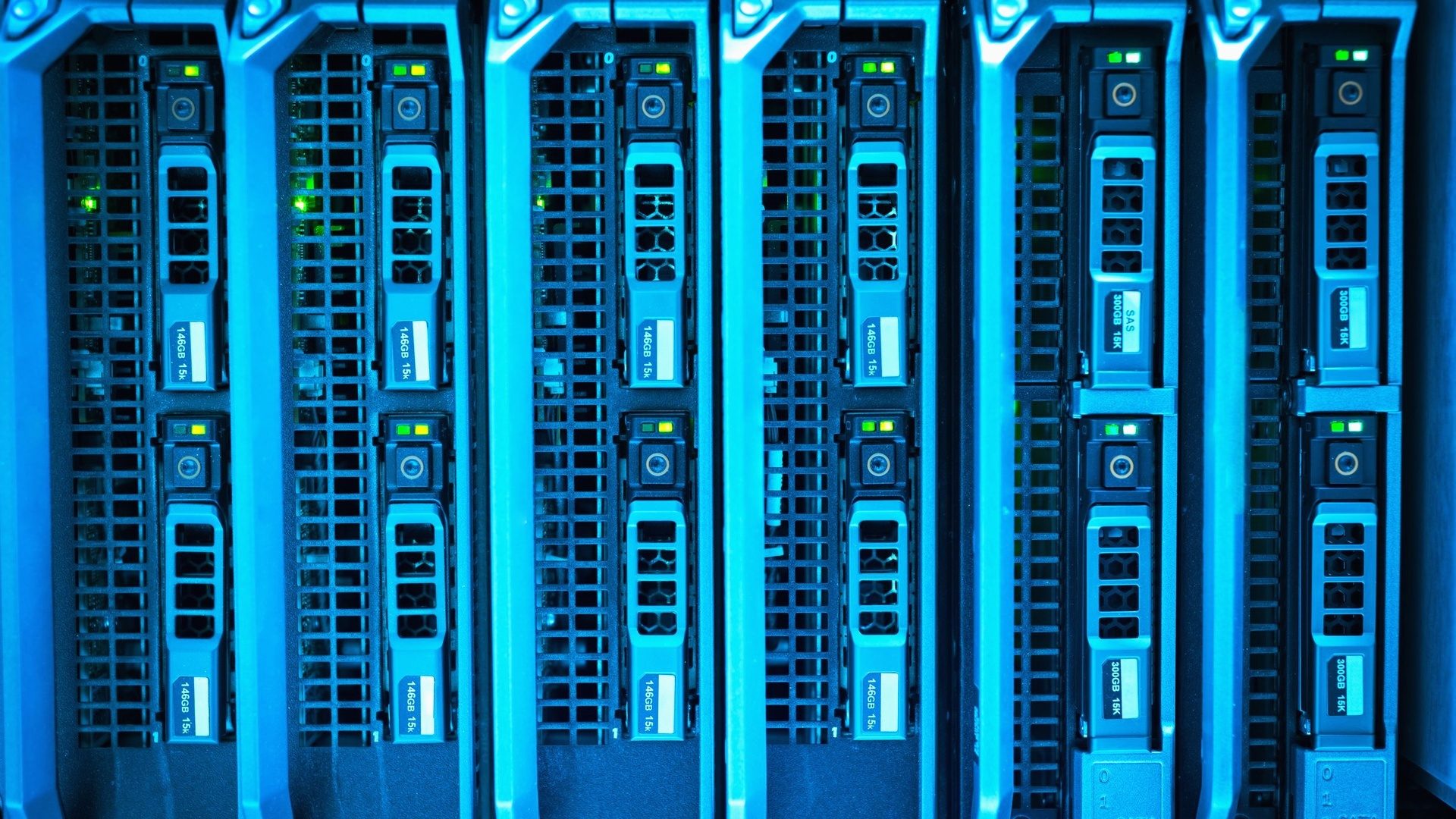
Photo: panumas nikhomkhai / Pexels (Pexels License).
Slack did not fall to an attack, a cut cable or a cloud region going dark. On November 11 it was undone by something far more ordinary: a change to its own database, which triggered a storage capacity problem in the systems underneath the world's office conversations. Slack's status record for the incident — titled, with understatement, “Trouble loading Slack and saving changes” — opens at 15:24 UTC and closes at 18:58 UTC. In between, for three hours and thirty-four minutes, the application that many companies now treat as the office itself loaded slowly or not at all, refused logins, and failed at tasks as basic as saving a profile change.
The incident is worth reading closely precisely because it is unglamorous. There is no villain and no exotic failure mode. There is a routine change, a storage tier that filled or faltered under it, and a cascade of symptoms that looked unrelated until Slack's engineers named the common layer beneath them. That is how the platforms the working day runs on actually break.
The morning, from Slack's own log
The first post, at 07:24 Pacific time, announced an investigation into delays loading Slack and using its features. Five minutes later the scope had a shape: some customers were hitting errors loading the app, saving preferences or profile changes, and deactivating members — an odd trio that only makes sense once you know the failures share a data layer. By the 08:16 update, the list had grown to include logins, channel creation, app installations and workflow publishing, and Slack named its suspect in plain language: “We're investigating a recent database change as the likely trigger leading to a database storage capacity issue. We began freeing storage and removed unhealthy database hosts.”
From there the log turns into a recovery curve. Errors had been decreasing since about 15:51 UTC; by the 09:02 Pacific update, error rates were at normal levels as of 16:15 UTC, and users could load Slack, log in, create channels and save changes again. The remaining work was the unglamorous kind that prevents the sequel: restoring full database redundancy, bringing additional database capacity online and completing configuration changes so the same change cannot bite twice. At 10:58 Pacific, Slack closed the incident — resolved, with an apology, and a sentence that matters for what comes next: “We're continuing to investigate the cause and will take steps to help prevent this from happening again.” No fuller post-mortem accompanies the record; the status log is, for now, the whole official account.
Why a storage problem looks like everything breaking at once
The symptom list is the lesson. Loading the app, logging in, creating a channel, installing an app, publishing a workflow, saving a preference: to a user these are six different features. Underneath, they are six different reads and writes against the same database tier — the layer that remembers who you are, what workspaces you belong to, what channels exist and what your settings say. When that layer's storage runs short or its hosts turn unhealthy, the failures surface wherever the product touches it, which is everywhere. The features do not fail one by one; the floor they stand on sags, and everything standing on it tilts at the same angle.
This is also why the fix reads the way it does. Freeing storage and removing unhealthy hosts is not a metaphor for the repair — it is the repair, performed on the layer where the fault lived. The follow-on work Slack lists — redundancy restored, capacity added, configuration changed — is the standard triad after a capacity incident: put back the spare copies, widen the margin, and alter the setup so the triggering change meets a different system next time.
The week it happened in
Slack's stumble did not occur in isolation. The following day, November 12, Microsoft 365 suffered a global outage — the subject of a separate report in this magazine's Software section — and collaboration tools that integrate with Microsoft services spent part of the same week degraded. Zoom's status record for November 12, as tracked by UptimeRobot, shows degradations tied to its Microsoft integrations running far longer — a reminder that the blast radius of a platform week belongs to the whole stack, not to one vendor. Independent trackers add two footnotes to Slack's own account: monitoring service StatusGator flagged the incident at 15:18 UTC, minutes before Slack's first post, and UptimeRobot's longer view puts the event in perspective — across the ninety days before it, Slack had recorded six incidents with a median duration of about seven hours and forty minutes. By that unflattering yardstick, November 11 was one of Slack's better bad days: shorter than its own median, with the error curve bending down within half an hour of the first post.
That context cuts both ways. A platform can be, simultaneously, reliable enough that a three-and-a-half-hour incident is news and central enough that the news matters to every company that felt it. Slack is both. The workspaces that could not load on November 11 were not missing a chat tool; they were missing their internal mail, their announcement channels, their approval workflows and, in many companies, their incident-response room — the place they would normally gather to discuss an outage like this one.
Not the first time the floor has sagged
Slack's own status archive for 2026 reads like a tour of the shared layers. On October 22, a real-time connection disruption closed a large number of active connections at once; when they reconnected together, the surge briefly strained the services customers use to send and read messages — eighteen minutes, by Slack's closing note, from first impact at 16:08 UTC to normal connections at 16:26 UTC. On October 1, the failure arrived from the opposite direction: a third-party app integration, caught in a loop by a feature-toggle ramp-up, posted messages until it had generated billions of them, pushing free-plan workspaces over their message limits and blocking them from sending at all. Slack lifted the block the same day and promised a full investigation of that incident too.
Three incidents, three different doors into the same house: connections, integrations, storage. None of them is the messaging feature itself. That is the structural point the November 11 outage underlines. A collaboration platform is a stack of shared services wearing a chat window as its face, and its reliability on any given day is set by the least forgiving layer in the stack. Slack's customers cannot diversify that risk from the inside — there is no second database tier of their own to fail over to. What they can do, and what post-mortems are for, is hold the vendor to the engineering that keeps the shared layers boring.
The November log contains one more quiet detail. Slack's later updates describe the work of restoring “full database redundancy” — which means that for a stretch of the incident the platform ran with a thinner safety net than designed, with fewer live copies of the data than the architecture calls for. Nothing in the record suggests data was lost, and error rates were already normal while that work continued. But recovery runs on two clocks: the one users watch, which stopped at 16:15 UTC, and the one engineers watch, which runs until the system is whole again.
What remains owed
Slack's record ends with a promise to keep investigating the cause, and that investigation is the document customers are still owed. The status log establishes the trigger class — a database change meeting a storage limit — but not the specifics an enterprise administrator would want: which change, what capacity threshold, what safeguard failed to catch it before production did. Until a post-mortem answers those, the incident stands as a tidy case study in concentration risk. The same week gave the industry a matching one from Microsoft. Neither company did anything exotic; both were undone by the ordinary machinery of change and capacity, at a scale where ordinary machinery moves the working day of millions. The databases will be given more room, the configurations will be changed, and the next routine change is already on someone's calendar.
𝐆𝐄𝐓 𝐅𝐑𝐄𝐄 𝐅𝐔𝐋𝐋 𝐌𝐀𝐆𝐀𝐙𝐈𝐍𝐄 𝐀𝐓 thebuyerspulse.com
Sources
- Slack Status (Nov 11, 2026), incident record “Trouble loading Slack and saving changes” (slack-status.com): the complete update timeline from 15:24 to 18:58 UTC, the identification of a recent database change as the likely trigger of a database storage capacity issue, the freeing of storage and removal of unhealthy database hosts, error rates back to normal at 16:15 UTC, and the affected services — Connectivity, Messaging, Apps/Integrations/APIs and Workspace/Org Administration.
- StatusGator and UptimeRobot (Nov 2026), independent incident tracking of the same event: detection at 15:18 UTC, minutes before Slack's first post; six Slack incidents in the prior ninety days with a median duration of about 7 hours 40 minutes.
- Photo: panumas nikhomkhai / Pexels — server drive bays in a data center (Pexels License).