
Samsung circles Modine, and the prize is cold air: a reported US$5.6 billion move on data-center cooling
Bloomberg reported on November 12 that Samsung Electronics is in talks to acquire Modine Manufacturing, the Wisconsin maker of data-center cooling systems whose market value stands at about US$5.6 billion. Nothing is signed and both companies declined to comment — but the logic of the move is written in Modine’s own numbers: data-center sales up 73% to more than US$1.1 billion in its last fiscal year, and up 95% in the most recent quarter.
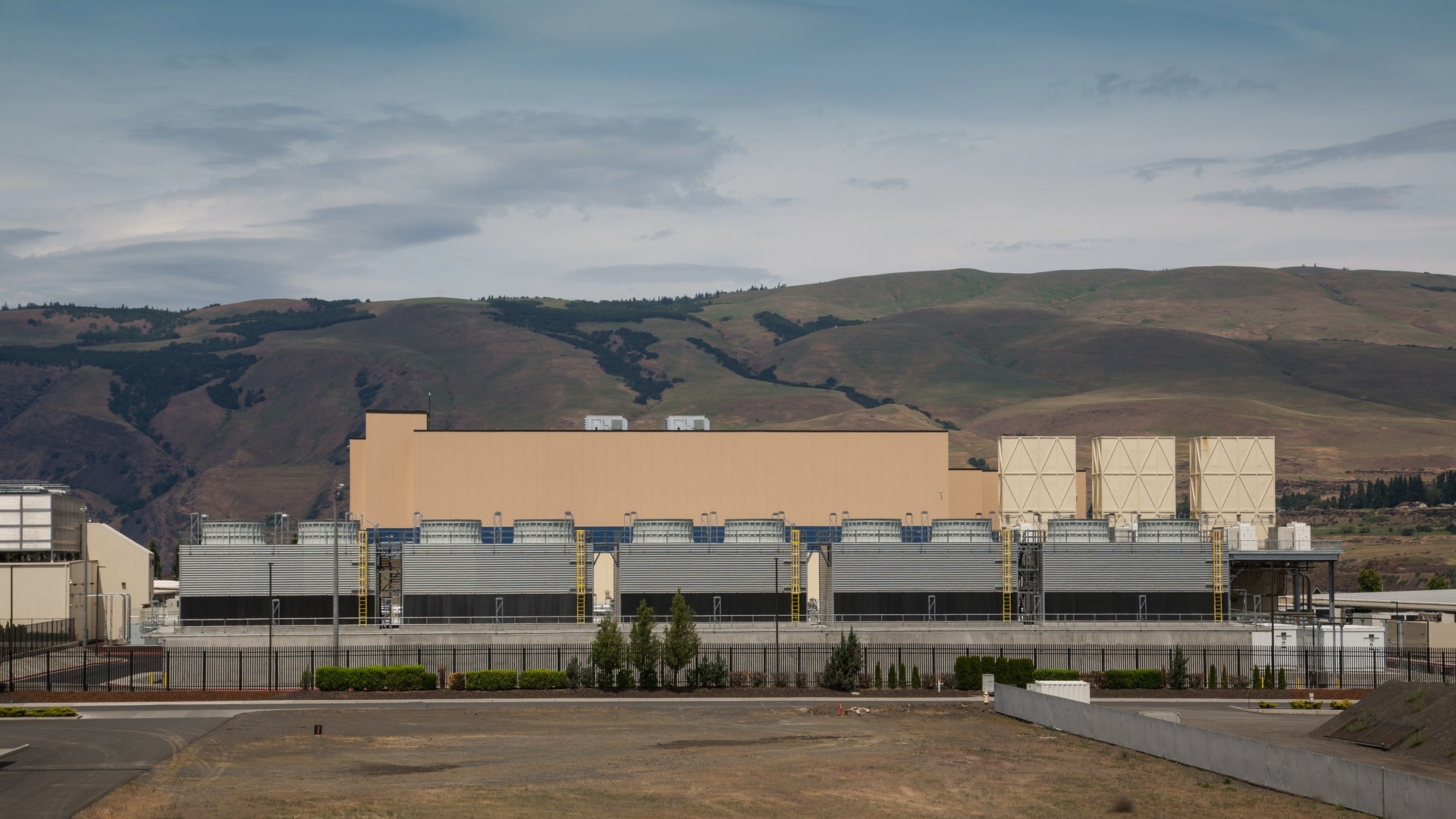
Photo: Tony Webster, via Wikimedia Commons (CC BY 2.0).
Start with the status, because it matters. Bloomberg reported on November 12, citing people familiar with the matter, that Samsung Electronics is in talks to acquire Modine Manufacturing, the Racine, Wisconsin company whose Airedale business has become one of the defining suppliers of cooling equipment to hyperscale data centers. A deal could come together within weeks. No final decision has been made, the talks could still fall apart, another suitor could emerge, and both Samsung and Modine declined to comment. Everything in this article that describes the transaction itself rests on that reported basis, and it is labeled accordingly.
What is not reported talk is the market’s reaction and Modine’s operating record. Modine’s shares jumped more than 28% in after-hours trading on the report, to above US$135, against a regular-session close of US$106.10 — a re-rating applied to a company that closed the day with a market value of about US$5.6 billion. Investors were not pricing a rumor in the abstract. They were pricing a business whose fastest-growing segment sells the equipment that keeps AI data centers from overheating, at the moment when that equipment has become one of the binding constraints of the entire build-out.
That is the frame for everything below: this is a story about heat. The AI industry’s limiting factors have rotated — chips, then power, then grid connections. Cooling sits on the same short list, and Samsung, which already bought Germany’s FläktGroup for €1.5 billion in 2025, is reported to be shopping for the American half of the same strategy.
Why Modine, why now
Modine is not a startup that rode a keyword. Founded in 1916 to make radiators for tractors, it spent a century as a diversified thermal-management manufacturer — vehicle cooling, industrial heat transfer, building HVAC. The transformation that makes it a target is recent and deliberate. In October 2026 the company spun off its vehicle-focused Performance Technologies business to concentrate on climate solutions, completing a pivot into a pure play on cooling for buildings and, above all, data centers.
The pivot shows in the mix. Data-center sales exceeded US$1.1 billion in the fiscal year to March 2026, up 73%, and then accelerated again: US$439.7 million in the July–September quarter, up 95% from a year earlier, driven mainly by North American hyperscalers. The product line sold under the Airedale by Modine brand covers the full heat path of a modern hall — air-cooled chillers including a new 3 MW-class TurboChill model, coolant distribution units, fan walls, rear-door heat exchangers, dry coolers and immersion systems. On November 11, one day before the Bloomberg report, Modine began producing large data-center chillers at a new plant in Grand Prairie, Texas, part of a reported US$100 million expansion of its US manufacturing capacity.
Two details keep the story honest. First, the order book: Modine holds a multi-year capacity agreement to supply more than US$4 billion of cooling products to a key strategic customer across 2027–2029 — the kind of contracted demand that lets a buyer underwrite an acquisition. Second, the strain: Modine’s shares were down roughly 60% from their May 2026 peak before the Samsung report, on margin compression caused by the cost of growing this fast — capacity spending, supplier constraints and raw-material costs. The business Samsung is reported to be buying is growing at 95% a quarter in its core segment and is being squeezed by exactly that growth. Both halves are the deal.
Samsung’s side of the table
For Samsung, the reported talks are the second move in a visible sequence. In 2025 it agreed to acquire FläktGroup, the German maker of air-conditioning and ventilation systems, for €1.5 billion (about US$1.7 billion) — a European platform for commercial HVAC and data-center cooling. Modine would be the North American counterpart: the same product family, the larger market, and a customer list anchored by the hyperscalers building the biggest AI campuses in the United States.
The strategic logic is portfolio arithmetic. Samsung’s core businesses — memory chips and smartphones — are enormous and cyclical. Cooling for data centers is a smaller market growing at infrastructure speed, attached to the same AI capital expenditure that drives demand for Samsung’s memory, but paid for by a different budget line and through different procurement channels. Owning the thermal layer also deepens Samsung’s position inside the data-center bill of materials: the company that sells the HBM stacks has an interest in the halls those stacks heat up.
Scale is not the obstacle. Modine’s US$5.6 billion market value was reported as equivalent to roughly 3.5% of Samsung’s cash position; even with a customary control premium — observers cited in market coverage suggested a price approaching US$7.5 billion is conceivable — the transaction is well inside Samsung’s capacity, alongside a capital-spending program reported at about US$63 billion for the year. The obstacles, if the talks advance, are the standard ones for a Korean acquisition of a US industrial supplier with defense-adjacent and hyperscaler customers: price, and a possible US national-security review of the kind that has shaped other cross-border deals in the AI supply chain.
The heat problem is the market
Step back from the two companies and the transaction explains itself. AI accelerators have pushed rack power densities past what air cooling alone can economically remove; the industry’s answer — direct-to-chip liquid cooling, coolant distribution units, rear-door heat exchangers and ever-larger chillers — is precisely Modine’s catalogue. Every gigawatt of AI capacity announced by a hyperscaler implies a second, quieter procurement program in thermal equipment, with lead times and capacity constraints of its own.
That is why a 110-year-old radiator maker from Wisconsin now sits at the intersection of a Korean conglomerate’s strategy and the AI build-out’s physics. The scarce asset is not a patent portfolio or a brand; it is installed manufacturing capacity, hyperscaler qualifications earned over years, and an order book — the US$4 billion-plus agreement — that converts the AI boom into contracted revenue through 2029.
It also explains the queue. Cooling equipment is no longer bought by facilities teams as a commodity line item; it is specified alongside the accelerators themselves, because a hall’s thermal design decides how much compute it can actually run. Suppliers across the segment — Modine, Vertiv, Schneider Electric and others named in industry supplier rankings — have spent two years adding capacity against orders that keep arriving faster than plants can be built. In that market, a supplier with qualified products, a contracted multi-year book and a new plant already in production is not merely a vendor. It is a position in the supply chain, and positions are what conglomerates buy when a component turns strategic. Samsung’s reported interest is the clearest sign yet that the industry’s center of gravity now includes the heat path — the unglamorous machinery that decides whether the glamorous machinery can run at full power, all day, every day.
What happens next
The reported timetable is weeks, not quarters. If the talks produce a signed deal, expect the price to be measured against the US$5.6 billion market value plus a premium, and expect scrutiny of Modine’s margins to decide whether the market calls it discipline or exuberance. If the talks collapse — as both companies’ silence leaves entirely open — Modine still exits the episode re-rated, with its data-center segment growing 95% and a new Texas plant to fill. Either way, the signal to the rest of the cooling industry is the same: the thermal layer of the AI data center is now strategic enough for the world’s largest technology companies to buy, not just procure.
𝐆𝐄𝐓 𝐅𝐑𝐄𝐄 𝐅𝐔𝐋𝐋 𝐌𝐀𝐆𝐀𝐙𝐈𝐍𝐄 𝐀𝐓 thebuyerspulse.com
What the talks signal
- Cooling has joined chips and power as a strategic layer of the AI build-out: Samsung is reported to be buying capacity and customer position, not a product line.
- Modine’s pivot is complete — the October 2026 spin-off of its vehicle business left a pure thermal play whose data-center sales grew 73% in fiscal 2026 and 95% in the latest quarter.
- The order book de-risks the story: more than US$4 billion of contracted Airedale supply across 2027–2029, and a new Grand Prairie plant already producing large chillers.
What is not settled
- Nothing is signed: Bloomberg’s sources say a deal could come within weeks, could fall apart, or could draw another suitor; neither company has commented.
- Price is open — a control premium over the US$5.6 billion market value could take the figure toward the ~US$7.5 billion observers have floated.
- Growth is straining the asset: margins have compressed under capacity and supplier costs, and Modine’s shares were down ~60% from their May peak before the report.
Sources
- Bloomberg (November 12, 2026): Samsung Electronics is in talks to acquire Modine Manufacturing; a deal could come together within weeks, no final decision has been made, the talks could fall apart and another suitor may emerge; both companies declined to comment — reported and attributed.
- Shanghai Metals Market, carrying the Bloomberg report (November 13, 2026): Modine’s market value of about US$5.6 billion; data-center sales above US$1.1 billion in fiscal 2026, up 73%; agreement to supply more than US$4 billion of Airedale cooling products in 2027–2029; October 2026 spin-off of the automotive operations.
- Market coverage of Modine’s results and the report’s market reaction (Stocktwits/Bloomberg, November 12–13, 2026): data-center segment revenue of US$439.7 million in the July–September quarter, up 95% year on year; shares up more than 28% in after-hours trading to above US$135 from a US$106.10 close; production of large data-center chillers began at the new Grand Prairie, Texas plant on November 11.
- BlackRidge Research, data-center cooling supplier profiles (updated November 10, 2026): Modine’s Airedale portfolio (3 MW-class TurboChill, CDUs, fan walls, immersion), the October 2026 Performance Technologies spin-off, and the reported US$100 million expansion of US manufacturing.
- Samsung’s €1.5 billion acquisition of Germany’s FläktGroup (agreed in 2025), as reported in the coverage above.