
IBM and the NCSC move CyberFirst to SkillsBuild and launch a new course for 15-year-olds
IBM and the National Cyber Security Centre announced on November 12 that the CyberFirst courses — taken by more than 450,000 UK young people since 2016 — move exclusively to the free IBM SkillsBuild platform, with a new course for 15- and 16-year-olds and the first TechFirst Girls Competition.
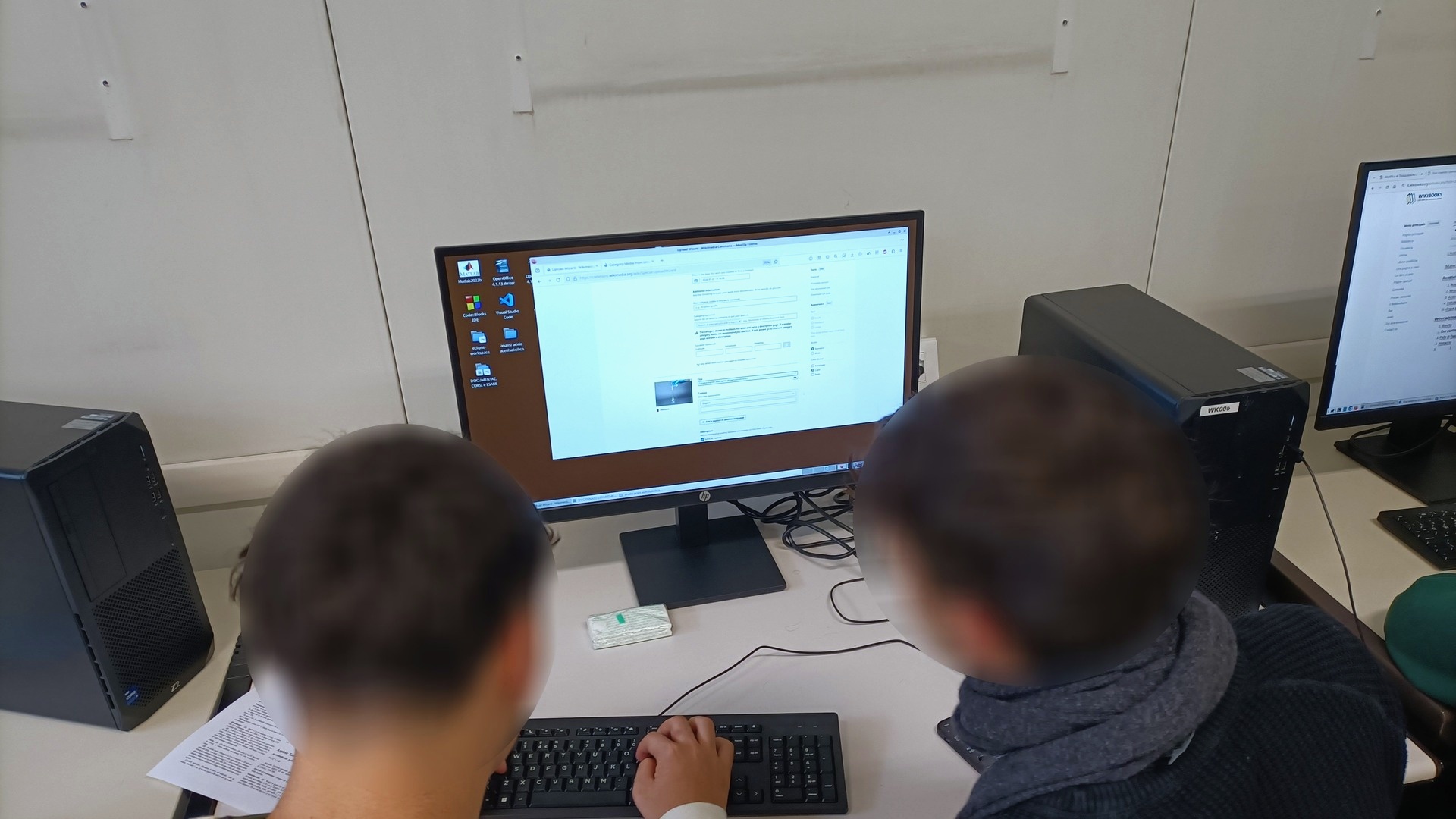
Photo: Fra.Ardini — CC BY-SA 4.0 — via Wikimedia Commons.
Britain's school cyber-security courses have a new single home. IBM and the National Cyber Security Centre announced on November 12, in London, that the NCSC's CyberFirst courses for school students move exclusively to IBM SkillsBuild — IBM's free technology-education platform — alongside a new advanced course for 15- and 16-year-olds and the first TechFirst Girls Competition. For families and schools, the practical change is simple: one free destination for the courses, the teachers' materials and the competition, instead of a programme scattered across sites.
CyberFirst is not a small programme being rescued; it is a large one being consolidated. Since 2016 it has engaged more than 450,000 young people in the United Kingdom. It now sits inside TechFirst, the government's flagship technology-skills programme, officially launched in September 2026 with the aim of reaching more than one million young people by the end of 2028. Moving its courses onto a single platform run by a founding industry partner is the government's chosen way to scale it.
What is actually on the platform
The course ladder is built by age. CyberFirst Defenders, for students aged 14 and 15, covers how to build and protect small networks and personal devices — the defensive basics, taught as practice rather than theory. The new CyberFirst Futures, launching in November for 15- and 16-year-olds, goes further into the advanced threats that target devices, applications and software. Around the courses sits the first TechFirst Girls Competition, launched by the UK Government with IBM, with schools registering teams at techfirstgirls.co.uk — a deliberate intervention in a field whose pipeline problem starts well before university. Students and teachers now reach all of it through SkillsBuild, which also carries IBM's broader catalogue of free technology courses.
Why the government is doing this with IBM
The announcement sits inside two larger commitments. The UK Government's AI Skills Boost programme aims to upskill ten million people, and IBM is a founding partner of that effort. IBM, for its part, has committed to skilling thirty million learners by 2030, and says SkillsBuild and its related programmes have already reached more than twenty-two million people worldwide. Chris Ensor, the NCSC's Deputy Director for Cyber Growth, framed the move as putting the courses where the students and teachers already are; Leon Butler, IBM's UK and Ireland chief executive, framed it as scale — the same content, on a platform built to carry it to every school rather than the schools that find it first. Both framings point at the announcement's declared priority: the most disadvantaged schools and students from underrepresented backgrounds are named as the focus, on the logic that a single free platform only equalizes access if the outreach goes where access is thinnest.
What it means at the kitchen table
Strip away the programme architecture and the offer to a UK family is concrete: free, structured cyber-security and AI courses for teenagers, built by the country's technical authority for cyber security, reachable from a school or a home connection, with a competition that gives girls a team-based way in. The skills are the employable kind — network defence, threat awareness, how software gets attacked — in a labour market where security roles are chronically unfilled. Parents do not need to evaluate the platform's pedagogy from first principles; the courses carry the NCSC's name and a decade of delivery behind them. The decision for a school is mostly logistical: register, pick the course that matches the age group, and let Defenders feed Futures. For a programme that began in 2016 as an outreach experiment, exclusivity on a global platform is a promotion — and for the students it is aimed at, the price of admission remains what it was: nothing.
From experiment to infrastructure
CyberFirst began in 2016 as the NCSC's outreach programme — bursaries, courses and competitions meant to find the teenagers who might become the country's defenders. A decade on, its numbers describe a pipeline rather than a project: more than 450,000 young people engaged, a course ladder that now runs from Defenders at 14–15 to the new Futures at 15–16, and absorption into TechFirst, the government's flagship technology-skills programme launched in September 2026, which carries the target of reaching more than one million young people by the end of 2028. The move onto IBM SkillsBuild is the infrastructure decision that matches that scale: a platform that already serves schools and adult learners worldwide, with the catalogue, the accounts and the teacher-facing tooling that a programme website has to rebuild for itself. Exclusivity is the point — one address for the courses means one link for a teacher to share, one place for a parent to check, and no parallel versions drifting out of date.
The girls' competition is a pipeline decision
The first TechFirst Girls Competition, launched by the government with IBM as part of this announcement, deserves reading as engineering rather than ceremony. Cyber security's workforce imbalance is a documented, persistent feature of the industry, and every serious attempt to change it starts at the age this programme targets — before subject choices harden at 16. A team competition gives schools a low-friction way to put girls into a security challenge with institutional backing, and its placement inside the CyberFirst structure means the competition is a feeder for the courses, not a one-off event. Schools register at techfirstgirls.co.uk; the courses their students then take are the same Defenders and Futures ladder, on the same free platform.
How a school or a family actually starts
For schools
- One destination: CyberFirst courses now live exclusively on IBM SkillsBuild — update any old bookmarks and scheme-of-work links.
- Match the course to the age: Defenders for 14–15 (build and protect small networks and devices); the new Futures for 15–16 (advanced threats to devices, apps and software).
- Enter the competition: register teams for the TechFirst Girls Competition at techfirstgirls.co.uk.
For families
- It is free: SkillsBuild is IBM's free education platform; the CyberFirst courses carry no charge for students or teachers.
- It is the NCSC's content: the courses come from the UK's national technical authority for cyber security, delivered since 2016 to 450,000+ young people.
- It connects upward: the programme sits inside TechFirst (1M young people targeted by end-2028) and the government's AI Skills Boost commitment to upskill 10 million people.
The announcement's own emphasis fell on reach into the schools that programmes like this historically miss — the most disadvantaged, and students from underrepresented backgrounds, named explicitly as the priority. A free platform does not by itself deliver that reach; teachers in those schools still have to hear about it, timetable it and run it. But the structural barriers that consolidation can remove — scattered links, multiple accounts, unclear ownership of the material — were removed on November 12, in one move, by putting a decade of national cyber education for teenagers onto a single platform built to carry it. What remains is the part no platform can do: a teacher, a classroom, and an hour in the week.
The scale behind the platform
SkillsBuild's role in this announcement is easier to judge with its numbers attached. IBM says the platform and its related programmes have reached more than twenty-two million learners globally, against a corporate commitment to skill thirty million people by 2030 — a distribution system of a size no national programme could build for itself in a school-generation. For the NCSC, placing CyberFirst there trades a measure of direct control for that reach; for IBM, hosting the national cyber curriculum of a G7 country is both a contribution and a credential. The exchange is the standard shape of these partnerships, and the test of it is mundane: whether a teacher in a school that has never run CyberFirst can now find the course, register a class and start Defenders in a single sitting. November 12 made that test possible; the school year will grade it.
A word on who this reaches first
Programmes like CyberFirst are often judged by their totals — 450,000 young people is the number this announcement leads with — but their effect concentrates at the margin: the school that runs the course because it is now one link instead of five, the student who enters the girls' competition because a teacher could timetable it, the 15-year-old who meets network defence as a school subject rather than a rumor. Consolidation is unglamorous work, and it is also how national programmes actually grow. The courses were already free and already respected; as of November 12 they are also, finally, in one place.
𝐆𝐄𝐓 𝐅𝐑𝐄𝐄 𝐅𝐔𝐋𝐋 𝐌𝐀𝐆𝐀𝐙𝐈𝐍𝐄 𝐀𝐓 thebuyerspulse.com
Sources
- IBM UK Newsroom (Nov 12, 2026): “IBM and National Cyber Security Centre expand free cyber and AI education for UK schools” — exclusive move to SkillsBuild, CyberFirst Futures and Defenders, TechFirst Girls Competition, programme figures.
- FE News (Nov 11/12, 2026): coverage of the announcement.
- Photo: Fra.Ardini, CC BY-SA 4.0, via Wikimedia Commons (students at the University of Genoa's computer science department).