
FedEx spends US$80 million in Mexico City on the back office of the Americas
FedEx has opened a Global Capabilities Services center in Mexico City — a US$80 million investment that will create more than 500 direct jobs by the end of 2026, with plans to grow to 1,000 employees, and that will provide strategic support services to the company’s operations in 33 countries across the Americas, from Canada to Argentina. It is not a warehouse. It is the network’s back office, moved to where the skills are.
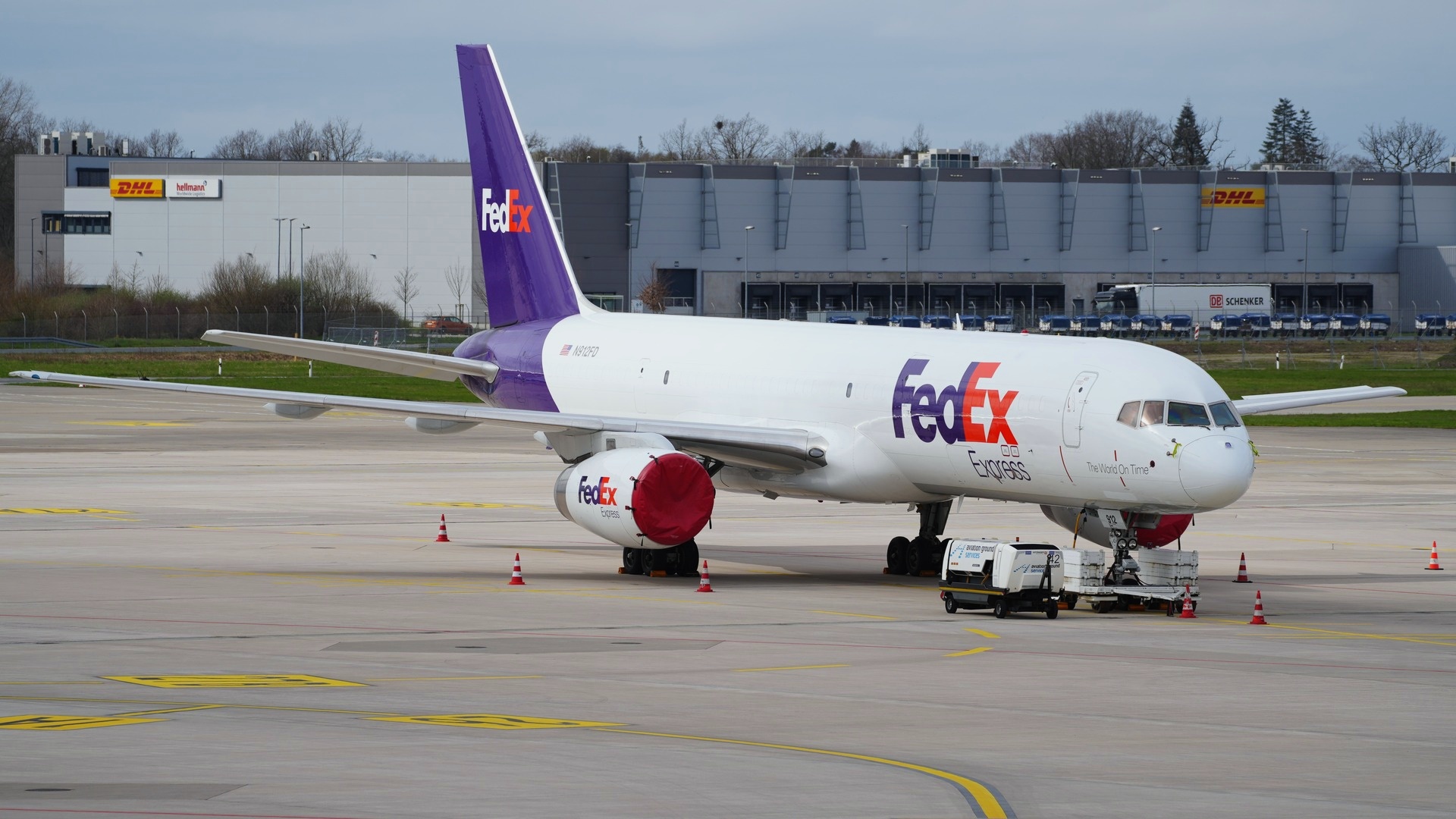
Photo: MarcelX42, via Wikimedia Commons (CC BY-SA 4.0).
The photograph that usually illustrates a FedEx investment is an aircraft or a warehouse. This one is neither, and that is the story. On November 12, FedEx announced the opening of its new Global Capabilities Services — GCS — center in Mexico City: a US$80 million project to build world-class facilities with advanced technology and security systems, staffed by multidisciplinary teams working on customer experience, finance and commercial operations for the world’s largest express transportation company.
The center will create more than 500 new direct jobs by the end of 2026, and FedEx plans to expand the workforce to 1,000 employees. From Mexico City, the company will provide strategic support services to 33 countries across the Americas, from Canada to Argentina — centralizing, in one Spanish- and English-speaking hub working the continent’s time zones, capabilities that an express network needs running every day but does not need sitting at headquarters in Memphis.
“These facilities will help strengthen our capabilities in strategic areas and reaffirm Mexico as a key destination for global service delivery,” said Jorge L. Torres, vice president of Operations at FedEx Mexico, in the company’s announcement. “FedEx is committed to Mexico, and we will continue providing solutions that contribute to the country’s economic development and competitiveness.”
Not a warehouse: a capabilities center
Read the job description, not the headline. A GCS center does not sort packages. It centralizes the skilled back-office work that a network of FedEx’s scale consumes in volume: the customer-experience teams that answer when a shipment matters, the finance functions that bill and reconcile across dozens of jurisdictions, and the commercial operations that support sales across two continents. FedEx’s own framing is explicit — the center exists to provide “critical back-office support” to its operations across the Americas and around the world, driving “more agile processes, continuous innovation and greater responsiveness.”
That distinction matters for Mexico. A distribution center competes on land, labor cost and highway access. A capabilities center competes on people: bilingual, university-trained, able to work a finance process for Brazil in the morning and a customer escalation from Canada in the afternoon. FedEx is explicit that these are “highly skilled” jobs, and that the center is designed to foster professional growth and development — the vocabulary of the services economy, not the warehouse economy.
Inside the model: what a capabilities center concentrates
The GCS label deserves a paragraph of its own, because it describes an organizational decision that goes well beyond real estate. In a company organized by countries and regions, every national operation tends to grow its own finance team, its own customer-service operation and its own commercial support — dozens of partial replicas, each too small to specialize and each competing for the same scarce bilingual talent. A capabilities center reverses the flow: the work is pooled in one place, where it can be staffed deeply, measured uniformly and improved as a single process. The country organizations are left with the work that genuinely has to happen in the country — operations, sales relationships, regulators — while the repeatable expert work concentrates where it can be done best.
That is also why the announcement lingers on the facilities themselves: “world-class facilities equipped with advanced technology and security systems.” A center that will run finance processes and hold customer data for 33 countries concentrates risk as well as expertise, and FedEx is signaling that the building was specified accordingly. The security line in the release is not boilerplate; it is part of the product a hub like this sells to the rest of the company — one controlled environment, one set of standards, instead of thirty-three variations.
And the model explains the jobs language. Because the pooled work is the expert layer — finance, customer experience, commercial operations — the hiring profile is professional rather than operational, and the company’s promise of “professional growth and development” is structural, not decorative: a capabilities center only retains the people it needs if it offers them a ladder, and the planned growth from 500 to 1,000 employees is, in effect, the ladder being built.
Why Mexico City
FedEx has operated in Mexico for 35 years, and the company notes that Mexico ranks among its most profitable markets worldwide. The GCS decision builds on that operating history with a specific piece of geography. Mexico City works the same business hours as the markets it will serve — a support center for the Americas that sits inside the Americas’ time zones, rather than twelve hours away from them. It offers a deep pool of bilingual professional talent at costs below the United States, in a country where FedEx already runs one of its largest international operations and understands the labor market, the universities and the regulators.
There is also a trade logic. The nearshoring cycle that has pulled manufacturing investment into Mexico over the past five years runs on logistics: every factory that relocates raises the volume of express shipments, customs work and commercial support around it. FedEx placing its Americas support hub in the same country is the services layer of that same bet — the network follows the freight, and the back office follows the network.
The pattern: services follow the network
FedEx is not the first global operator to discover that the highest-value jobs in a logistics company are not all at the hub airport. The industry’s large integrators have spent a decade building global capability centers — concentrated hubs of finance, customer and commercial expertise that serve whole regions from one city. What is notable here is the direction of the flow: a US company moving skilled service work for 33 countries, including its home market’s closest partners, into Mexico City, and saying so in the language of strategy rather than cost-cutting.
For Mexico, the announcement lands in a specific policy moment. The government’s industrial strategy courts exactly this category of investment — high-skill services attached to global value chains — because it employs graduates, exports services and sticks. Five hundred jobs by the end of 2026, rising toward a thousand, will not move national statistics. But the center’s function will touch operations in 33 countries every day, which is a different kind of weight: Mexico City becomes part of the control room of the Americas’ largest express network.
The same week brought a smaller echo of the pattern: trade coverage of the opening noted FedEx expanding on the logistics side in Thailand as well — a reminder that the company is building on both layers at once, physical capacity where freight grows and service capacity where the skilled work can be concentrated.
What to watch
One more detail in the announcement rewards attention: the calendar. A center announced on November 12 that promises more than 500 jobs “by the end of 2026” is not describing a distant plan — it is describing a ramp already in motion, with hiring, training and the first service migrations compressed into the coming months. That makes the GCS opening unusually checkable as corporate announcements go: within about a year, the headcount either is or is not there, in a single building, in a single city.
The metrics are printed in the announcement. The first is hiring: does the center reach its 500-plus jobs by the end of 2026, and on what trajectory toward the planned 1,000? The second is scope: capability centers that work tend to absorb more functions over time — each additional discipline moved to Mexico City is a vote on the model. The third is imitation: if FedEx’s Americas back office performs from Mexico, the question reaches every competitor with a regional structure to feed. The aircraft will keep making the photographs. The org chart is where this investment lives.
𝐆𝐄𝐓 𝐅𝐑𝐄𝐄 𝐅𝐔𝐋𝐋 𝐌𝐀𝐆𝐀𝐙𝐈𝐍𝐄 𝐀𝐓 thebuyerspulse.com
What the center does
- Centralizes customer experience, finance and commercial operations for FedEx across the Americas in one hub with advanced technology and security systems.
- Serves 33 countries from Canada to Argentina — inside the region’s time zones, with bilingual professional teams.
- Creates skilled employment at scale: more than 500 direct jobs by the end of 2026, with a planned workforce of 1,000.
What to watch
- The hiring pace against the printed targets — 500-plus by end-2026 is the first verifiable milestone.
- Whether more functions migrate to the hub over time, as successful capability centers tend to absorb.
- The competitive response: regional support structures are a cost and quality battleground for every global integrator.
Sources
- FedEx Newsroom (November 12, 2026): “FedEx Opens New Global Capabilities Services (GCS) Center in Mexico City” — US$80 million investment; more than 500 highly skilled direct jobs by the end of 2026; plans to expand the workforce to 1,000 employees; strategic support services to 33 countries across the Americas, from Canada to Argentina; multidisciplinary teams in customer experience, finance and commercial operations; statement by Jorge L. Torres, vice president of Operations at FedEx Mexico; Mexico among FedEx’s most profitable markets worldwide; 35 years of operations in the country.
- CEP Research (November 13, 2026): FedEx opens its Americas support services centre in Mexico City as part of the US$80 million investment programme, alongside a smaller logistics expansion in Thailand.