
Bitcoin capitulates: a three-month low at $62,081, $2 billion in leveraged bets wiped out, and fear at 10
The break came on Saturday night, when the market was at its thinnest and the funds that now anchor bitcoin were closed for the weekend. By Sunday morning, bitcoin had touched its lowest price in three months, almost $2 billion in leveraged positions had been forcibly closed, and the market's own fear gauge read 10 out of 100. On Sunday the price bounced back above $65,000. What this was — a flush or a fracture — gets its first real answer on Monday, when the ETF door reopens.
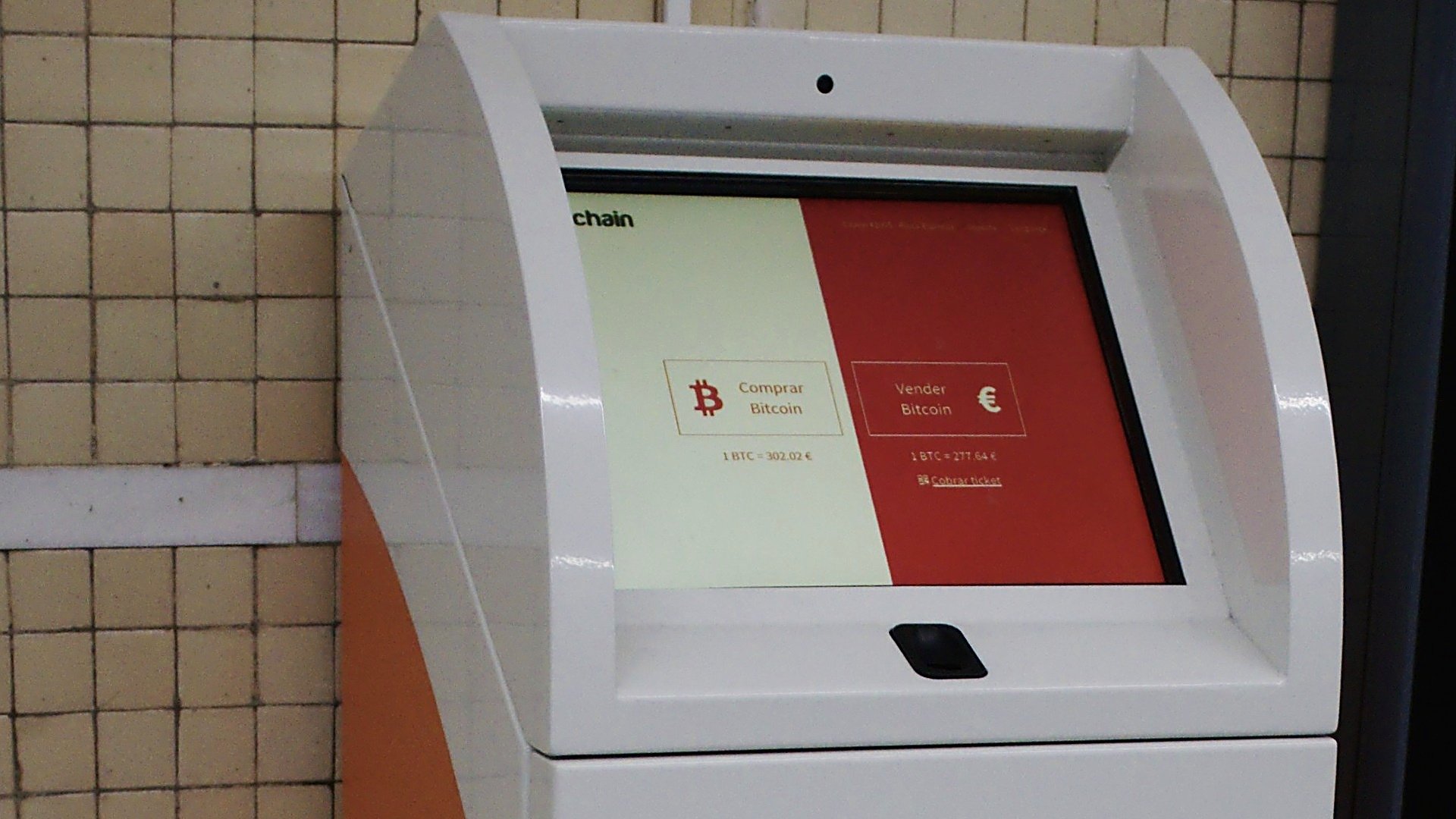
Photo: Nicolas Vigier, Wikimedia Commons (CC0).
The level had held all day. Through Saturday, $65,000 was the line bitcoin traders watched — the floor of the week's slide — and it held until the evening, when the weekend's thin order books met one more wave of selling. Then it gave way, and the fall stopped being orderly. CoinGecko recorded a 24-hour low of $62,081; on Coinbase, bitcoin printed $61,946 at 01:45 UTC on Sunday. Either way it was the weakest price since mid-July — a three-month low, roughly 14 percent down on the week by CoinDesk's count, and on course for a sixth consecutive weekly loss.
What turned a bad week into a capitulation was not the selling itself. It was what the selling triggered.
Ninety minutes of forced selling
A liquidation is not a decision. It is the opposite of one: when a leveraged position falls past its margin, the exchange closes it automatically, at market, whatever the price. Each forced closure sells into the same fall that caused it, pushing the price through the next layer of margin thresholds, which triggers the next round of closures. On Saturday night the loop ran at full speed. In a single hour as the $65,000 level broke, about $691 million in positions was liquidated — roughly $671 million of it longs, against $19.5 million in shorts, according to CoinGlass data cited by AiCoin.
Across the full 24 hours, the tallies converge on the same figure: about $2 billion in leveraged positions wiped out. The Defiant, reading CoinGlass data, put the total at $2.05 billion, more than 90 percent of it long positions — bets that the price would rise. Bitcoin accounted for roughly $750 million of the liquidations and ether for about $488 million, per CoinGlass figures reported by Business Standard; ether itself touched $1,714 in the small hours, its weakest level in months. Some 319,000 traders had positions closed out from under them.
Why the weekend made it worse
Two features of this market turned a slide into a cascade. The first is the calendar. Bitcoin trades around the clock, but its largest pool of buyers no longer does: the US spot bitcoin ETFs, which hold the asset for pension funds, advisers and ordinary brokerage accounts, trade only when US markets are open. From Friday's close to Monday's open, that entire bid was absent — the selling ran into a market missing its biggest buyer, in the thinnest hours of the week.
The second is the backdrop the selling landed on. The US dollar index has climbed to a 19-month high, and hotter-than-expected inflation data has traders pricing in the possibility of tighter, not looser, monetary policy — the combination that has pressured risk assets all month, as Decrypt and CoinDesk have reported through the selloff. Bitcoin did not fall alone on Saturday; it fell last, and fastest, because it is the one major asset that never closes.
The money leaving through the front door
Underneath the weekend's drama, the slower story is the ETF flow — and it has been running in one direction for two weeks. US spot bitcoin ETFs recorded net outflows for a seventh consecutive session on Friday, about $1.91 billion withdrawn across that streak, according to Farside Investors data, and roughly $2.1 billion for November so far. BlackRock's IBIT, the largest of the funds, has now posted eleven straight sessions of net outflows.
The analysts cited in the coverage read the flows as de-risking rather than abandonment. HashKey researcher Tim Sun told Decrypt that the outflows reflect institutions cutting risk and are "not yet sufficient to prove that Bitcoin's long-term allocation thesis has reversed." That distinction — trimming exposure versus exiting the asset — is precisely what Monday's session starts to test: the first flow data after the capitulation weekend arrives after Monday's US market close, and it will show whether the streak was the story or merely the overture.
Capitulation is a technical word here
On-chain analyst James Check, in comments reported by CoinDesk, called the move bitcoin's fourth capitulation event since its record high — and placed the price in what he termed a "deep value zone," a band last visited in February and late summer. His supporting figure is the one that gives the weekend its name: daily realised losses — the losses actually locked in by sellers — more than doubled in a single day, from $420 million to over $850 million, as holders who had bought above $80,000 sold at whatever the market would pay. Capitulation is the market's word for that moment: not analysis, surrender.
The levels frame how far the surrender ran. Bitcoin's record high is $126,080, set on October 6, 2025; Saturday night's low sits more than 50 percent beneath it. The price also closed the weekend below its 200-week moving average, near $67,990 — a line that has separated recoveries from deeper bear markets in past cycles, and the level the price must reclaim to change the conversation. Below, the next marker traders cite is the year's low: $57,742, printed on July 1. Strategy, the largest corporate holder of bitcoin, watched the paper loss on its treasury swell to roughly $11 billion at the low, narrowing to about $8.5 billion after Sunday's bounce, by market tallies. Even the network's plumbing registered the stress: Bitcoin Magazine noted mining difficulty fell 9.13 percent in its latest adjustment.
Sunday's bounce, and what it does not settle
The recovery, when it came, was quick. Bitcoin reclaimed $65,000 on Sunday and held it — Finnhub's feed showed $65,029 in the early hours of Monday UTC, and KuCoin's market report put it at $65,360, up 1.88 percent on the day, as Sunday closed. A bounce off a capitulation low is the normal shape of these events; forced sellers, once flushed, stop selling.
But the gauges that measure mood have not followed the price back up. The Crypto Fear & Greed Index still reads 10 — it was 20 on Friday and 13 on Saturday — deep in extreme fear. Funding rates on the largest perpetual futures venues stayed negative through the recovery, according to market reports, meaning short sellers were still paying to hold their positions: traders, in aggregate, remained positioned for more downside even as the price recovered. The bounce settled the weekend. It did not settle the argument.
The two bitcoins
The machine in this article's photograph stands in a metro station in Barcelona, and its screen offers the same two buttons it offered on Friday: buy bitcoin, sell bitcoin. It is worth pausing on the distance between that machine and this weekend's $2 billion. The liquidations happened in derivatives markets most holders never see, at hours most holders were asleep, in a market structure where the asset trades continuously but its largest regulated wrapper — the ETF — keeps office hours. Anyone holding bitcoin through an ETF on Friday evening owned an asset whose price fell 14 percent over a weekend during which their fund could not trade at all; anyone holding it directly, or at a machine like this one, faced the same fall with the door open.
That is the structural fact the weekend exposed, and it does not depend on where the price goes next. Bitcoin is now two things at once: a round-the-clock speculative instrument liquid enough to burn $2 billion in a night, and a mainstream allocation held through the most conventional vehicles in finance. This weekend, those two bitcoins traded on different clocks — and only one of them was open.
𝐆𝐄𝐓 𝐅𝐑𝐄𝐄 𝐅𝐔𝐋𝐋 𝐌𝐀𝐆𝐀𝐙𝐈𝐍𝐄 𝐀𝐓 thebuyerspulse.com
Sources
- CoinDesk (Nov 14–15, 2026): bitcoin's three-month low, the ~13.5–14% weekly decline, and analyst James Check's "fourth capitulation" assessment and realised-loss figures.
- CoinGecko price data: 24-hour low of $62,080.91 — the weakest level since July.
- Coinbase price data via Coindaro (Nov 15, 2026): the $61,946 print at 01:45 UTC on Sunday.
- CoinGlass liquidation data, via The Defiant and Cryptoast ($2.05 billion in 24 hours, over 90% long positions) and via AiCoin (the $691 million single hour); trader count and the bitcoin/ether split via Business Standard.
- Farside Investors flow data, via Decrypt and Cointelegraph: seven consecutive sessions of net outflows from US spot bitcoin ETFs, ~$1.91 billion across the streak, ~$2.1 billion for November; IBIT's eleven-session outflow streak.
- Crypto Fear & Greed Index (Alternative.me), as reported across market coverage: 20 on Friday, 13 on Saturday, 10 on Sunday.
- Finnhub and KuCoin market data (Nov 16, 2026, 00:00–04:22 UTC): the Sunday reclaim of $65,000.
- Bitcoin Magazine: mining difficulty's 9.13% downward adjustment.
- Photo: Nicolas Vigier, "Bitcoin ATM" (Bitchain ATM, Barcelona metro), Wikimedia Commons, CC0.