
Amodei makes the pitch: Anthropic fixes its IPO at US$70–78 a share — and demand is already pressing above the range, the FT reports
The man in the photograph is doing this week what he is photographed doing: standing in front of an audience and making the case for Anthropic. On November 10 the company he co-founded launched the roadshow for its initial public offering and, in Amendment No. 2 to its Form S-1 filed with the SEC the same day, fixed the terms that had been blank since the first filing in October: 825 million shares of Class A common stock at an expected US$70.00 to US$78.00 a share, to be listed on the Nasdaq Global Select Market under the symbol ANT. At the top of the range the offering raises US$64.35 billion before costs — and the first reports from the roadshow say the range may already be too low. The Financial Times reports that, with demand on the first day already covering the book, Anthropic's bankers are weighing a price above the range, which would value the company at US$1.5 trillion or more fully diluted. That last part is a press report, not a filing: Anthropic has not confirmed it, and no new filing sets it. This article keeps the two apart throughout — what the prospectus fixes, and what is only being reported.
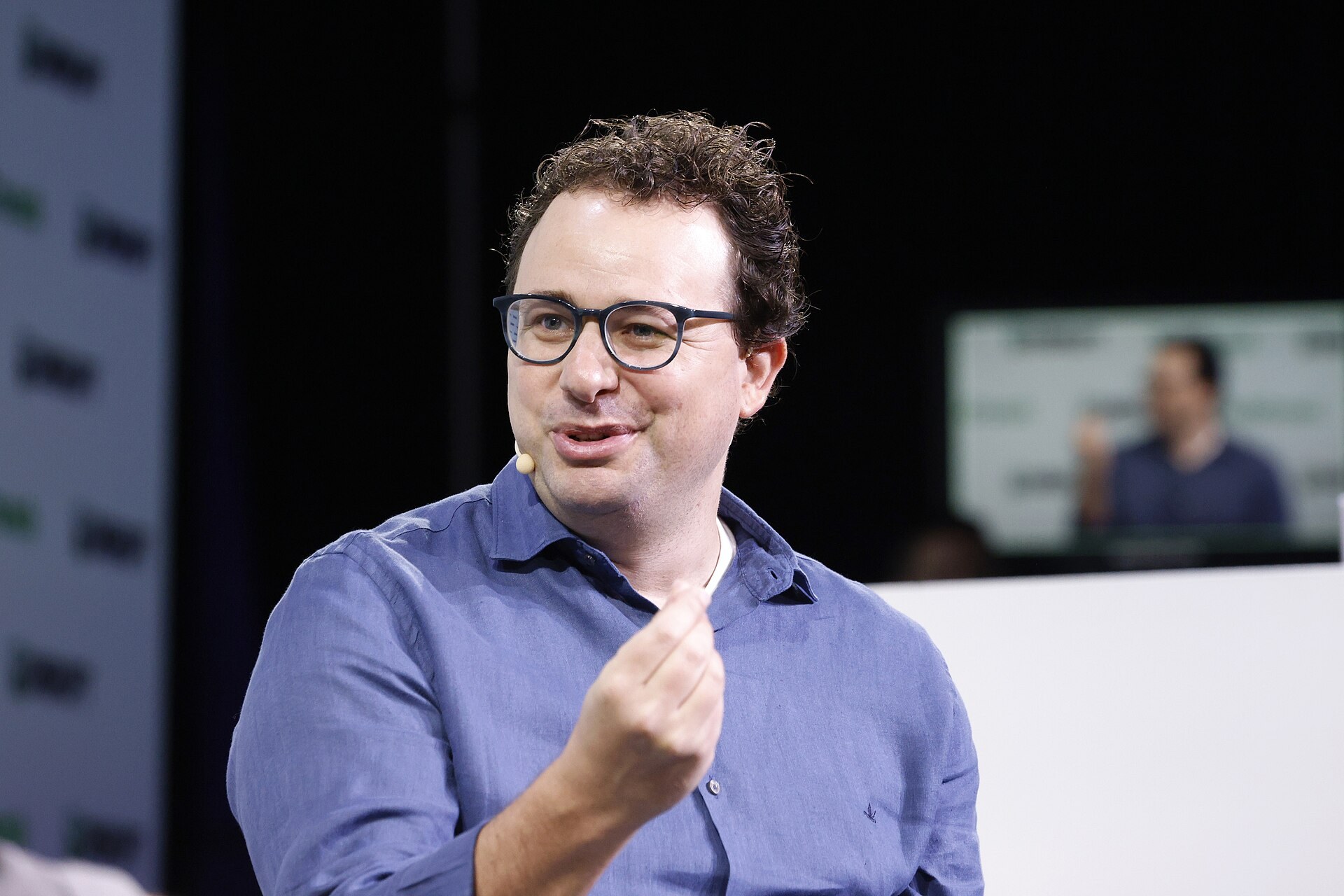
Photo: Kimberly White / Getty Images for TechCrunch, via Wikimedia Commons (CC BY 2.0) — file photograph, TechCrunch Disrupt, San Francisco, September 20, 2023.
Until Tuesday, Anthropic's public filing was a prospectus with the commercial heart left blank: the original S-1 of October 26 and the first amendment of November 2 disclosed the business, the revenue and the risks, but no price, no share count and no date. Amendment No. 2, accepted by the SEC on November 10, fills in the heart. The offering is 825,000,000 shares of Class A common stock. Of these, 801,351,354 are new shares sold by Anthropic itself, and 23,648,646 are sold by existing stockholders — Anthropic receives nothing from that second slice. The expected price is US$70.00 to US$78.00 a share. Goldman Sachs and Morgan Stanley lead the underwriting. And the company has applied to list on the Nasdaq Global Select Market under a three-letter claim on its own name: ANT.
What the filing fixes — and what it does not
The arithmetic of the filed range is simple and very large. At US$70 a share, 825 million shares raise US$57.75 billion gross; at US$78, they raise US$64.35 billion, before underwriting discounts and expenses. On top of the base deal, Anthropic expects to grant the underwriters a 30-day option to buy up to 123,750,000 additional shares — a standard stabilisation mechanism that, if exercised in full at the top of the range, would add roughly US$9.65 billion more. What the filing does not fix matters just as much. The final price is not set: it will be decided after the roadshow, when the bankers close the book. No pricing date and no first trading day appear in the document. And the registration statement, as Anthropic's own announcement underlines, has been filed but has not yet become effective — until the SEC declares it effective, no shares can legally be sold at any price. Everything in this section is in the filing. Everything about dates and about a price above the range, further down, is not.
The valuation depends on which share count the reader chooses, and the two numbers in circulation measure different things. On the shares that will be outstanding after the offering, Reuters calculates a valuation of about US$1.02 trillion at the top of the range. On a fully diluted basis — counting the options, restricted stock and other instruments that will turn into shares over time — TechCrunch, working from the filing, puts the figure at up to about US$1.4 trillion. Both are arithmetic on the same prospectus; neither is a price anyone has paid. The fully diluted number is the one that describes the whole company the market is being asked to value, and it is the basis on which the reported move above the range, below, would take the valuation to US$1.5 trillion or more.
The second deal running beside the first
The public offering is not the whole raise. Running in parallel, and described in the filing, is a private placement of US$26 billion of non-voting Class N common stock, sold at the same price as the IPO shares. The reported buyers are a map of Anthropic's supply chain and its platform world: Google and Nvidia are reported as the largest participants, with AMD, Broadcom, Micron, Microsoft and TSMC also reported among the purchasers. Read that list again slowly. These are, in the main, the companies that sell Anthropic its compute, its chips and its distribution — investing in their own customer at the moment it goes public, in shares that carry no vote. The placement is not a detail: US$26 billion is more than most companies raise in their entire public lives, and here it is the side deal next to a US$64.35 billion main event.
Add the pieces together and the scale of the week's financing comes into focus — this is arithmetic on the filing's own figures, not a new claim. The public offering at the top of its range is US$64.35 billion. The private placement beside it is US$26 billion more, at the same price. If the underwriters also exercise their option in full at US$78, roughly US$9.65 billion follows. The three together describe a company preparing to take in on the order of US$100 billion of new capital around a single listing — against nine-month revenue of US$33.2 billion and an annualised run-rate of about US$81 billion. Capital raises are usually sized to the business that exists; this one is sized to the commitments already signed, the roughly US$900.9 billion of compute and infrastructure the prospectus obliges Anthropic to buy and lease. The offering is enormous because the bill it answers is nine times larger still.
Why the company needs money at this scale is also in the prospectus, and it is the single largest number in this story. Anthropic discloses purchase and lease commitments of about US$900.9 billion — substantially all of it, as TechCrunch notes from the prospectus, in compute and infrastructure. That is the business model stated as a liability: the revenue below is real and growing very fast, but it is produced by capacity that has to be contracted, built and paid for in advance, on a scale that approaches a trillion dollars of commitments. The IPO is, among other things, the financing instrument for that bill — which is why its size is not vanity. A company that has promised to buy roughly US$900.9 billion of compute raises equity in tens of billions because its commitments are denominated in hundreds of billions.
The numbers investors are being asked to underwrite
The growth in the filing is of a kind prospectuses rarely contain. Revenue in the third quarter of 2026 was about US$17 billion, up 47% from the quarter before it. For the first nine months of 2026, revenue was US$33.2 billion, against US$2.5 billion in the same period a year earlier — more than thirteen times larger. And the run-rate at the end of October, the filing indicates, annualised to about US$81 billion. These are the figures Dario Amodei and his bankers are presenting this week, room by room, on the roadshow: a company whose revenue multiplied by thirteen in a year, selling shares at a fully diluted valuation of about US$1.4 trillion at the top of the filed range. Whether that price is high or low depends entirely on how many more years of growth at anything like this pace the buyer believes are left — which is precisely the question a roadshow exists to argue about.
One group is selling into that argument in a measured way. The prospectus shows the company's seven co-founders each selling about 3.38 million shares in the offering — part of the 23,648,646 shares offered by existing stockholders. At the US$74 midpoint of the range, those founder sales add up to about US$1.75 billion combined, by the prospectus's own figures. It is a partial cash-out at the moment of listing, small against what the founders retain, and it is disclosed in the document for every roadshow investor to read — which is the point of a prospectus: the selling is on the table, priced into the same range as everything else in this article.
Day one of the roadshow, and the price is already moving — in reports
Now the part that is not in any filing. CNBC reports that demand on the first day of the roadshow already covered the book — investors had ordered at least as many shares as the offering contains. The Financial Times goes further: citing five people familiar with the process, it reports that the bankers are evaluating pricing the deal above the US$70–78 range, a move that would put the fully diluted valuation at US$1.5 trillion or more. The sourcing deserves to be read as carefully as the claim. Anthropic has not confirmed the report. No amendment to the S-1 raises the range. A priced-above-range outcome would only become a filing fact when a new amendment or the final prospectus says so. Until then, the correct statement is the narrower one: the terms on paper are US$70–78, and a well-sourced newspaper reports that the market's first response is pressing against the top of them.
The calendar is in the same category — reported, not filed. Pricing is expected on November 18 and the Nasdaq debut on November 19, according to people familiar with the plans cited by CNBC. The filing itself sets neither date, and the debut also depends on the SEC declaring the registration statement effective. If the reported calendar holds, Anthropic will go from roadshow launch to public trading in nine days, at a size and speed that match the growth figures in its own prospectus. If the range is raised before pricing — as the FT reports is being weighed — the next amendment will say so, and the numbers in the panel above will move with it.
How to read this deal
For the reader who runs infrastructure rather than a portfolio, the Anthropic filing is worth reading as an industry document, not only a market one. It prices, in public, the inputs the whole sector buys in private: roughly US$900.9 billion of compute and infrastructure commitments, a US$26 billion placement bought largely by the suppliers of that compute, and a public raise of up to US$64.35 billion to fund the machine. The customer, the suppliers and the capital are the same small group of companies, now joined on a stock exchange. That circularity is not hidden — it is the structure of the deal, laid out in the prospectus for anyone to read. The Buyer's Pulse does not offer investment advice, and nothing here is a recommendation to buy or sell ANT. What can be said on the record is narrower and, for this magazine, sufficient: the terms are fixed, the growth is in the filing, the commitments are in the filing, and the only thing still moving is the price — which, if the reports are right, is moving up.
What the filing fixes
- The terms are set in Amendment No. 2 to the S-1 (November 10): 825 million Class A shares at US$70–78, ticker ANT on the Nasdaq Global Select Market, Goldman Sachs and Morgan Stanley leading.
- The growth is documented, not pitched: Q3 2026 revenue of about US$17 billion (+47% on the quarter) and nine-month revenue of US$33.2 billion, against US$2.5 billion a year earlier.
- A parallel US$26 billion private placement at the IPO price adds the industry's own money — reported buyers include Google, Nvidia, AMD, Broadcom, Micron, Microsoft and TSMC.
What to watch
- The reported move above the range (US$1.5 trillion or more fully diluted) comes from the Financial Times, citing five people familiar with the process; Anthropic has not confirmed it and no new filing sets it.
- The calendar — pricing on November 18, debut on November 19 — is reported by CNBC from people familiar with the plans; it is not in the filing, and the registration statement is not yet effective.
- The prospectus discloses about US$900.9 billion of purchase and lease commitments, substantially all in compute and infrastructure: the growth is bought in advance, at enormous scale.
The file
The offering (S-1/A, November 10, 2026)
| Field | Detail |
| Shares | 825,000,000 Class A common stock — 801,351,354 offered by Anthropic, 23,648,646 by selling stockholders |
| Price range | US$70.00–US$78.00 per share (gross proceeds US$57.75 billion–US$64.35 billion) |
| Listing | Nasdaq Global Select Market, symbol ANT (applied) |
| Underwriters' option | Up to 123,750,000 additional shares, 30 days |
| Lead underwriters | Goldman Sachs and Morgan Stanley |
| Valuation | About US$1.02 trillion on shares outstanding (Reuters calculation); up to about US$1.4 trillion fully diluted (TechCrunch, on the filing) |
| Status | Registration statement filed, not yet effective; final price and dates not set in the filing |
The company in the filing
| Field | Detail |
| Q3 2026 revenue | About US$17 billion, up 47% quarter on quarter |
| Nine months 2026 | Revenue US$33.2 billion (same period a year earlier: US$2.5 billion) |
| Run-rate | About US$81 billion annualised at the end of October 2026 |
| Commitments | About US$900.9 billion of purchase and lease commitments, substantially all compute and infrastructure (via TechCrunch, on the prospectus) |
| Founder sales | Seven co-founders each sell about 3.38 million shares — about US$1.75 billion combined at the US$74 midpoint (per the prospectus) |
| Private placement | US$26 billion of non-voting Class N stock at the IPO price; reported buyers: Google, Nvidia, AMD, Broadcom, Micron, Microsoft, TSMC |
Reported, not filed
| Field | Detail |
| Above the range | Financial Times (five people familiar with the process): bankers are evaluating pricing above US$70–78, implying US$1.5 trillion or more fully diluted — unconfirmed by Anthropic |
| The book | CNBC: first-day roadshow demand already covered the book |
| The calendar | CNBC (people familiar with the plans): pricing expected November 18, Nasdaq debut November 19 — neither date is in the filing |
Sources
- Anthropic, PBC — Amendment No. 2 to Form S-1, filed with the U.S. Securities and Exchange Commission on November 10, 2026 (SEC EDGAR): the offering terms (825 million Class A shares at US$70.00–78.00; 801,351,354 new shares and 23,648,646 from selling stockholders), the underwriters' option of 123,750,000 shares, the Nasdaq Global Select Market listing application under the symbol ANT, the US$26 billion private placement, the revenue figures (Q3 2026 about US$17 billion; nine months US$33.2 billion; annualised run-rate about US$81 billion at the end of October), the commitments and the founder sales. sec.gov
- Anthropic — 'Anthropic launches roadshow for proposed initial public offering', company announcement, November 10, 2026: the roadshow launch, the share split, Goldman Sachs and Morgan Stanley as prospectus sources, and the statement that the registration statement has been filed but has not yet become effective. anthropic.com
- Reuters — coverage of the November 10 filing: the valuation of about US$1.02 trillion calculated on shares outstanding at the top of the range.
- TechCrunch — coverage of the filing: the valuation of up to about US$1.4 trillion fully diluted, and the prospectus's roughly US$900.9 billion of purchase and lease commitments, substantially all in compute and infrastructure.
- CNBC — roadshow coverage: first-day demand already covering the book, and the expected calendar (pricing November 18, Nasdaq debut November 19) attributed to people familiar with the plans. Neither item is in the filing.
- Financial Times — report of November 11, 2026, citing five people familiar with the process: bankers evaluating pricing above the filed range, implying a fully diluted valuation of US$1.5 trillion or more. Not confirmed by Anthropic; no new filing sets a higher range.
- Photo: Kimberly White / Getty Images for TechCrunch, via Wikimedia Commons (CC BY 2.0) — Dario Amodei speaking at TechCrunch Disrupt, San Francisco, September 20, 2023. A file photograph: Amodei is shown making a public presentation, as he does on the roadshow; the photograph is not from the roadshow itself.