
HomeView is on sale: Apple's shared screen greets six faces by name — and two reviewers got opposite answers on your messages
Apple's first smart display goes on sale today, Friday, November 13, at US$299, and its central promise is a delicate one: a screen the whole household shares, which recognizes up to six faces and shows each person only their own messages, calendar and reminders. The first reviews, published Thursday, tested that promise in real kitchens — and two of the most thorough tests reached opposite conclusions about whether the protection holds.
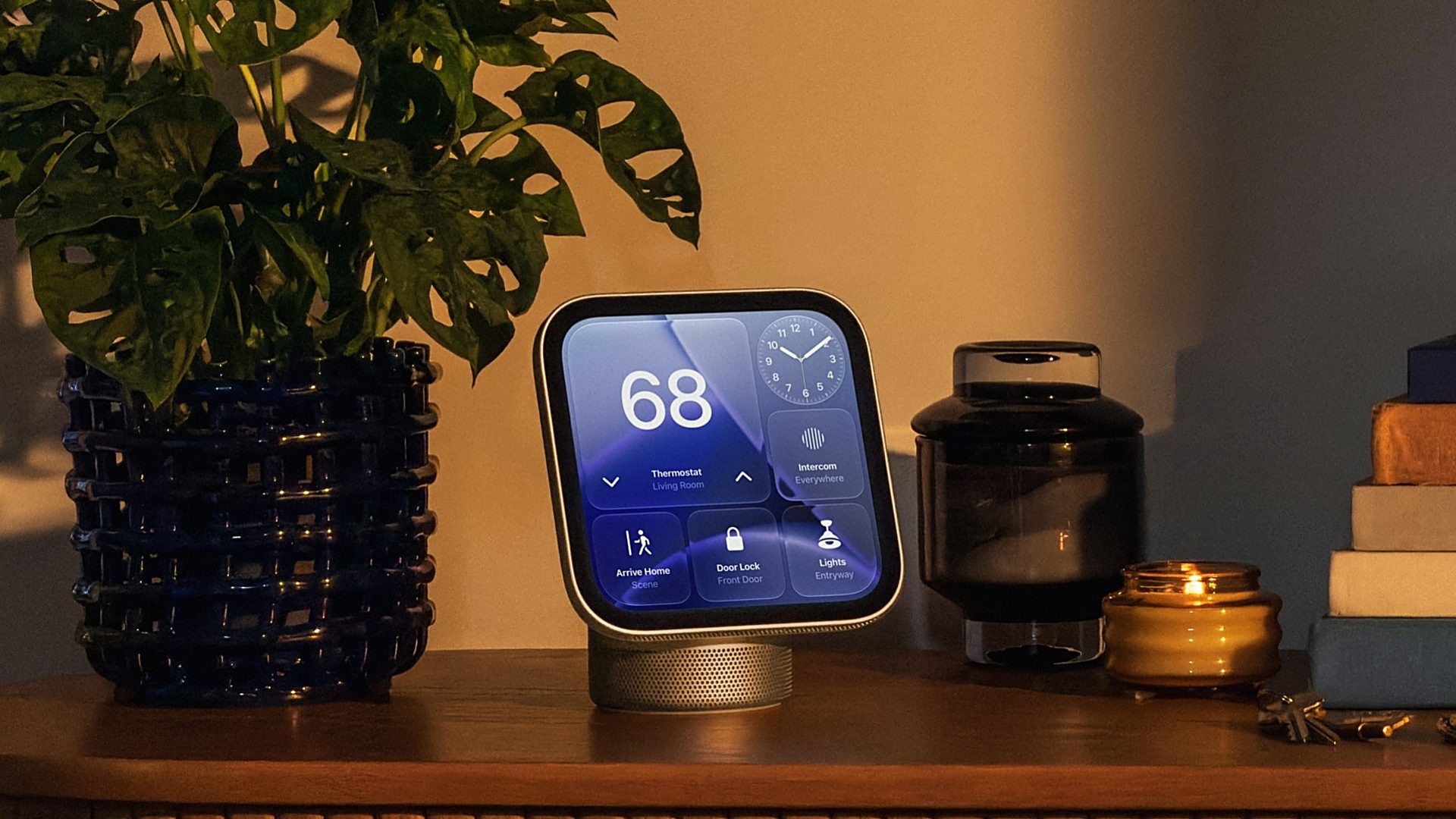
Photo: Apple (official press image, Apple Newsroom).
HomeView is Apple's first smart display: a 7-inch Liquid Retina touchscreen on a domed speaker base, with a flat wall-mounted twin sold alongside it. Apple announced it on October 13 and opened pre-orders the same day; beginning today it is on sale at Apple Store locations, on the Apple Store online and in the Apple Store app in the United States, the United Kingdom, Australia, Canada, India, New Zealand and Singapore, with South Africa served through authorized resellers. It is pitched as the center of the home — entertainment, FaceTime calls, photos, guided cooking and control of the house — and it is the first Apple home device with Siri AI built in.
HomeView does not arrive alone. It is the centerpiece of the home lineup Apple presented on October 13 — the same event brought a new Apple TV 4K, also US$299 and also on sale today, and a HomePod mini 2 at US$149 — and, like a HomePod or an Apple TV, it doubles as a hub for Apple Home. It also enters a category Amazon and Google have occupied for a decade with cheaper displays: at US$299 it costs more than an Echo Show or a Nest Hub, a premium every review weighs against how deeply the household is already invested in Apple's ecosystem.
A screen that decides whose data it is showing
The feature everything else hangs on is recognition. HomeView identifies up to six people by face and by voice, and adapts to whoever is in front of it: their Messages, FaceTime, Calendar, Reminders and Find My. Personal content, in Apple's own description, appears only under two conditions at once — the user is recognized by face, and their paired iPhone or iPad is present and has been recently unlocked. Setup requires that iPhone or iPad, running the latest software.
It is not Face ID. As Chance Miller of 9to5Mac describes from his ten days with the device, HomeView uses its built-in camera for facial recognition, and during setup it asks you to turn your head left, right, up and down so it can capture your face from different angles. Apple says the camera and microphone data used for recognition is processed in Secure Exclaves, a hardware-isolated part of the A18 chip that apps, the user and Apple itself cannot reach. Anyone the camera does not know falls into a new category Apple had to invent for a shared screen, the unrecognized user: as The Verge described at launch, that person can control lights, play music, ask general questions and watch live camera feeds — but cannot rewind recordings or access security devices.
The Verge's test: ten seconds of someone else's messages
Jennifer Pattison Tuohy of The Verge tested HomeView at home for a week, in both its tabletop and wall-mounted forms. With her daughter taking part in the test, Tuohy found that after her daughter had been viewing her own messages and stepped away, the profile stayed active for about 10 seconds — long enough for Tuohy to keep reading her 15-year-old daughter's text messages, and, she reports, vice versa. The device then re-checked who was in front of it and locked the personal content. Her daughter's verdict, as Tuohy reports it: "I'll just use my iPhone."
The episode sits inside an otherwise warm review. Tuohy calls HomeView "my new favorite smart display," scores it 7 out of 10 and says it is "superb at controlling my smart home," an excellent hands-free kitchen companion and a gorgeous digital photo frame, with solid sound for its size. The friction she flags is precisely the shared-iPhone behavior: clunky authentication checks and being sent back to her iPhone too many times interrupt the hands-free experience, Siri AI can be slow at times, and there are no physical volume or mute buttons.
9to5Mac's test: the door stayed shut
Chance Miller of 9to5Mac spent ten days living with HomeView on his kitchen counter, alongside his partner — and ran the mirror-image test. When he approached the display while it was on his wife's profile and tried to open the Messages app, HomeView answered that it could not verify his identity and denied him access. When he tried repeatedly, the device went further: it disabled facial recognition altogether, requiring his wife to authenticate with her iPhone before she could reach her personal information again. Automatic profile switching between the two of them, he reports, worked well.
A third test points the same way. Jacob Krol of TechRadar reports that while he was viewing his own messages, his father walked into the camera's view and HomeView immediately stopped showing his personal content until it could recognize him again. The three results are three different scenarios — a handover in the seconds after someone walks away (The Verge), a deliberate attempt to open another person's profile (9to5Mac), and a second face entering the frame mid-session (TechRadar) — and they do not contradict each other so much as they map different edges of the same system. What none of the first reviews can establish yet is how often the first scenario, the open window, occurs in ordinary household use.
What the first reviews agree on
Beyond the privacy question, the reviews converge. Smart home control is the star: lights, scenes, cameras and locks respond with a speed reviewers compare to an iPad's. In the kitchen, guided cooking with Handoff sets automatic timers as a recipe advances, and Miller writes that the recipes feature "works incredibly well." The customizable faces — clock faces, photo faces, including a Snoopy face — make it a strong digital photo frame, and the interface, familiar from iPhone and Apple Watch yet purpose-built for a display, drew praise from 9to5Mac.
The limits are equally consistent. There is no App Store: HomeView runs 18 built-in Apple apps, beams in CarPlay-compatible audio apps from a user's iPhone, and has no third-party video apps at launch; The Verge notes the Ring app, among others, is not available directly. Everything personal leans on that nearby, recently unlocked iPhone or iPad. And Siri AI — available in beta in HomeView software 27.2, in English at launch — showed occasional slowness in testing; MacRumors reports that Apple plans a software update in December that includes a Siri fix.
Price, versions, and the map of where it is not sold
Both models cost US$299 in the United States. The tabletop version comes in silver, starlight, rose pink and space gray, and its box includes a 1.5 m USB-C cable and a 30W power adapter. The wall-mounted version, in silver and space gray, includes the display and documentation only: the mount, the cable and a 20W-or-higher adapter are sold separately. The purpose-built mounts from Schneider Home start at US$59.95 for the Power Mount USB-C Wall Connector and US$79.95 for the Power Mount AC Wired; a Power over Ethernet mount follows in early 2027 at US$129.95.
The map has two notable absences. HomeView is not available for sale in the European Union, because Siri AI is currently unavailable in iOS in the EU; Apple says it is working with the EU to find a path forward. Mexico is not part of the launch wave either. Siri AI on HomeView is available in English in the U.S., Australia, Canada, India, New Zealand, Singapore, South Africa and the UK, and Canadian French support will arrive later through a free software update.
What happens next is dated. The December software update MacRumors reports is Apple's first scheduled opportunity to adjust how the handover between profiles behaves — the seconds after one person walks away and before the screen decides who it is looking at. Several reviewers have also asked for a switch to turn the personal features off entirely. Until then, the first reviews leave the product in an unusual position: the best-reviewed smart display Apple could have made, with its defining feature — a shared screen that knows your face — already shown to behave differently in different kitchens.
Sources
- Apple Newsroom (Nov 13, 2026), 'Apple HomeView available today': on sale beginning November 13 in Australia, Canada, India, New Zealand, Singapore, the UK and the U.S. at US$299 (U.S.) for both models; personal content appears only when a user is recognized by face and their paired iPhone or iPad is present and recently unlocked; not available in the European Union, as Siri AI is currently unavailable in iOS in the EU; Schneider Home mounts from US$59.95.
- Apple Newsroom (Oct 13, 2026), 'Meet Apple HomeView': the announcement — 7-inch Liquid Retina display, recognition of up to six people by face, tabletop colors and wall-mounted model, pre-orders from October 13 with availability beginning November 13.
- The Verge (Nov 12, 2026), Jennifer Pattison Tuohy, HomeView review: a week of testing at home; the profile remains active for about 10 seconds after the person walks away; she could read her teenage daughter's text messages, and vice versa; score 7/10.
- 9to5Mac (Nov 12, 2026), Chance Miller, 'Apple HomeView review: an adorable smart display that earns its place': ten days in his kitchen; opening Messages on his wife's profile returned a message that it could not verify his identity; repeated attempts disable facial recognition until she re-authenticates with her iPhone.
- TechRadar, Jacob Krol, HomeView review, as reported in iPhone J.D.'s news roundup (Nov 13, 2026): while he viewed his messages, his father walked into the camera's view and HomeView immediately stopped showing his personal content.
- MacRumors (Nov 12–13, 2026): first orders reaching customers on launch day; the new Apple TV 4K also launches November 13 at US$299; Apple plans a December software update including a Siri fix, as reported.
- The Verge (Oct 2026), on Apple's October 13 home launch: HomeView presented alongside the new Apple TV 4K and a HomePod mini 2 at US$149; HomeView also acts as an Apple Home hub, a Matter controller and a Thread border router.
- Photo: Apple — official press image (Apple Newsroom): HomeView in a living room.